Book Review: The Best of Uncanny edited by Lynne M. Thomas and Michael Damian Thomas

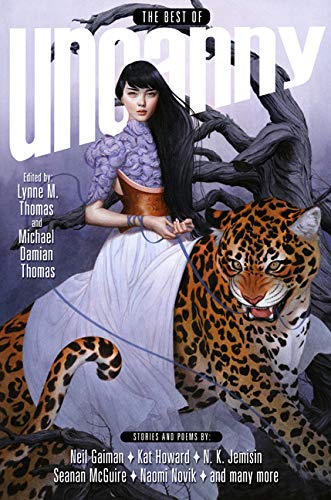
Cover of the book The Best of Uncanny edited by Lynne M. Thomas and Michael Damian Thomas
The Best of Uncanny
edited by Lynne M. Thomas and Michael Damian Thomas
Subterranean, 2019

This review was first published by Booklist on November 1, 2019.

**STARRED REVIEW** Multi-award-winning Uncanny Magazine has been the preeminent publisher of speculative short fiction, poetry, and nonfiction since 2014, and is renowned for offering its contributors tremendous creative freedom. Authors published by Uncanny are a roster of the greatest sf writers of the present era: Neil Gaiman, N. K. Jemisin, Charlie Jane Anders, Seanan McGuire, Naomi Novik, and many, many more. The works in this anthology are the best of the best in the genre, from science fiction to fantasy to weird tales to poetry, representing a stunning diversity of styles and perspectives, from the Hugo award-winning “Folding Beijing,” by Hao Jingfang to a female empowerment parable, “Monster Girls Don’t Cry,” by A. Merc Rustad. Language and family tie into technology and posterity in “Restore the Heart to Love,” by John Chu; “Clearly Lettered in a Mostly Steady Hand,” by Fran Wilde visits a nightmarish circus freak show; “And Then There Were (N-One),” by Sarah Pinsker is what happens when Being John Malkovich meets Agatha Christie. This anthology contains a gluttonous surfeit of narrative riches. The works in this collection are inventive, gorgeous, occasionally difficult, and immensely rewarding. Truly, the best of Uncanny.

Cultures of Storytelling

Love Beyond Body, Space, and Time: An Indigenous LGBT Sci-fi Anthology edited by Hope Nicholson
Love Beyond Body, Space, and Time: An Indigenous LGBT Sci-fi Anthology
edited by Hope Nicholson
Bedside Press, 2016

I’ve made it a point over the past several years to seek out SF written by people from other countries and cultures, Indigenous people, LGBTQIA2 people, minorities, etc. The most recent book I read was Love Beyond Body, Space, and Time: An Indigenous LGBT Sci-fi Anthology. I was discussing it with a friend and he asked me:

“Are the stories any good?”

I had been talking about the Two Spirit and queer authors and characters, the Indigenous settings and perspectives, the prefatory material which lay out the history and politics and which argue the need for stories like these—the important context surrounding these stories—and my friend noticed I wasn’t talking much about the stories themselves. Thus, his question.

I fumbled a bit to answer. Yes, some are good, a few excellent, some just OK. I voiced my belief that there’s benefit to reading stories like these even if they’re not good: I appreciate these works because of what they can teach me, how they challenge my assumptions and show me very different experiences and understandings of the world.

But the truth is also this: I don’t always know whether the stories I read are any good. I’m not always qualified to assess the quality of these works.

Continue reading “Cultures of Storytelling”

Book Review: Medieval Bodies: Life and Death in the Middle Ages by Jack Hartnell

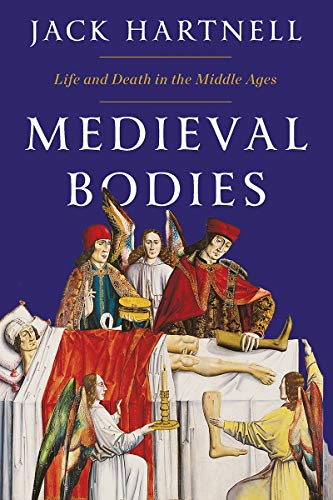
Cover of the book Medieval Bodies: Life and Death in the Middle Ages by Jack Hartnell
Medieval Bodies: Life and Death in the Middle Ages
by Jack Hartnell
Norton, 2019

This review was first published by Booklist on October 15, 2019.

**STARRED REVIEW** Medieval Bodies was a Sunday Times History Book of the Year when published in Britain last year, and it is now coming out in the U.S. Hartnell, a professor of the history of art and visual culture, brings together his vast knowledge of medieval art and writing to examine how European and Middle Eastern peoples of the time understood the workings of their own bodies. He starts with medical texts and illustrations, explores the legacy of classical Greek and Roman teachings, and surveys the general practices of medicine and healing during this period. But he doesn’t stop there. The body becomes a metaphor for medieval culture overall that informs our understanding of everything from the politics, religious beliefs, and class structures of this swath of Western history to the arts and interpersonal relationships of those who peopled it. Armed with Hartnell’s telling, readers will reassess their traditional view of the Middle Ages. Far from a Dark Age of superstition and ignorance, this was a time of curiosity, inquiry, and experimentation—a collision of the legacies of the past and the realities of the present. His knowledge and insight are impressive, and he shows uses [sic] with wit and humor.

Book Review: The Best American Science and Nature Writing 2019 edited by Sy Montgomery and Jaime Green

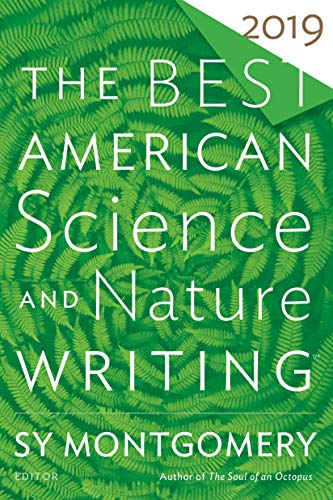
Cover of the book The Best American Science and Nature Writing 2019 edited by Sy Montgomery and Jaime Green
The Best American Science and Nature Writing 2019
edited by Sy Montgomery and Jaime Green
HMH, 2019

This review was first published by Booklist on October 1, 2019.

**STARRED REVIEW** The works in this annual anthology are lyrical, emotional, moving, and insightful—proof that long-form science journalism boasts some of our best writers. Many selections offer dreary outlooks for the future: the effects of climate change, the rise of infectious diseases, species extinction. Despite this, many are uplifting—science will always carry a sense of wonder and the joy of discovery, and awe for our ability to look deeply into existence and grapple with what we find. The strongest theme of this collection is the humanity of science. These articles all focus to some degree on the human nature of scientific endeavor. Science is work done by people seeking to understand our world; it’s passionate and flawed, subject to whim and error, driven by socioeconomic pressures and cults of personality. Science impacts real people, and these outcomes must be accounted for. For all its vaunted objectivity, science cannot be separated from its human components. Nor should it be, as series editor Green argues in a fiery foreward about the inescapable political nature of science. These pieces challenge us to look deeper and to understand better, to see the beating human heart in the soul of science.

The Connection Between Libraries and Theaters

People tend to be surprised when I tell them how many former theater people end up going into libraries as a second career. But it’s true—I know several former costumers and stage managers, even a sound guy and a dramaturg or two, who left theater to pursue new careers as librarians or archivists. I estimate fully one third of my class in my Masters of Library and Information Science program were former theater people.

(Interestingly, I don’t personally know any actors, designers, or directors who left theater for libraries. None of the creative side, just us backstage folk.)

Thing is, theaters and libraries are a natural fit.

Continue reading “The Connection Between Libraries and Theaters”

Book Review: Reality ahead of Schedule: How Science Fiction Inspires Science Fact by Joel Levy

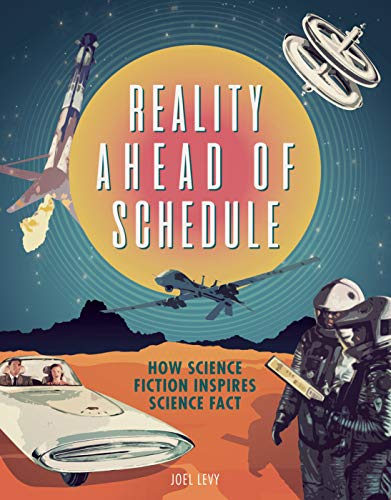
Cover of the book Reality ahead of Schedule: How Science Fiction Inspires Science Fact by Joel Levy
Reality ahead of Schedule: How Science Fiction Inspires Science Fact
by Joel Levy
Smithsonian, 2019

This review was first published by Booklist on September 15, 2019.

Science fiction starts with science and extrapolates possibilities. But how, and how often, does science fiction influence the course of science and technology? Levy does an admirable job of teasing apart this relationship by exploring the history of science fiction and tracing the origins of many ideas which came to dominate science over the years: H.G. Wells envisioned the atom bomb and tanks, for example; credit cards were predicted in a work written in 1888; and Star Trek gave us ideas for 3D printing, telecommunications, and health apps. In some cases, science fiction explores scientific ideas before they enter the mainstream. In others, people who grew up on science fiction work to make those stories a reality. Much of what Levy illuminates is already well-known but there are some surprising connections here, too. Most notably, he argues that telepresence (as portrayed in the movie Avatar) belongs to the evolution of videophones. He presents information in an accessible and engrossing way, highlighting many forgotten classic works of science fiction. This work should appeal to anyone who’s interested in the history of science, technology, and science fiction.

This title has been recommended for young adult readers:

YA/S – special interest: High school and even advanced middle school readers with an interest in science fiction and technology will appreciate this accessible book.

Book Review: The Science of Monsters: The Truth about Zombies, Witches, Werewolves, Vampires, and Other Legendary Creatures by Meg Hafdahl and Kelly Florence

Cover of the book The Science of Monsters: The Truth about Zombies, Witches, Werewolves, Vampires, and Other Legendary Creatures by Meg Hafdahl and Kelly Florence
The Science of Monsters: The Truth about Zombies, Witches, Werewolves, Vampires, and Other Legendary Creatures
by Meg Hafdahl and Kelly Florence
Skyhorse, 2019

This review was first published by Booklist on September 1, 2019.

Hafdahl and Florence, cohosts of the popular podcast, Horror Rewind, explore some of the real-world, factual basis for 30 popular horror films from the early days of Hollywood to today. The authors don’t offer specific analyses of each film so much as use the movies as jumping off points to explore ideas that arise from them. In some cases, the ideas are directly related to a specific kind of movie: slashers based on the psychology of real-life serial killers, rare physical conditions that inspired movie monsters. In other chapters, the ideas are only tenuously connected; for example, the chapter on Alien discusses dark matter and neutrinos, which have nothing to do with the movie. But this is part of the book’s appeal. It’s fascinating how these films can inspire curiosity about a wide range of topics. The chapters are all brief, and none go into any depth, but brevity makes this a quick and fun read. If readers want to know more about the topics explored, there are good end notes to direct further research.

This title has been recommended for young adult readers:

YA/General Interest: Pop-culture hooks make for easy entry into scientific topics. —Julia Smith

Book Review: Sisters of the Vast Black by Lina Rather

Cover of the book Sisters of the Vast Black by Lina Rather
Sisters of the Vast Black
by Lina Rather
Tor, 2019

This review was first published by Booklist on September 1, 2019.

An order of nuns ministering to colony worlds in the outer reaches of human settled space. A living spaceship that might have a will of its own. Conflict between Earth and the outer systems. A controlling church. A deadly plague and a conspiracy with galaxy-spanning consequences. Sisters of the Vast Black uses these elements to explore questions of faith and free will, the conflicts that arise between obedience and conscience, complicity and refusal, and how people move on from tragic pasts. It offers a compelling blend of religious and moral challenges, science and politics. Awfully heady stuff to tackle in a novella, but Rather succeeds with intelligence and empathy. Her world building is exceptional, especially in her descriptions of the little details on the sisters’ living ship. Her characters are authentic and developed with compelling back stories. What stands out the most is Rather’s lyrical and assured style. Her language invites the reader in and sustains a sense of wonder within a challenging world. This is a beautifully written work.

Transformational Ideation vs. Original Ideatation

Or: Why ’80s Pop Bowie Is Better than ’70s Glam Bowie

David Bowie is one of the most important musicians in my personal pantheon. And I’ve always liked the pop music he made in the 1980s better than the glam rock that made him famous in the 1970s.

I’ve spent a lot of time trying to define why I like ’80s Bowie better than I ever liked ’70s Bowie. Part of it is because I’m a child of the ’80s and that’s the pop music I grew up on. But there’s more to it than just that. And it leads me to an interesting insight into the nature of ideational work.

Our modern culture prioritizes innovation to the point of fetishizing it. Because of this, we assign the greatest value to people who can come up with new ideas. This is an immensely valuable skill.

But it’s not the only skill necessary for us to do our best ideation work.

I’ve known people who weren’t any good at coming up with new ideas but who were brilliant at exploring the ideas of others. They can take your idea and discover potential in it you never saw. They can develop your idea into something better than you ever envisioned.

I’ve known people who were geniuses at connecting ideas together. They can take your idea and match it to some other idea you never would have thought related, and together these ideas become better than anything you imagined.

To borrow from the language of copyright law: There’s original work and transformative work. Some people are brilliant at doing the transformative work even if they’re not skilled at doing original work.

This sort of exploration and development work is as important as the work of coming up with new ideas. This is the work that transforms ideas into their best possible versions.

Continue reading “Transformational Ideation vs. Original Ideatation”

Book Review: The Best of Greg Egan by Greg Egan

Cover of the book The Best of Greg Egan by Greg Egan
The Best of Greg Egan
by Greg Egan
Subterranean, 2019

This review was first published by Booklist in August 2019.

**STARRED REVIEW** Egan (Perihelion Summer, 2019), a master of short form science fiction, has collected twenty of what he considers the best of his short works from the past thirty years. By presenting these works in chronological order, the collection highlights the growth of his skill as a writer: readers see his style become more elegant and subtle, his characters more nuanced and empathetic, his stories more incisive. As satisfying as each story is on its own, the greatest reward of this collection is witnessing Egan’s development as a storyteller. It also brings his obsessions front-and-center: the workings of the human mind (“Axiomatic,” “Reasons to Be Cheerful”), reason and identity (“Learning to Be Me,” “Closer,” “Uncanny Valley”), humanity’s relationship to technology (“Appropriate Love,” “Bit Players”), artificial intelligence (“Singleton,” “Crystal Nights”), the relationship between science and faith (“Oracle,” “Oceanic”), and his deep fascination with mathematics (“Luminous,” “Dark Integers”). This retrospective is sure to be treasured by Egan’s many fans, and it presents an excellent doorway for new readers to discover and explore his work for the first time.