Book Review: Devil in the Stack: Searching for the Soul of the New Machine by Andrew Smith

Cover of the book Devil in the Stack: Searching for the Soul of the New Machine by Andrew Smith
Devil in the Stack: Searching for the Soul of the New Machine
by Andrew Smith
Grove, 2024

This review was first published by Booklist in August 2024.

**STARRED REVIEW** Many of us have a sense that modern technology, especially social media, is damaging human society and relationships. Smith was curious to understand if that’s true and, if so, why. Here, he takes a deep dive into the culture of computer coders: he learned to code, attended coding conferences, and interviewed some of the most eminent persons of the coding world. Along the way, he offers a course in the history of the creation and development of computers and code, a necessary context to understand how we got to where we are today. He explores the nature of coding itself: is it more math or language, science or art, and how do human brains process it? He also calls our attention to the divisive, often counterintuitive history of diversity in tech. Smith believes modern technology is doing harm to society and ultimately suggests a well-reasoned argument for why, with suggestions to address the damage. But technology also offers tremendous potential to do good, and much of the culture around tech is deep with creativity, imagination, and hope. Devil in the Stack is a humane, nuanced, humorous, insightful work and a much-needed call for greater due diligence around some of the most impactful innovations in human history.

Book Review: The Mercy of Gods by James S. A. Corey

Cover of the book The Mercy of the Gods by James S. A. Corey
The Mercy of the Gods
by James S. A. Corey
Orbit, 2024

This review was first published by Booklist on July 15, 2024.

**STARRED REVIEW** No one remembers how humanity came to live on the planet Anjiin. Then the alien Carryx arrive to enslave mankind. Caught up in an age-old conflict they had no idea was even happening, and thrust into a far wider galactic community of aliens, the survivors from Anjiin must figure out how to navigate their subjugation and maybe even find a path back to freedom. Writing duo Corey (Memory’s Legion, 2022) once again does a masterful job of populating their settings with deeply drawn, unique characters. The settings are immersive and interesting, and the history of the Carryx provides compelling depth to the grand conflict of the story. The Carryx are an insectoid villain race, but Corey explores their worldview, mindset, and culture more deeply than is typical, making them more believable and interesting than the usual genre stereotype. They’re the most well-developed insectoid baddies since Orson Scott Card’s original Ender Trilogy. The Mercy of Gods starts in an unspecified part of the galaxy, assumed to be far from Earth, at an unspecified, far-future time, giving it a more speculative, fantastical feel compared to Corey’s Expanse series. This is old-fashioned space opera on a grand scale and a promising start for an epic new series.

Book Review: Ka-Boom! The Science of Extremes by David Darling

Cover of the book Ka-Boom! The Science of Extremes by David Darling
Ka-Boom! The Science of Extremes
by David Darling
Oneworld, 2024

This review was first published by Booklist on June 14, 2024.

People are perennially fascinated by extremes. What’s the most massive object we know of? The fastest computer? The loudest sound? The longest-lived being? The coldest temperature? The biggest explosion? Darling serves up a fun, informative, and quirky overview of some fascinating science facts. He surveys physics, space, materials, technology, and the natural world, offering myriad examples of the extremes we’ve discovered in the course of our exploration of our universe. There’s something for everyone in this quick and engaging read. There may not be much new information here for existing science aficionados, he repeats a few examples in different subject sections, and he doesn’t go into much depth on any of them, but his delight in exploring this material is invigorating. Even inveterate science geeks should enjoy this time spent with fascinating facts. Ka-Boom! is most valuable as an ideal introduction to the science of extremes for people just starting out on their journey into the vast realms of scientific knowledge.

Book Review: The Book of Elsewhere by Keanu Reeves and China Miéville

Cover of the book The Book of Elsewhere by Keanu Reeves and China Miéville
The Book of Elsewhere
by Keanu Reeves and China Mi&eacuteville
Del Rey, 2024

This review was first published by Booklist on June 1, 2024.

A warrior who can’t be killed and who doesn’t understand why. A government agency studying him. Ancient powers who worship him and seek to destroy him. And an immortal deer-pig. A novel cowritten by beloved sf movie star Reeves and beloved sf author Miéville (The Last Days of New Paris, 2016) doesn’t disappoint, but it may not be quite what anyone expects. Set in the same universe as Reeves’ BRZRKR graphic novel series, the nature of the narrative is revealed somewhat slowly, and the writing style is oddly anachronistic and very erudite. It’s stylistically daring, combining sf, fantasy, parascience, history, and action. It’s violent, propulsive, and introspective, ultimately offering a philosophical exploration of identity and the meaning of mortality, chaos, and entropy. The Book of Elsewhere gets under your skin and into your mind and revels in a pervasive sense of mystery. Or it could just be a weird riff on some of the most popular Reeves internet memes. Whatever it is, it works.

HIGH-DEMAND BACKSTORY: Reeves and Miéville each have their own legions of fans, and their collaboration is bound to draw both groups in.

The Core Conflict in Science Fiction

Most of my favorite science fiction authors were members of the literary science fiction movement. These are authors who grew up reading pulp, Golden, and Silver Age scifi. They loved the scope and potential of these types of speculative stories, but they were frustrated by the lack of artistry in the writing. A lot of classic scifi was, let’s be honest, pretty poorly written. Hugely imaginative but there wasn’t much style. When their turn came to become authors and storytellers, they wanted to play in this genre but they also wanted to innovate stylistically, to explore the potentials of language and storytelling structure in a way that matched the technological and scientific innovation that drove scifi from the beginning. They wanted to transform scifi into a literature with deeper artistic merit.

And that’s how most of us tend to understand literary scifi: it made scifi more artsy.

Continue reading “The Core Conflict in Science Fiction”

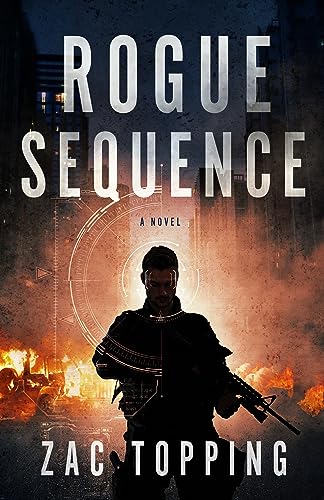
Book Review: Rogue Sequence by Zac Topping

Cover of the book Rogue Sequence by Zac Topping
Rogue Sequence
by Zac Topping
Tor, 2024

This review was first published by Booklist on May 1, 2024.

Ander Rade is a genetically modified and psychologically conditioned corporate soldier-for-hire. Imprisoned after a failed mission, he’s released by a new U.S. government agency to help stop a terrorist attacking corporate sites—a terrorist who used to be a member of Rade’s squad. Set in a near-future, reshaped United States, this taut, violent, race-against-time thriller is a tale of one man coming to terms with the evils of his past and exploring the possibility of redemption. It’s also a stark warning about the dangers of unchecked corporate power and government corruption. Topping (Wake of War, 2022) refuses to make simplistic judgements about his characters. While it’s clear who the good and bad guys are, they all have understandable reasons for what they do, and they’re all caught up in the larger machinations of powerful corporate and government interests. Topping’s military experience shines in the vivid fight scenes and his descriptions of the characters’ surroundings. It makes the action more believable and compelling. Recommended for fans of espionage thrillers, as well as military sf readers.

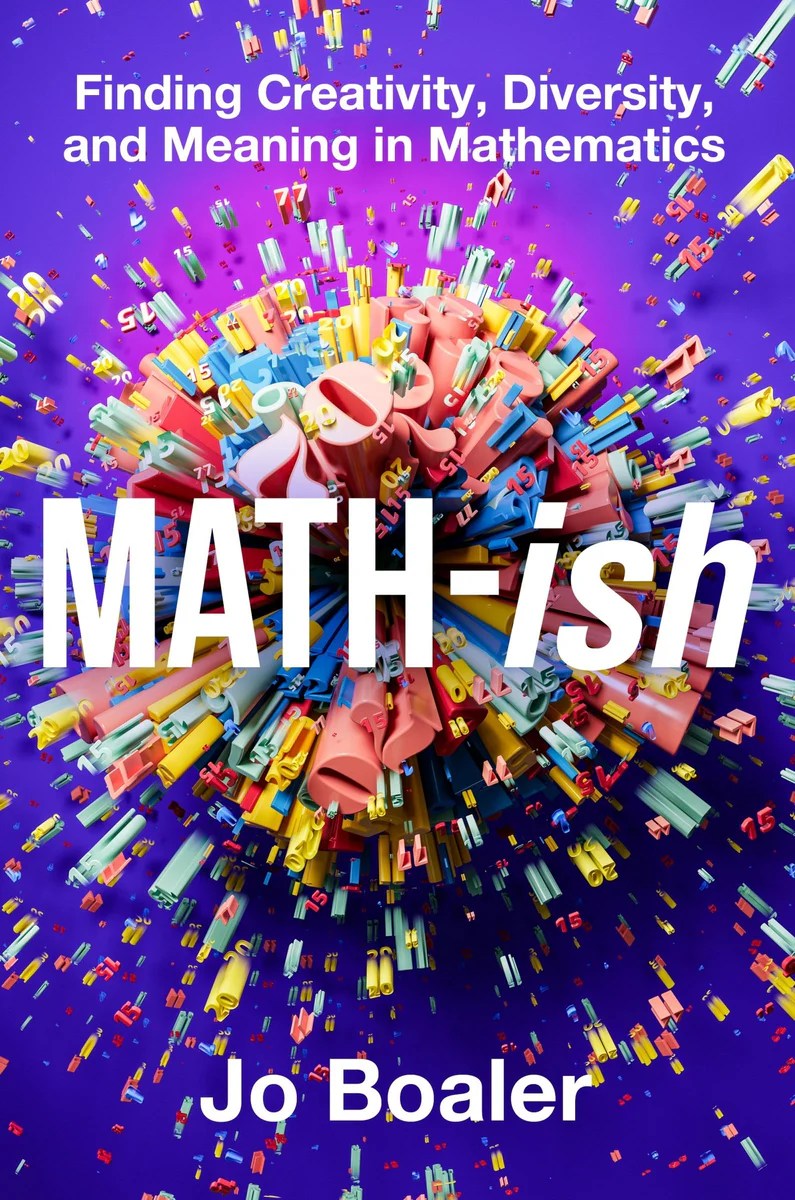
Book Review: Math-ish: Finding Creativity, Diversity, and Meaning in Mathematics by Jo Boaler

Cover of the book Math-ish: Finding Creativity, Diversity, and Meaning in Mathematics by Jo Boaler
Math-ish: Finding Creativity, Diversity, and Meaning in Mathematics
by Jo Boaler
HarperOne, 2024

This review was first published by Booklist on May 1, 2024.

Math-ish is an invigorating call to reform how we teach mathematics. Math can be creative and beautiful, but you’d never know that from the way it is normally taught. Professional mathematicians report that what is taught in schools has little bearing on the math we need to drive innovation in the real world. Mathematics achievement in U.S. schools has been plummeting since the mid-twentieth century. The traditional methods of rote learning and prescribed formulae don’t work and exclude far too many people. These exclusionary methods cost us by keeping different perspectives and ideas out of STEM careers that require advanced mathematics education. Boaler, an education specialist at Stanford University, draws on evidence from educational pedagogy, neuroscience, and psychology to build strong, evidence-based arguments for how we should transform mathematics education and the benefits we could reap. Math should allow for multiple approaches to problem-solving, embrace sensory methods for interacting with concepts, and celebrate the learning that happens when people make mistakes. She presents a future for mathematics that’s more creative, diverse, and successful.

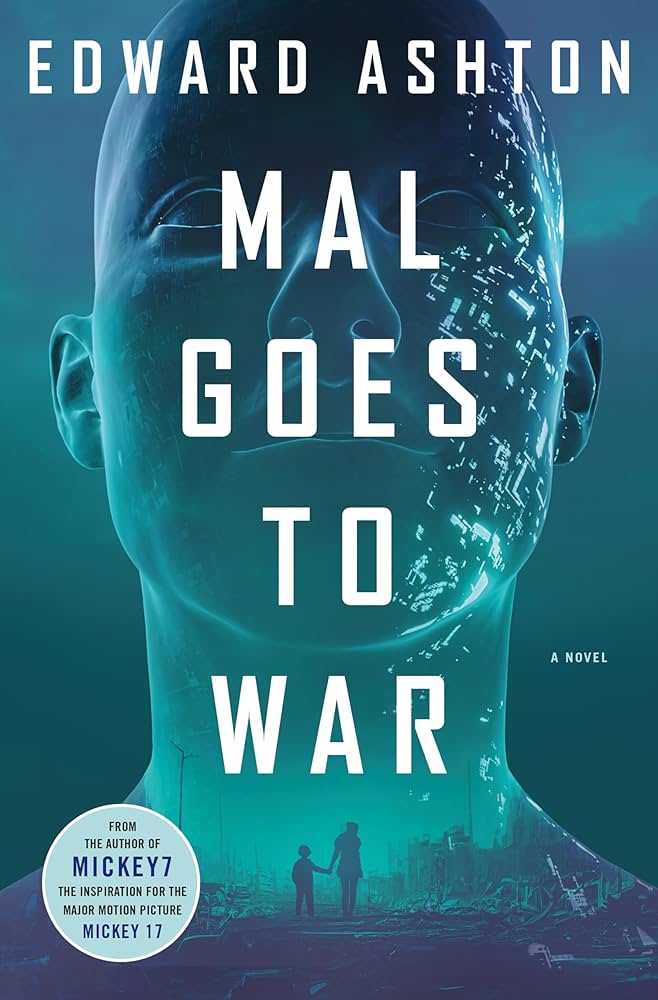
Book Review: Mal Goes to War by Edward Ashton

Cover of the book Mal Goes to War by Edward Ashton
Mal Goes to War
by Edward Ashton
St. Martin’s, 2024

This review was first published by Booklist on March 15, 2024.

Ashton (Antimatter Blues, 2023) sets his latest stand-alone in a near-future world where artificial intelligences exist and humans—especially wealthy ones—technologically enhance their bodies, while a growing movement of dispossessed people opposes this use of technology. Armed conflict flares between the enhanced Federalist forces and unenhanced Humanists. But not all is as it seems, and the Humanists may not be as pure as they claim. Mal, an artificial intelligence living in the infosphere who specializes in infiltrating other systems, embeds himself in the corpse of a cyborg human to learn more about the conflict on the ground. Through a series of gruesome and darkly comic mishaps, he becomes deeply embroiled and cut off from the infosphere. This is a funny, fast-paced, fish-out-of-water tale that should satisfy Ashton’s growing fan base. Exploring the nature of AI is a hot topic, and the contrast between the literalism of computers and human emotions is perennially fascinating. As we’ve seen in his Mickey7 series, Ashton has a talent for handling nonhuman characters. This should also appeal to fans of Martha Wells’ Murderbot Diaries series.

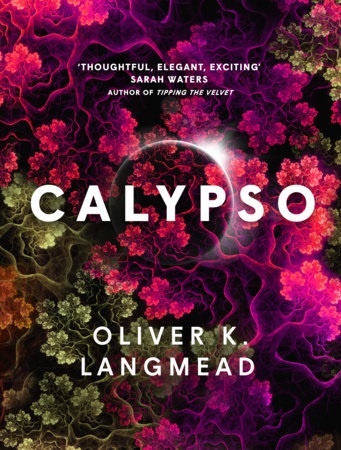
Book Review: Calypso by Oliver K. Langmead

Cover of the book Calypso by Oliver K. Langmead
Calypso
by Oliver K. Langmead
Titan, 2024

This review was first published by Booklist on March 1, 2024.

A generation ship is sent from Earth to a far exoplanet, with several engineers in hyperstasis scheduled to awaken and lead the terraforming when they arrive, while generations of passengers live their lives during the journey. But when one engineer emerges from her sleep, she finds the others are missing and a schism has wracked the ship. Told in long-form poetry, Calypso gives this well-used plot a unique spin. Langmead (Glitterati, 2022) uses poetic styling in fascinating ways. He alters the formatting of the text for each narrating character and presents individualized, gorgeous artwork at the top of each chapter. Altering the poetic format not only conveys which character is narrating, it proves to be a potent method of character development; each character’s format gives the reader deeper insight into how their mind works. It’s also a uniquely powerful technique to unmoor the reader by disrupting expected visual cues. Ultimately, the story Langmead tells is secondary to his character and style explorations. A sure bet for readers of lyrical, lush, and character-driven sf.

Book Review: The Heart and the Chip: Our Bright Future with Robots by Daniela Rus and Gregory Mone

Cover of the book The Heart and the Chip: Our Bright Future with Robots by Daniela Rus and Gregory Mone
The Heart and the Chip: Our Bright Future with Robots
by Daniela Rus and Gregory Mone
Norton, 2024

This review was first published by Booklist on February 9, 2024.

Rus, Director of the MIT Computer Science and Artificial Intelligence Laboratory, knows more about robots and artificial intelligence than just about anyone. Here she takes readers on a tour of the cutting edge of this technology. She assures us there’s no danger of a robot apocalypse. She and many of her colleagues envision a world where robots and people cooperate to enhance our abilities, where the human heart and the computer chip work together to make the world better for everyone, especially people who are disabled or disadvantaged. Modern robots aren’t clunky metal contraptions as they’re so often portrayed. They can be made from fabrics, plastics, just about anything, in all kinds of shapes and sizes, and can be used in everything from non-invasive surgeries to training athletes to helping the elderly maintain mobility and independence. Robots can help us solve deep-set problems, even aid us in healing the planet. Not a world of robot overlords, but a world full of Iron Man suits made of stylish fabrics instead of steel. It’s a compelling vision.