Luddite Librarians

Digital technology is part of our job now, whether we like it or not.


This post is the first of two that I plan to present as a point / counterpoint kind of thing. Read the second post here.


Every library, it seems, has a handful of staff members who just won’t get onboard with new technology and new digital services. Some of them even make it a point of pride—they see themselves as stalwarts, holdouts against unnecessary change.

Some say they’re too set in their ways and technology changes too fast to keep up with it. Some flat out don’t trust new technology or digital information resources.

As a profession, we grimace and shrug and resign ourselves to the fact that some of our coworkers are going to be like that.

But consider it from a different angle:

Continue reading “Luddite Librarians”

Libraries Are…

Semi-related follow-up to my last post.

Libraries are uniquely qualified to recognize both the value of current popular titles and also the enduring benefits modern readers can realize when they take the time to explore our ongoing literary heritage.

Libraries celebrate education and entertainment both as necessities of a life well lived.

Libraries are on the front lines of diversifying the stories available to our communities, undertaking the essential work of expanding our cultural consciousness and mutual understanding.

Libraries are where you find yourself and also discover the unknown.

Libraries are where we learn what it means to be human, in all our myriad aspects.

The Transformative Power of Reading

I have a social media friend—you know the type: you’re barely even acquaintances in real life but you have enough mutual friends to be friends online. We’ve been social media friends for some years now.

For the past couple of weeks, I’ve been watching her life transformed by the power of reading. That sounds cheesy and dramatic, I know, but it’s literally true.

My social media friend is currently in her early 30s. She’s Hispanic Latina, born into a fairly poor family, raised in a fairly poor neighborhood, with all the disadvantages inherent to such a background in this country. She had her first child when she was still in high school and married the father when she turned 18. They had a couple more kids over the next few years. She didn’t go to college. She went straight from high school to being a working mother, raising her children and holding down a series of part-time, low skilled, hourly wage jobs. A few years ago, she and her husband got divorced, so she took her kids and moved back in with her parents.

She decided to change the course of her life and she enrolled in a community college to get a degree in nursing. This is where her current transformation begins…

Continue reading “The Transformative Power of Reading”

This Is Why Books Are Dangerous

I recently finished reading The Meaning of the Library: A Cultural History, edited by Alice Crawford (Princeton University Press, 2015). Several passages from the concluding essay, “The Modern Library and Global Democracy” by James H. Billington, stood out:

Books are our guardians of memory, tutors in language, pathways to reason, and our golden gate to the royal road of imagination. Books take us to new places where boundaries are not set by someone else … . Books help us to pose the unimagined question and to accept the unwelcome answer. Books convince rather than coerce. They are oases of coherence where things are put together rather than just taken apart. Good books take us away from the bumper cars of emotion and polemics in the media into trains of thought that can lead us into place we might not otherwise ever discover. (p. 263)

This is why some people are afraid of books. This is why some people see certain books as a threat. Books are transformative, books empower—books encourage independence of thought. This is why some people seek to control them.

Libraries are antidotes to fanaticism. They are temples of pluralism, where books that contradict one another sit peacefully side by side on the shelves just as intellectual antagonists work peacefully next to each other … . (p. 263)

This is why some people are afraid of libraries. This is why some people see libraries as a threat. This is why some people seek to control them. Pluralism is anathema to control and dominance.

My favorite quote, though, and the best conclusion we can come to, is this:

Reading can balance our noisy, hurry-up, present-minded world with what Keats called “silence and slow time.” Whatever else you do in life, do not fail to experience the simple pleasure of being alone with a good book on a rainy day. (p. 265)

Book Review: Me and the Devil by Nick Tosches

Me and the Devil by Nick Tosches
Little, Brown and Company 2012

I’m a great admirer of Nick Tosches. More than any other living author, for me he defines erudition. He is, without doubt, one of the great prose stylists of the English language. His artistry and craftsmanship, the astounding depth and breadth of his intellect, is unparalleled.

But Me and the Devil is disappointing. It still has all the style and intellect I expect from Mr. Tosches—his typical hallmarks are as much in evidence in this work as in any of his others.

But I walked away from this book asking the one question I’ve never asked about any of his work before:

What was the point of all this?

Continue reading “Book Review: Me and the Devil by Nick Tosches”

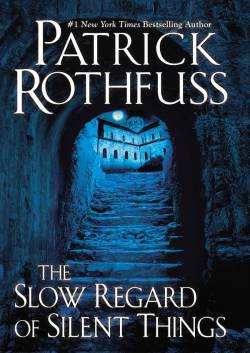
Book Review: The Slow Regard of Silent Things by Patrick Rothfuss

The Slow Regard of Silent Things by Patrick Rothfuss
DAW 2014

Patrick Rothfuss introduces The Slow Regard of Silent Things with a warning that it’s not a proper story. It doesn’t do the things a story is supposed to do.

And it’s wonderful. It’s unlike most anything else I’ve read and I treasured every word of it.

This isn’t a story so much as it’s a contemplation. Reading it isn’t an act of reading so much as it’s a meditation.

Even more so than in the novels of his Kingkiller Chronicle, this novella displays Mr. Rothfuss’ delight in language. He plays with words here in a way that’s both elegant and giddy. The book is lyrical, bursting with alliteration, homophones, and rhyme, but it never comes off as contrived or self-conscious. Rather, his language is a search to find just the right words for each thing that needs to be said.

Continue reading “Book Review: The Slow Regard of Silent Things by Patrick Rothfuss”

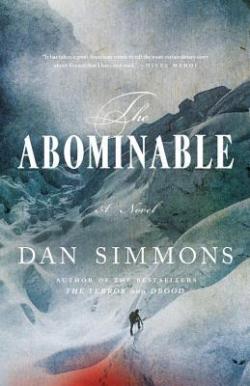
Book Review: The Abominable by Dan Simmons

The Abominable by Dan Simmons
Little, Brown and Company 2013

The Abominable by Dan Simmons is one of those books where my enjoyment of it doesn’t match how well I esteem the author. Given the caliber of much of Mr. Simmons other work, I suspect this may be a better book than I give it credit for.

It’s just not one I enjoy all that much.

The Abominable is one of Mr. Simmons’ entries in his historical thriller novels (the others being Drood and The Terror, neither of which I’ve read yet). In this book, a group of mountaineers attempts an Alpine-style climb of Mt. Everest in 1925, one year after George Mallory’s final, fatal attempt. There’s also a missing British lord, Tibetan monks, Nazis, and international intrigue.

Continue reading “Book Review: The Abominable by Dan Simmons”

Once Again, Print Proves Its Worth

Perhaps it’s ironic, but the more time I spend as a digital librarian, learning and exploring new technology, finding new and better ways to provide technology to our patrons, the more I find myself passionately advocating for the importance of print and the necessity of its continued presence in our reading culture.

Once again, print proves its worth:

Reading Books Instead of Kindles Can Improve Your Memory, Concentration and Good Looks by Jon Levine (posted on Arts.Mic on August 20, 2015)

Nothing in this article surprises me (although I get frustrated every time someone implies that ebooks aren’t books). It all pretty well stands to reason:

Continue reading “Once Again, Print Proves Its Worth”

Book Review: The Story of Alice: Lewis Carroll and the Secret History of Wonderland by Robert Douglas-Fairhurst

The Story of Alice: Lewis Carroll and the Secret History of Wonderland by Robert Douglas-Fairhurst
Belknap Press 2015

The Story of Alice: Lewis Carroll and the Secret History of Wonderland by Robert Douglas-Fairhurst isn’t the most comprehensive biography of Lewis Carroll out there. That’s not the author’s intention. Rather, he seeks to explore the available material on Carroll and Alice Liddell—much of which has never been published—as well as their historical context, to trace these elements to the genesis, content, and legacy of Carroll’s most famous works.

This is the biography of a literary creation more than a biography of its author or his Muse.

The book is structured in three main chronological sections, beginning with Carroll’s childhood and ending with Alice Liddell’s death, along with a prologue and epilogue:

Continue reading “Book Review: The Story of Alice: Lewis Carroll and the Secret History of Wonderland by Robert Douglas-Fairhurst”

Book Review: Sacrament by Clive Barker

Sacrament by Clive Barker
HarperCollins 1996

Like many of my generation, I went through a Clive Barker phase when I was a teenager. The Hellraiser movies, Nightbreed, Candyman; his novels, The Great and Secret Show and Imajica. He defined dark and edgy for me, and he was much cooler than Stephen King.

Sacrament was the first new-to-me Clive Barker novel I’d read in over two decades. It wasn’t what I expected.

Because of his early work, Mr. Barker is too easily dismissed as a horror writer, albeit one who incorporates a greater portion of magic and fantasy than most. This has never been entirely fair—his best novels have always been more than just horror, as fantastical as they are horrible, works of unfettered imagination.

Sacrament casts off any chains previously tying Mr. Barker to the horror genre. There’s darkness in it, and danger, but it’s definitively not a horror novel.

Continue reading “Book Review: Sacrament by Clive Barker”