Book Review: And Then She Vanished by Nick Jones

Cover of the book And Then She Vanished by Nick Jones
And Then She Vanished
by Nick Jones
Blackstone, 2021

This review was first published by Booklist on January 15, 2021.

When Joseph Bridgeman was a teenager, his younger sister, Amy, vanished while under his supervision. She was never found and the loss tore his family apart. Twenty years later, in the midst of crippling depression, a hypnotherapy session unlocks a strange new ability: Joe discovers he can travel back in time. If he can figure out how this power works, maybe he can save his sister. Time travel is used to tell an intimate, personal story here: a tale of grief and guilt and what a loving brother will do to heal the wounds of the past. But there are moral quandaries posed by changing history and Jones doesn’t shy from that. The novel, originally self-published in 2015, offers an ending that isn’t as neat and happy as readers might expect: there’s a cost to getting what you want. Jones’ version of time travel is compelling; though the mechanism remains secret, the rules of time travel are clear. It’s a compelling set up for the next in the Downstream Diaries series.
Book Review: A Funny Thing Happened on the Way to Stockholm: The Adrenaline-Fueled Adventures of an Accidental Scientist by Robert Lefkowitz and Randy Hall

Cover of the book A Funny Thing Happened on the Way to Stockholm: The Adrenaline-Fueled Adventures of an Accidental Scientist by Robert Lefkowitz and Randy Hall
A Funny Thing Happened on the Way to Stockholm: The Adrenaline-Fueled Adventures of an Accidental Scientist
by Robert Lefkowitz and Randy Hall
Pegasus, 2021

This review was first published by Booklist on January 1, 2021.

Lefkowitz grew up wanting to be a doctor, not a scientist. But life took him down some unexpected paths and his pioneering research identifying the nature and structure of beta receptors won him the Nobel Prize in Chemistry in 2012. An avid and inveterate storyteller, he chronicles his life in medicine and science. Well on his way to becoming a cardiologist, he found himself drawn to the world of medical research, where he contributed to groundbreaking discoveries for more than 40 years, and became one of the field’s great mentors. Told with humor and humility, what shines through most is his love of stories. This book came about because of his penchant for sharing tales about his life, but he also argues for the central importance of storytelling in both patient care and scientific research: knowing a patient’s story is essential to understanding their ailments, and research data doesn’t mean anything without a story to make sense of it. His passion for science and discovery, for helping people, and for celebrating stories is infectious.

Book Review: Out Past the Stars by K. B. Wagers

Cover of the book Out Past the Stars by K. B. Wagers
Out Past the Stars
by K. B. Wagers
Orbit, 2021

This review was first published by Booklist on December 1, 2020.

Hail, Star of Indrana, seeks to broker peace between the Farian and the Shen, a task made unimaginably more difficult when she meets the Farian gods and discovers they’re not what everyone has long believed. Now, an ancient, dangerous enemy is hunting them down. To preserve peace and save her empire, Hail must discover the truth behind centuries’ worth of lies and avert an all-out war. But the cost might be more than she can bear, just when she was hoping to finally put violence behind her. What makes Hail such a likable character is her obvious love for her compatriots. What makes her admirable is her unwavering commitment to doing what’s right, even when it’s not at all clear what the right choice is. The story is a compelling mix of action and politics, but Wagers’ strength is crafting character-driven science fiction, and it’s on full display. Everyone, including the villains, are complex and compelling. Relationships, both old and new, are rich. Wagers offers a well-earned, heartfelt, and hopeful conclusion to the Farian War series (which began with There before the Chaos, 2018).

Book Review: Extraterrestrial: The First Sign of Intelligent Life beyond Earth by Avi Loeb

Cover of the book Extraterrestrial: The First Sign of Intelligent Life beyond Earth by Avi Loeb
Extraterrestrial: The First Sign of Intelligent Life beyond Earth
by Avi Loeb
HMH, 2021

This review was first published by Booklist on December 1, 2020.

On October 19, 2017, astronomers discovered ‘Oumuamua, the first known interstellar object to pass through our solar system. But its behavior was strange. While many hypotheses have been presented to explain its anomalies, Loeb, the longest-serving chair of Harvard’s Department of Astronomy and founder of the Black Hole Initiative, postulates the most likely explanation is that ‘Oumuamua is evidence of extraterrestrial intelligence. He offers strong evidence to support this conclusion, but perhaps more valuable is how he uses this as a jumping-off point for much broader musings on the state of science. He critiques the tendency of science to be too conservative and the pernicious effects of scientific elitism toward the public. He considers the larger implications of what it would mean if we do obtain proof of other intelligent life in the universe, including the need for humanity to overcome our shortsightedness and invest in further exploration. Some of his digressions are a bit of a leap, but whether or not readers agree with him, his vision and curiosity are compelling.

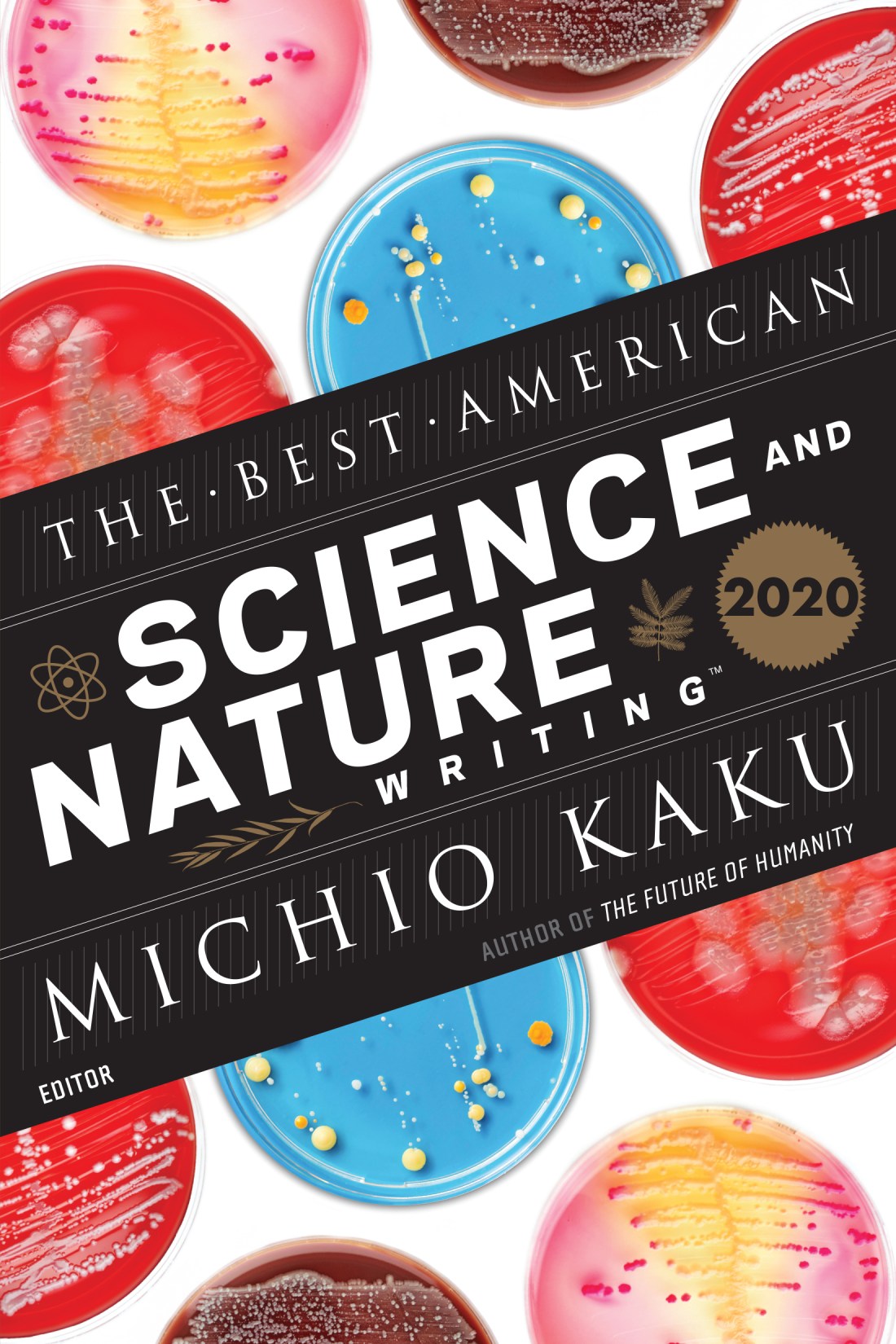
Book Review: The Best American Science and Nature Writing, 2020 edited by Michio Kaku and Jamie Green

Cover of the book The Best American Science and Nature Writing, 2020 edited by Michio Kaku and Jamie Green
The Best American Science and Nature Writing, 2020
edited by Michio Kaku and Jamie Green
HMH, 2020

This review was first published by Booklist on November 1, 2020.

The common thread in most of the works here is disaster and how one recovers from it. Disasters range from extinction-level asteroid impacts to natural disasters to accidents and illness. Works raise two questions: “How did this happen?” and “What comes next?” These questions occupy many of the writers featured here, and the exploration of the recovery process will be particularly resonant for current readers; because all of the pieces included here were published in 2019, the 2020 edition of this series feels a little like a pre-pandemic time capsule. Selected works cover everything from climate change to medicine to ecology to geology to cosmology to chaos theory: proof that any subject makes a good story in the hands of a talented writer. Also striking is the way this collection as a whole jumps through time, with articles about dinosaurs and the geological K-t boundary alongside explorations of future technology. However, the articles focused on the present are the most personal and carry the deepest emotional resonance. This series remains a must-buy for most library collections.

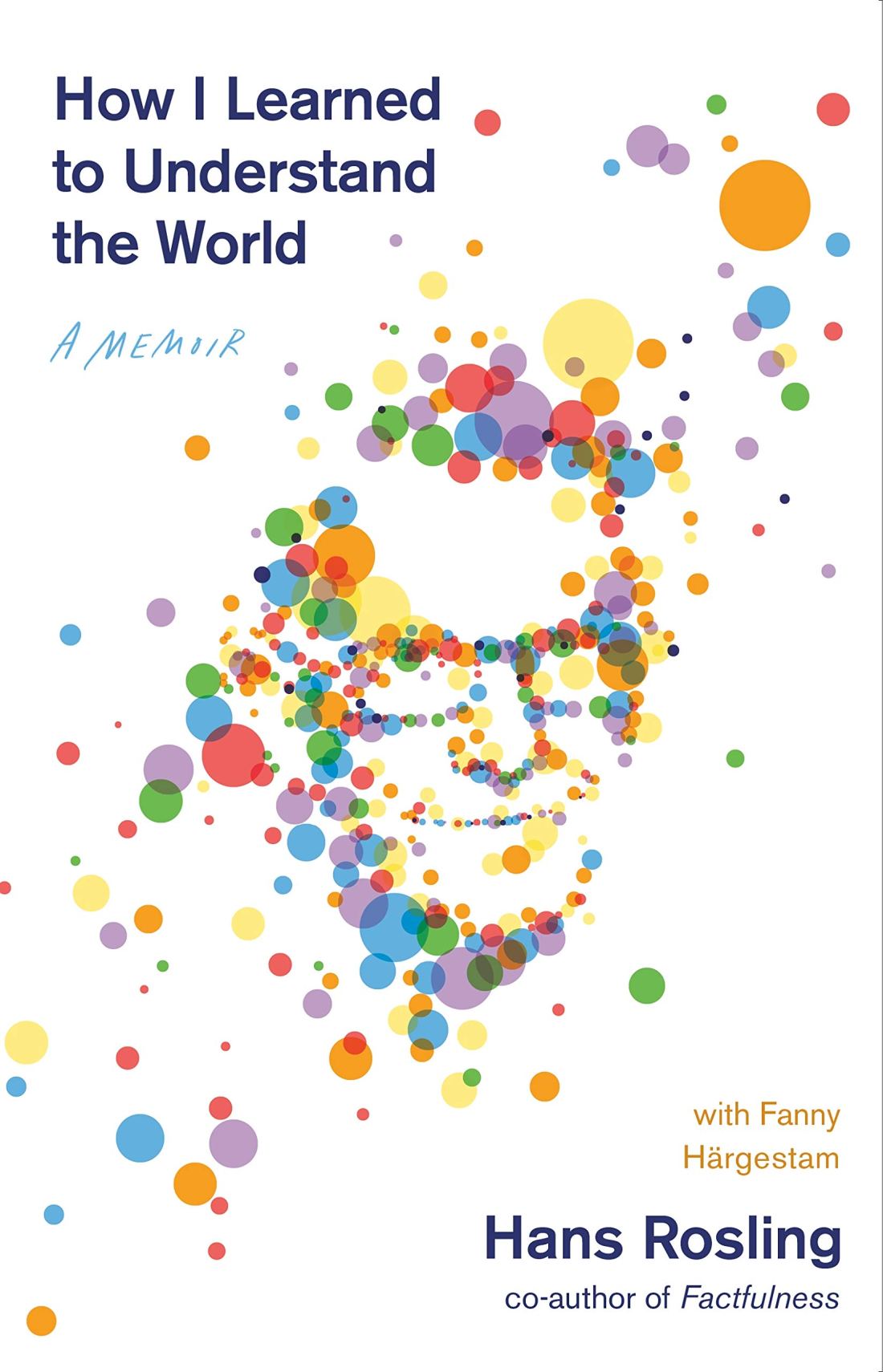
Book Review: How I Learned to Understand the World by Hans Rosling

Cover of the book How I Learned to Understand the World by Hans Rosling
How I Learned to Understand the World
by Hans Rosling
Flatiron, 2020

This review was first published by Booklist on November 1, 2020.

In this deeply personal memoir, Rosling takes account of his life with the goal of exploring how he came to understand the world. Most famous for his work in worldwide health data analysis as the founder of the Gapminder Institute and one of the inventors of the Trendalyzer software system which creates animated graphics of data over time, he sought to comprehend the big picture as clearly as possible, to make the best decisions about how to improve the health and living conditions of the world’s most needful. He dedicated much of his effort to correcting the common misunderstandings most Western countries have about the state of non-Western countries. Rosling began his career as a physician in Mozambique shortly after that country gained independence, and pioneered new epidemiological methods to better address the lived reality of the people he served. Over the years, he applied these same methods throughout sub-Saharan Africa, all while he and his wife raised three children and he battled cancer twice. His memoir is kind, humane, and unflinchingly honest.

Book Review: Zoey Punches the Future in the Dick by David Wong

Cover of the book Zoey Punches the Future in the Dick by David Wong
Zoey Punches the Future in the Dick
by David Wong
St. Martin’s, 2020

This review was first published by Booklist on September 1, 2020.

Zoey Ashe, still unsure how to manage her father’s massive criminal empire after the events of Futuristic Violence and Fancy Suits (2015), receives a disemboweled corpse in the mail. Online trolls accuse her of being a cannibal and threaten to attack her home. A rival is growing a private security empire, which may or may not be involved in murder. When her beloved cat, Stench Machine, goes missing, Zoey is ready to tear the city apart to get it back. This may be Wong’s most timely and topical work to date, featuring incels, trolls, and the rise of private security. Wong’s trademark imagination and humor remain but it’s his grounded sense of humanity that elevates this work. Zoey is a good person in bizarre circumstances, doing her best to make the world a better place. Wong knows what makes people tick and his vision of humanity isn’t rose-colored. But he’s also fundamentally an optimist: there are solutions to the problems humanity faces. Not always neat or tidy, not always clean, but readers will feel that they—like Zoey—can stumble through.

YA/General Interest: Futuristic Violence in Fancy Suits won an Alex Award, so teen fans may come looking for its sequel.

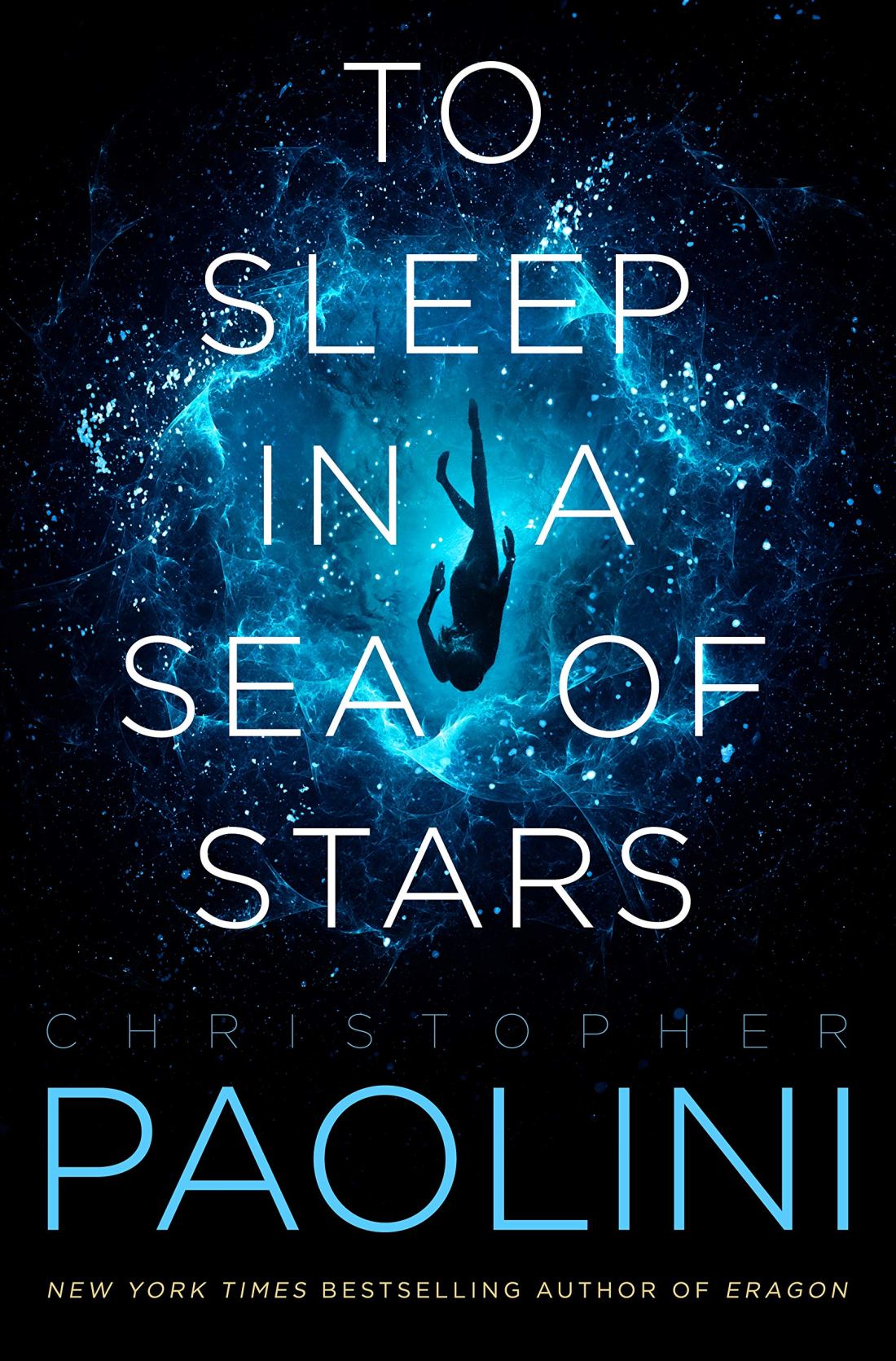
Book Review: To Sleep in a Sea of Stars by Christopher Paolini

Cover of the book To Sleep in a Sea of Stars by Christopher Paolini
To Sleep in a Sea of Stars
by Christopher Paolini
Tor, 2020

This review was first published by Booklist on September 1, 2020.

**STARRED REVIEW** Paolini’s first foray into adult science fiction doesn’t do anything by halves. This is a massive work of space opera with a deep history and complex mythology, epic in scope and packed with action. Kira Navárez, a xenobiologist exploring a new planet, stumbles upon a piece of alien technology that upends human-settled space and sends her on a quest across the galaxy in the company of a scrappy group of traders and a possibly insane superintelligence, all in the middle of an interstellar war. Humanity’s first contact with aliens could spell extinction: the stakes don’t get any higher than this. The concepts in this book aren’t all that original, but the book is not derivative: this is Paolini’s love letter to the genre. The skills honed in his YA fantasy series, Inheritance (Eragon, 2003), are on full display here in his vibrant world building, especially in the mythology of the alien tech. Paolini populates this universe with a large cast of interesting and relatable characters, and mostly avoids reductive good guy/bad guy dynamics, lending the story a sincere emotional depth. Highly recommended for fans of James A. Corey’s The Expanse series and for fantasy fans willing to try space opera.

HIGH-DEMAND BACKSTORY: Paolini’s first novel since 2011 is a major departure, and those who grew up on his Inheritance series will be eager to see what he does in a novel sans dragons.

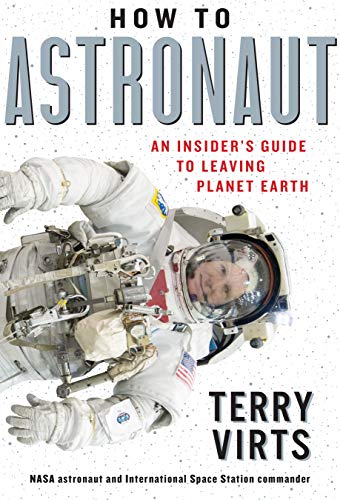
Book Review: How to Astronaut: An Insider’s Guide to Leaving Planet Earth by Terry Virts

Cover of the book How to Astronaut: An Insider's Guide to Leaving Planet Earth by Terry Virts
How to Astronaut: An Insider’s Guide to Leaving Planet Earth
by Terry Virts
Workman, 2020

This review was first published by Booklist in August 2020.

How to Astronaut is an amusing and enlightening insight into an astronaut’s work life. Virts joined NASA near the end of the construction of the International Space Station (ISS) and continued as an ISS crew member. During his time, he led crews, performed space walks, docked the space shuttle to the ISS, worked as a medical officer, performed many science experiments, and even filmed an IMAX documentary—all of this after his first career as a fighter and test pilot with the U.S. Air Force. He shares stories from his many experiences: what it’s like to train, the terror of a launch, how to handle weightlessness, the pains of suiting up, how physically demanding space walks are, what the Earth is like from orbit, how astronauts eat, sleep, work, play, and—yes—go to the bathroom. This is an eye-opening insider’s view on what it’s really like to be an astronaut: the joys, the dangers, the fear, and the day-to-day reality of it. Virts’ writing is humorous, playful, down to earth, and often wise.

Book Review: Weird Earth: Debunking Strange Ideas About Our Planet by Donald R. Prothero

Cover of the book Weird Earth: Debunking Strange Ideas About Our Planet by Donald R. Prothero
Weird Earth: Debunking Strange Ideas About Our Planet
by Donald R. Prothero
Red Lightning, 2020

This review was first published by Booklist in August 2020.

In his latest, science teacher and proud skeptic Prothero takes on a raft of pseudo- and anti-scientific beliefs and handily debunks them: flat earth, hollow earth, young earth, geocentrism, moon landing conspiracies, faked fossils, flood myths, Atlantis, dowsing, and more. He briefly describes these schools of thought, where they come from, and summarizes the scientific evidence which shows that these beliefs are incorrect. But he wants to do more than just debunk. He believes scientists need to explain why and how they come to the conclusions they do. He ends most of the chapters with a section called “How We Know,” listing all the evidence supporting the relevant scientific conclusions. Also valuable is his introduction, in which he neatly summarizes how science works, how it evaluates evidence, the requirements for peer review and burden-of-proof, and how that process offers trustworthy understanding. Finally, he explores the reasons why some people reject science. Popular trust in science is eroding alongside decreases in scientific literacy; Prothero wants scientists to show their work to help earn that trust back.