Book Review: Take Us to Your Chief and Other Stories by Drew Hayden Taylor

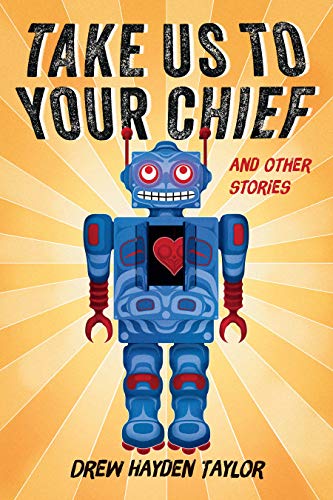
Cover of the book Take Us to Your Chief and Other Stories by Drew Hayden Taylor
Take Us to Your Chief and Other Stories
by Drew Hayden Taylor
Douglas & McIntyre, 2017

This review was first published by Booklist on March 3, 2017.

Taylor is on a mission to create science fiction written by indigenous First Nations authors. That alone makes his collection of short stories important. These nine stories are highly entertaining, the quality is high, and his range of tone is impressive. The First Nations perspective gives an interesting take on the “first contact” theme, paralleling the arrival of Europeans to the Americas. Most of these stories are humorous, but there are a couple serious ones thrown in. Many have a 1950s, Silver Era, silly pop-movie feel, which lends them a nostalgic patina. Unfortunately, the retro feel of these stories is at odds with the progressive goal of the author, coming across a tad dated and frivolous. The collection is a fun and quick read, but as entertaining as these stories are, such a slim volume isn’t quite enough to satisfy. Still, readers will be looking for more to come from Taylor.
Book Review: Avengers of the Moon by Allen Steele

Cover of the book Avengers of the Moon by Allen Steele
Avengers of the Moon
by Allen Steele
Tor, 2017

This review was first published by Booklist on March 3, 2017.

In Avengers of the Moon, Steele resurrects Captain Future, a hero of classic pulp serials created by Edmond Hamilton, and retcons him for the twenty-first century. This all-new origin story introduces Captain Future and his crew to a new audience, pits him against his archnemesis, and sets up a continuing series. It’s a classic rollicking adventure story—exciting and entertaining, with enough callbacks to the original to appeal to existing fans. Steele states in his afterword that his intent is to recapture the magic of old pulp SF, but he doesn’t completely succeed. This isn’t the fault of the book—it’s well written, appropriately pulpy, and fun to read. It’s just that pulp doesn’t necessarily work with a modern audience. The pulp era grew out of a sense of wonder; audiences then possessed a wide-eyed credulity. Modern readers aren’t that credulous anymore. Without that innocence and idealism, pulp SF is an awkward fit. Still, this book is worth reading for the fun of it.

Book Review: Everything I Need to Know I Learned in The Twilight Zone by Mark Dawidziak

Cover of the book Everything I Need to Know I Learned in The Twilight Zone by Mark Dawidziak
Everything I Need to Know I Learned in The Twilight Zone
by Mark Dawidziak
St. Martin’s/Thomas Dunne, 2017

This review was first published by Booklist on March 3, 2017.

This book is a delightful love letter to the original The Twilight Zone television series, the primary writers of the show, and its creator, Rod Serling. The narrative is presented as a lighthearted guide to life, as Dawidziak sets forth 50 “life lessons” that can be found in various episodes. Some of the lessons are a bit on the nose, but make no mistake—as humorous as this book is, these lessons are substantial. The Twilight Zone episodes functioned as mini-morality plays, after all, steeped in Serling’s belief in the fundamental dignity of individuals. One could do worse than try to live by the book’s precepts. The book reminds us, too, of how revolutionary and brilliant the show was. Dawidziak includes statements from a variety of showbiz movers and shakers about why The Twilight Zone was important and the influence it had on them. This book won’t stand as a scholarly work, but that’s not the point: it’s a joyful celebration of being a fan. If nothing else, it will make readers want to rewatch the show—and that’s surely a welcome thing.

Book Review: The Wrong Dead Guy by Richard Kadrey

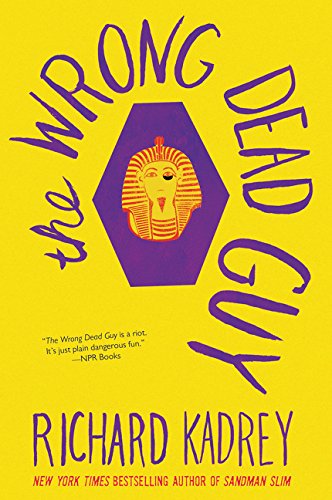
Cover of the book The Wrong Dead Guy by Richard Kadrey
The Wrong Dead Guy
by Richard Kadrey
Harper/Voyager, 2017

This review was first published by Booklist on January 9, 2017.

Coop and company are back for their second supernatural adventure (after The Everything Box, 2016). This time, they’re facing a reanimated mummy bent on world domination (and finding his old girlfriend) while Coop gets acclimated to his new role in DOPS. There are inept suburban animal-rights activists, a crooked used-car salesman, machinating DOPS agents, a possessed museum guard, crooked old mystics, a professor transformed into a cat trapped in a television mounted on a tentacled robot, a forgotten department in the bowels of DOPS with a strange box in it . . . Kadrey fans have plenty of his signature ridiculousness to sink their teeth into: Douglas Adams meets Clive Barker in a James Ellroy setting. This is smart, witty, and biting comedy. There’s a bit of a sophomore slump: the stakes of the conflict are lower than its predecessor, and the side characters feel somewhat perfunctory. Still, all the elements come together and work well, and Kadrey at slightly less than his best remains one of the best out there. This new series remains worthwhile.

Book Review: Cyberbullying and the Wild, Wild Web: What Everyone Needs to Know by J. A. Hitchcock

Cover of the book Cyberbullying and the Wild, Wild Web: What Everyone Needs to Know by J. A. Hitchcock
Cyberbullying and the Wild, Wild Web: What Everyone Needs to Know
by J. A. Hitchcock
Rowman & Littlefield, 2017

This review was first published by Booklist on December 15, 2016.

This book will be a useful resource for anyone who wants to know how to deal with cyberbullying. Chock-full of examples of what cyberbullying is—each chapter opens with the story of a victim—the narrative’s greatest value is the well-informed and practical advice it offers about how to handle cyberbullies and what parents can do if their child is the one doing the bullying. The author also provides insightful analysis of what makes cyberbullying different and why it can be more harmful than other forms of bullying. The work concludes with a comprehensive list of resources and support organizations available to those who need them. Parents will appreciate the guidance. Hitchcock founded one of the first organizations dedicated to combating online abuse and is a recognized expert in the field. She approaches the subject from the perspective of her own experiences, which testifies to her authority on the subject, but at times it comes across as a bit self-promotional. However, she also interviews several other cyberbullying experts and includes their insights, making this a well-rounded resource for parents and educators.

Book Review: Power Play: How Video Games Can Save the World by Asi Burak and Laura Parker

Cover of the book Power Play: How Video Games Can Save the World by Asi Burak and Laura Parker
Power Play: How Video Games Can Save the World
by Asi Burak and Laura Parker
St. Martin’s, 2017

This review was first published by Booklist on December 15, 2016.

This book is a survey of the movement to use video games as tools to educate and empower positive social change. Each chapter dives into a specific game or media company to present the history of this movement through real-world examples. Games can be forces for good—these games have been used to foster empathy and compassion, to illuminate mutual understanding, to promote involvement in civics and science, and even to help the sick deal with illness. Lead author Burak has been a pivotal figure in the Games for Change movement. Just about all of the games profiled in this book were projects that his organization, Games for Change, was involved with in some way. This makes him biased on the subject, certainly, but it also makes him better informed about the state of social-impact games than just about anyone else. This is an insider’s perspective, and the authors make a compelling argument. Games for Change might just change the world someday. It will be exciting to see what comes next.

Book Review: Last Year by Robert Charles Wilson

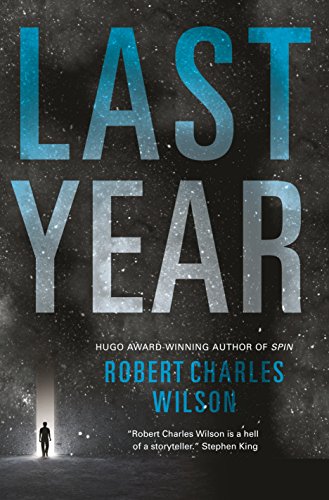
Cover of the book Last Year by Robert Charles Wilson
Last Year
by Robert Charles Wilson
Tor, 2016

This review was first published by Booklist on November 15, 2016.

People from the twenty-first century have opened a portal in rural Illinois that allows them to visit 1877. They’ve built a tourist resort called the City of Futurity, where wealthy individuals can experience the past and locals can catch a sanitized glimpse of the future. Jesse Cullum is a native of 1877 who works for the City. A man with a violent history, he meets and falls for a woman from the future. Meanwhile, someone is smuggling future technology into the past and sowing discord toward the City. Soon enough, it all starts to fall apart. There’s a lot going on in the latest from Hugo Award–winning Wilson. It’s an alternate-history novel, a time-travel story, and a whodunit all in one. It explores parallel universes, corporate greed, and culture clashes while critiquing the entitlement of modern society and our tendency to romanticize the past. Wilson wrangles all these threads with skill and vividly renders the reality of the past. The story is well paced, builds to an epic crisis, and makes for a satisfying read.

Book Review: The Social Organism: A Radical Understanding of Social Media to Transform Your Business and Life by Oliver Luckett and Michael J. Casey

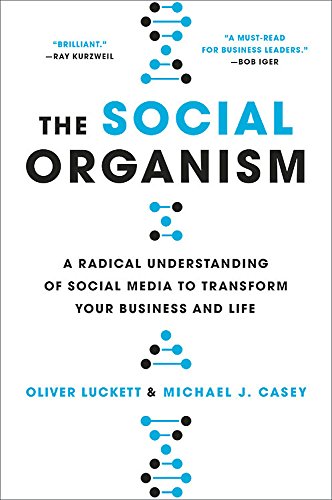
Cover of the book The Social Organism: A Radical Understanding of Social Media to Transform Your Business and Life by Oliver Luckett and Michael J. Casey
The Social Organism: A Radical Understanding of Social Media to Transform Your Business and Life
by Oliver Luckett and Michael J. Casey
Hachette, 2016

This review was first published by Booklist on November 1, 2016.

Luckett and Casey are established authorities in the world of social media. If anyone can help us understand this digitally connected world, it’s them—and they don’t disappoint. They propose that the best way to comprehend the nature of social media is through the model of the seven characteristics of biological life. The book offers a deeply informed and nuanced portrait of the social-media landscape, supported by numerous examples. Although the outlook is hopeful, the authors clearly recognize the pitfalls and dangers social media presents and argue that we must guide its development if we want to make it better. The title implies that this will be a practical how-to manual for anyone who wants to take advantage of social media. It’s not. This is an overarching theory of social media, spanning disciplines from biology to anthropology to business to computer science. Whether or not you agree with their vision for what social media can be and do, this work offers a compelling model to understand what social media is.

Book Review: Into the Guns by William C. Dietz

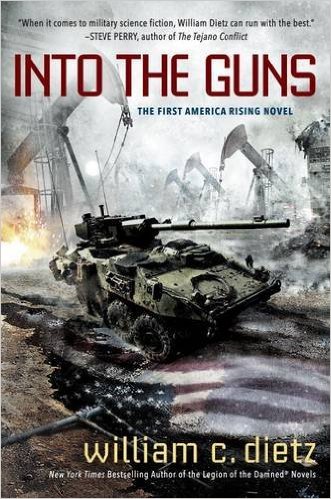
Cover of the book Into the Guns by William C. Dietz
Into the Guns
by William C. Dietz
Ace, 2016

This review was first published by Booklist on October 13, 2016.

Into the Guns begins a new near-future military sf series from Dietz. In 2018, several meteors strike the earth and decimate civilization, and the American government is left in turmoil. Members of the armed forces are left stranded without command. The southern states secede from the union, a second Civil War looms, and a new president struggles to rebuild. The plot’s not very original, but it works. Dietz’s depictions of military operations and hardware are detailed. That alone is a major appeal factor. He delights in throwing around military jargon, although he’s inconsistent about defining some of the terms for readers unfamiliar with the argot. Unfortunately, characters are sketches more than fully rendered. Yet this will be a worthy purchase, given Dietz’s many fans.

Book Review: Remnants of Trust by Elizabeth Bonesteel

Cover of the book Remnants of Trust by Elizabeth Bonesteel
Remnants of Trust
by Elizabeth Bonesteel
Harper/Voyager, 2016

This review was first published by Booklist on September 15, 2016.

This second entry in the Central Corps series is wall-to-wall action. It starts with a bang, opens new vistas of political and corporate intrigue, and pulls readers along to an ending that will leave them wanting more. After the events of The Cold Between (2016), Elena Shaw and Greg Foster were court-martialed for their actions. But instead of punishment, they’re put back on board their ship and assigned to patrol the Third Sector. When Syndicate raiders attack and destroy a fellow Corps ship, they must partner with a PSI captain and her crew to pursue the attackers. Elena’s former crewmates and commander open old wounds, as the pursuit leads to the site of one of her worst memories. Worse yet, there’s a saboteur on board. Bonesteel’s characters are what really stand out amid all the action—the relationships between them ground everything in the story, though this novel ditches the romance that characterized its predecessor in favor of more straightforward military science fiction. Fans of David Drake’s Honor Harrington series will find much to enjoy here.