Book Review: Ka-Boom! The Science of Extremes by David Darling

Cover of the book Ka-Boom! The Science of Extremes by David Darling
Ka-Boom! The Science of Extremes
by David Darling
Oneworld, 2024

This review was first published by Booklist on June 14, 2024.

People are perennially fascinated by extremes. What’s the most massive object we know of? The fastest computer? The loudest sound? The longest-lived being? The coldest temperature? The biggest explosion? Darling serves up a fun, informative, and quirky overview of some fascinating science facts. He surveys physics, space, materials, technology, and the natural world, offering myriad examples of the extremes we’ve discovered in the course of our exploration of our universe. There’s something for everyone in this quick and engaging read. There may not be much new information here for existing science aficionados, he repeats a few examples in different subject sections, and he doesn’t go into much depth on any of them, but his delight in exploring this material is invigorating. Even inveterate science geeks should enjoy this time spent with fascinating facts. Ka-Boom! is most valuable as an ideal introduction to the science of extremes for people just starting out on their journey into the vast realms of scientific knowledge.
Book Review: The Heart and the Chip: Our Bright Future with Robots by Daniela Rus and Gregory Mone

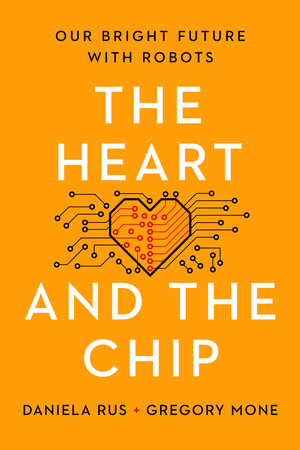
Cover of the book The Heart and the Chip: Our Bright Future with Robots by Daniela Rus and Gregory Mone
The Heart and the Chip: Our Bright Future with Robots
by Daniela Rus and Gregory Mone
Norton, 2024

This review was first published by Booklist on February 9, 2024.

Rus, Director of the MIT Computer Science and Artificial Intelligence Laboratory, knows more about robots and artificial intelligence than just about anyone. Here she takes readers on a tour of the cutting edge of this technology. She assures us there’s no danger of a robot apocalypse. She and many of her colleagues envision a world where robots and people cooperate to enhance our abilities, where the human heart and the computer chip work together to make the world better for everyone, especially people who are disabled or disadvantaged. Modern robots aren’t clunky metal contraptions as they’re so often portrayed. They can be made from fabrics, plastics, just about anything, in all kinds of shapes and sizes, and can be used in everything from non-invasive surgeries to training athletes to helping the elderly maintain mobility and independence. Robots can help us solve deep-set problems, even aid us in healing the planet. Not a world of robot overlords, but a world full of Iron Man suits made of stylish fabrics instead of steel. It’s a compelling vision.

2023: My Year in Reading

For a list of my favorite books I read this year, go here >

This was a very low-key year in reading for me. I read 46 books—less than most past years, but I think still a respectable amount—roughly 40% of which were for Booklist. That’s ok. I had a lot going on at work, so reading took a bit of a back seat. I finally got around to reading all of Becky Chambers’ stuff, she’s been on my To Read list for years!

I read 26 nonfiction titles and 20 fiction. I’ve been more interested in nonfic as I get further into middle age, which isn’t something I anticipated. I discovered a new favorite author and read one of the wisest books I’ve ever read.

Books Read in 2023

Continue reading “2023: My Year in Reading”

Book Review: How to Win Friends and Influence Fungi: Collected Quirks of Science, Tech, Engineering, and Math from Nerd Nite by Chris Balakrishnan and Matt Wasowski

Cover of the book How to Win Friends and Influence Fungi: Collected Quirks of Science, Tech, Engineering, and Math from Nerd Nite by Chris Balakrishnan and Matt Wasowski
How to Win Friends and Influence Fungi: Collected Quirks of Science, Tech, Engineering, and Math from Nerd Nite
by Chris Balakrishnan and Matt Wasowski
St. Martin’s, 2024

This review was first published by Booklist on December 22, 2023.

How to Win Friends and Influence Fungi is a selection of various Nerd Nite presentations collected in written form. As one would expect from Nerd Nite, these presentations range across a remarkable array of subjects, and they vary in length (although none is more than a handful of pages). The 71 essays collected here are loosely arranged into 11 topics (animals, space, math, bodily fluids, etc.) and span the gamut from stories of animal procreation to how cups of tea led to better scientific, experimental protocols to the multiple definitions of infinity. The appeal of Nerd Nites—people presenting information on subjects they’re passionate about—translates well into book form. It’s quirky, fun, engrossing, and informative. It’s a delightful collection! Perfect for existing fans of Nerd Nite, it also serves as an ideal introduction for anyone who may not have heard of these gatherings before. It should appeal to nerds and information lovers of all ilk, despite some salty language and subject matter.

Book Review: 42 Reasons to Hate the Universe: And One Reason Not To by Chris Ferrie and others

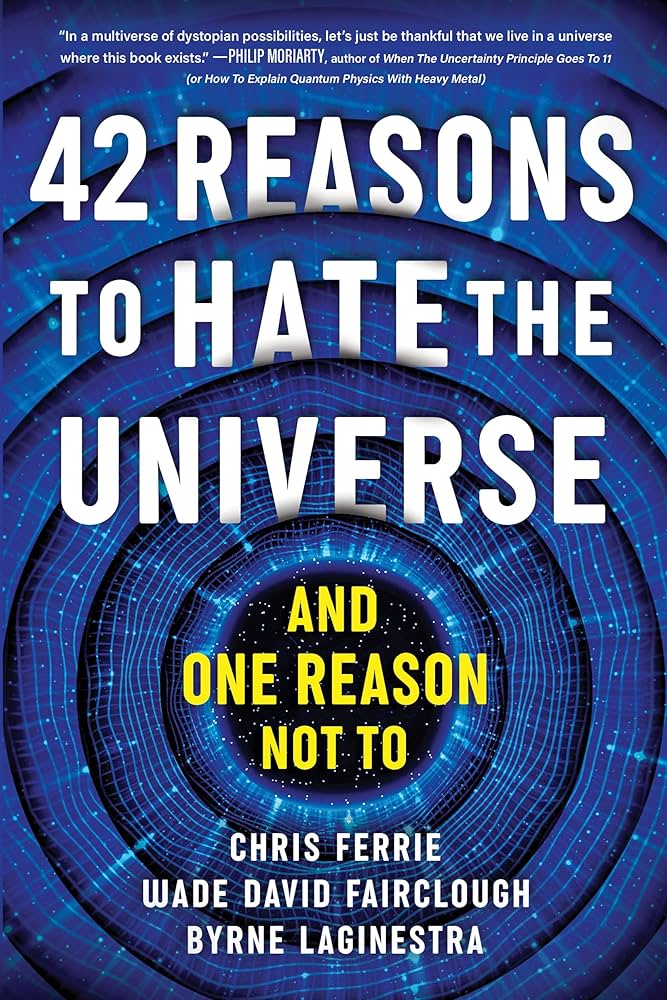
Cover of the book 42 Reasons to Hate the Universe: And One Reason Not To by Chris Ferrie and others
42 Reasons to Hate the Universe: And One Reason Not To
by Chris Ferrie and others
Sourcebooks, 2024

This review was first published by Booklist on December 1, 2023.

Ferrie, best known for his Baby University board books, presents a delightfully profane and cranky work for adults. As the title states, he and his coauthors describe 42 ways the universe wants to kill us. Most of these threats exist right here on Earth (animals, earthquakes, volcanoes, climate change, the air we breathe and water we drink), but things get much worse once we get into space (cosmic radiation, black holes, the violent death of stars, various theories as to how the universe might end). Some ideas are more plausible than others, but it all paints a clear picture of just how precarious and unlikely it is that complex, intelligent life should exist at all. The question of whether we’re alone suggests answers that are equally unpleasant. Each chapter is relatively short, but all the essential information is there to make sure readers understand just how vicious our universe is. It’s funny, snarky, and bleak while still being informative and engrossing. It’s an apt approach for our cynical times.

Book Review: Unmasking AI: My Mission to Protect What Is Human in a World of Machines by Joy Buolamwini

Cover of the book Unmasking AI: My Mission to Protect What Is Human in a World of Machines by Joy Buolamwini
Unmasking AI: My Mission to Protect What Is Human in a World of Machines
by Joy Buolamwini
Random, 2023

This review was first published by Booklist on November 1, 2023.

**STARRED REVIEW** Buolamwini fell in love with robotics as a teenager and found a passion for using technology to solve real-world problems when she studied in Africa. At MIT she discovered the burgeoning world of artificial intelligence and, hidden within it, programmatic biases she calls “the coded gaze.” AI encodes the personal assumptions of the individuals who develop it as well as the structural biases of the communities who use it. Trained on datasets that reflect the social inequities of our society, AI too often ends up perpetuating prejudice. As we increasingly rely on AI to handle decision-making responsibilities in everything from hiring and housing to criminal identification and immigration, these baked-in biases have immense power to destroy lives and worsen social inequalities. Buolamwini takes readers step-by-step through an examination of how such biases enter AI in the first place, how they affect people in the real world, and how we can correct them. Woven through her critique of this increasingly important technology is her personal story of discovery and awakening. This is as much a memoir as it is a clarion call for change. Unmasking AI belongs alongside Cathy O’Neil’s Weapons of Math Destruction (2016) and Safiya Umoja Noble’s Algorithms of Oppression (2017) as essential warnings for our time. It’s an important corrective to our unquestioning embrace of technology.

Book Review: 42: The Wildly Improbable Ideas of Douglas Adams by Douglas Adams. Ed. by Kevin Jon Davies

Cover of the book 42: The Wildly Improbable Ideas of Douglas Adams by Douglas Adams. Ed. by Kevin Jon Davies
42: The Wildly Improbable Ideas of Douglas Adams
by Douglas Adams. Ed. by Kevin Jon Davies
Unbound, 2023

This review was first published by Booklist on September 22, 2023.

Douglas Adams was one of the most original thinkers and writers of the last half century. Editor Davies was granted permission to access Adams’ archive of personal papers, and here he presents various letters, notes, scripts, and project ideas, with occasional glimpses into Adams’ interior life, written in the man’s own hand. This isn’t a biography but an overview of the collection, presenting high quality scans of dozens of documents. Much of this material is transcribed for easier reading and informational captions provide context. Also included are letters to Adams written by some of those who knew him best while he was alive. The book’s greatest value is the insight it provides on the ways Adams’ ideas developed over time, from their initial genesis to eventual use on the page, the themes and concepts that ran through so much of his work. Davies’ highlights will make readers yearn to dive deeper and see more of the treasures lying within this archival collection. This is for committed fans of Adams but it likely won’t appeal to casual readers.

Book Review: Grace in All Simplicity: Beauty, Truth, and Wonders on the Path to the Higgs Boson and New Laws of Nature by Chris Quigg and Robert N. Cahn

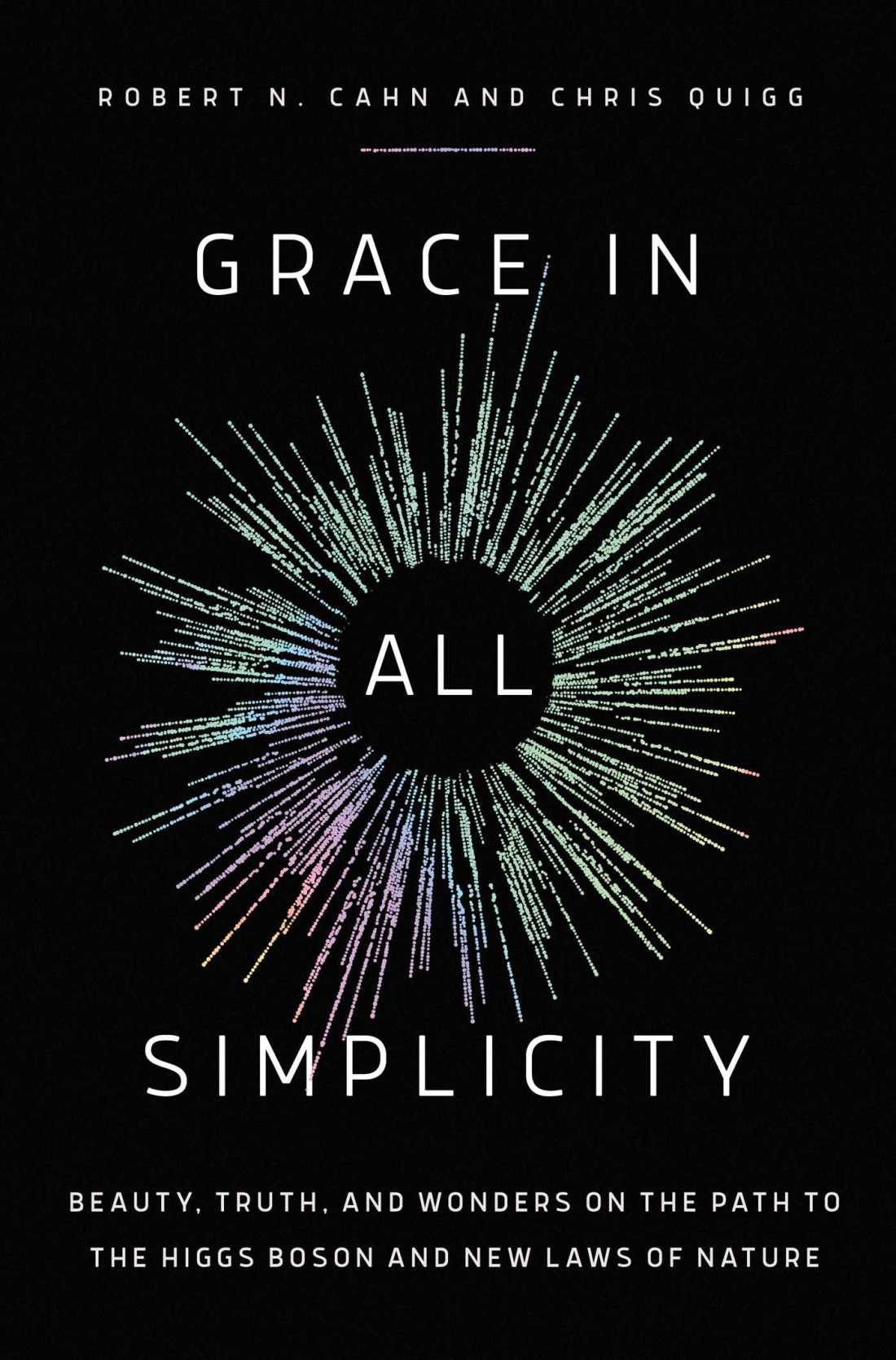
Cover of the book Grace in All Simplicity: Beauty, Truth, and Wonders on the Path to the Higgs Boson and New Laws of Nature by Chris Quigg and Robert N. Cahn
Grace in All Simplicity: Beauty, Truth, and Wonders on the Path to the Higgs Boson and New Laws of Nature
by Chris Quigg and Robert N. Cahn
Pegasus, 2023

This review was first published by Booklist on September 1, 2023.

Grace in All Simplicity traces the development of our current, standard model of physics from the earliest days of atomic theory to the development of particle physics to challenges of dark matter and energy. Cahn and Quigg highlight the many people who contributed to this history, alongside the technology that made it possible and the experiments that revolutionized our understanding of the universe. This isn’t a chronological account. By bouncing around the time line, they highlight the connectedness of the underlying concepts and the ways experiment and theory interact over time. There’s equal attention paid to theory, experiment, and technology. All are necessary to build our best scientific understandings. Theory requires experiment, technology enables new experiments, and experiments deliver results which require new theory. It’s all connected. While there’s no math, the content is very dense, chock-full of concepts and names of people and particles. Because this isn’t a chronological account, the dates can get muddled, but the payoff is a wonderful and engaging dive into the last century of revolutionary physics.

Book Review: The Secret Lives of Numbers: A Hidden History of Mathematics by Kate Kitagawa and Timothy Revell

Cover of the book The Secret Lives of Numbers: A Hidden History of Mathematics by Kate Kitagawa and Timothy Revell
The Secret Lives of Numbers: A Hidden History of Mathematics
by Kate Kitagawa and Timothy Revell
Morrow, 2023

This review was first published by Booklist in July 2023.

**STARRED REVIEW** The history of math is typically taught from an exclusively Greco-Eurocentric perspective as a parade of great men. This significantly distorts reality. Mathematics has been invented in one form or another by every culture on Earth, and the exclusion of women and people of color from traditional narratives is particularly glaring. Kitagawa and Revell do an excellent job of broadening our view to the far more vibrant, collaborative, diverse, and interesting history. Different cultures developed the same ideas at different times, and there is no one inventor of any given idea. The foundations of calculus were discovered by mathematicians in India centuries before Newton or Leibniz were even born, for example, and binary notation has roots in the traditional hexagrams of the Chinese Book of Changes. The mathematics of different cultures were driven by different needs and values, and some of our biggest mathematical revolutions were fueled when these different traditions encountered and altered each other. Math, like all human endeavors, has been subject to politics, religious and cultural influences, and struggles for power and wealth. Mathematics is the most powerful tool humans ever invented, and this book is a welcome corrective to our understanding of how it came to be.

Book Review: Out There: The Science behind Sci-Fi Film and TV by Ariel Waldman

Cover of the book Out There: The Science behind Sci-Fi Film and TV by Ariel Waldman
Out There: The Science behind Sci-Fi Film and TV
by Ariel Waldman
Running Press, 2023

This review was first published by Booklist on June 1, 2023.

Waldman, host of the space- and pop- culture-focused show Offworld, offers a delightful collection of conversations about the role of popular sf films and television in shaping our vision of space and what the future may hold. She presents conversations she’s had with NASA astronauts, physicists, astronomers, engineers, SETI researchers, and other analysts on subjects such as spaceship and spacesuit design, how we might deal with loneliness and communicate with aliens, black holes, artificial gravity, matter transporters, clones, cyborgs and artificial intelligence, the skills modern and future astronauts will need to have, and more. Luminaries such as Frank Drake (creator of the famed Drake Equation), Mythbuster’s Adam Savage, and speculative fiction author Annalee Newitz (to name but a few of the most well-known) detail their perspectives on how sf has and continues to influence how we relate to science and popular expectations for human beings’ future in space. Most importantly, this work illustrates the importance of imagination in the pursuit of science. It’s a concise and rewarding book.