Book Review: Super Fly: The Unexpected Lives of the World’s Most Successful Insects by Jonathan Balcombe

Cover of the book Super Fly: The Unexpected Lives of the World's Most Successful Insects by Jonathan Balcombe
Super Fly: The Unexpected Lives of the World’s Most Successful Insects
by Jonathan Balcombe
Penguin, 2021

This review was first published by Booklist on May 1, 2021.

Flies, two-winged flying insects that include everything from houseflies to mosquitoes to midges, are some of the least studied insects on the planet, which is surprising given that they’re among the most populous and varied. But associations with filth and blight, biting and pestilence, and crop destruction don’t make them very appealing. Balcombe wants to change that. Flies are fascinating, vital, and beautiful creatures. Flies are essential to the food chain, among the most common plant pollinators, and clean up rot and decay. They help solve crimes and heal wounds, and even unlock the possibility of insect sentience. Most famous for helping scientists study genetic inheritance via fruit flies, Diptera, it turns out, have far more to teach us. Balcombe also warns of the potential catastrophic effects of human actions on fly populations. Monoculture and pesticides are greatly reducing their numbers, but without flies, ecosystems will collapse. They may be pests, but flies deserve our respect and admiration. This is an excellent overview of what we know and what we’re discovering about flies.
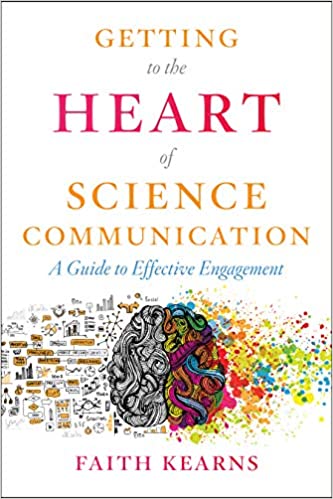
Book Review: Getting to the Heart of Science Communication: A Guide to Effective Engagement by Faith Kearns

Cover of the book Getting to the Heart of Science Communication: A Guide to Effective Engagement by Faith Kearns
Getting to the Heart of Science Communication: A Guide to Effective Engagement
by Faith Kearns
Island, 2021

This review was first published by Booklist on April 30, 2021.

With more than 25 years of experience as a science communicator, Kearns has a persuasive vision for how to improve the relationship between science and the public. She covers the history of science communication and offers guidance to make it more effective, illustrated by the experiences of a range of science communicators at work today. Science communication can’t be an objective authority handing down information to the public. Communicators must connect with people in the context of lived experience and the trauma that accompanies the natural and human-made disasters science seeks to solve. Science communicators aren’t separate from the public, instead often living in the communities they serve and affected by the same traumas. Science communication must engage with empathy, negotiate interpersonal and structural conflicts, interrogate the privilege and lack of diversity in the field, and embrace the emotional landscape of science. This book is written for professional science communicators but will appeal to anyone interested in a growing field, and it offers good advice about communication that applies far beyond the confines of science.

Book Review: Chemistry for Breakfast: The Amazing Science of Everyday Life by Mai Thi Nguyen-Kim

Cover of the book Chemistry for Breakfast: The Amazing Science of Everyday Life by Mai Thi Nguyen-Kim
Chemistry for Breakfast: The Amazing Science of Everyday Life
by Mai Thi Nguyen-Kim
Greystone, 2021

This review was first published by Booklist on April 1, 2021.

Nguyen-Kim is a chemist and a science communicator who runs a popular German-language YouTube channel. Her first book takes readers on a journey through her typical day, from waking up and having her first cup of coffee through visiting a friend to charging her smartphone to an evening dinner party, showing how chemistry defines the world along the way in terms understandable to science newbies. Chemistry is central to food and nutrition, cosmetics and cleaning products, technology, even moods and how we fall in love. (The nutrition labels examined are German, not American.) Nguyen-Kim uses everyday examples to teach the basics of chemistry, and illustrates (aided by illustrations by claire Lenkova) that scientists are cool and interesting people, far from the stodgy stereotype. The more we know about how chemistry works, the better choices we can make about the things we use and consume. Ultimately, she wants to inspire a passion for science, which makes the world more fascinating, more beautiful, and more complex. Altogether, this is an impassioned, quirky, fun, and engaging read.

This title has been recommended for young adult readers:

YA/Curriculum Support: Teens needing a rudimentary breakdown of chemistry will find this engaging book helpful. —Susan Maguire

Book Review: Liftoff: Elon Musk and the Desperate Early Days That Launched SpaceX by Eric Berger

Cover of the book Liftoff: Elon Musk and the Desperate Early Days That Launched SpaceX by Eric Berger
Liftoff: Elon Musk and the Desperate Early Days That Launched SpaceX
by Eric Berger
Morrow, 2021

This review was first published by Booklist on February 15, 2021.

Tech billionaire Elon Musk set out to revolutionize the space industry, and founded aerospace company SpaceX in the hope of one day landing humans on Mars. Berger, senior space editor at Ars Technica, was granted unprecedented access to interview Musk, as well as current and former employees of SpaceX, and here shares first-hand accounts of their experiences. The main focus isn’t Musk himself, but the engineers, technicians, vice presidents, and lieutenants: passionate and driven people bold enough to take on Musk’s ambitious vision. Berger shares how they came to work for Musk, their experiences of toil and sweat, uncertainty and victory. There’s very little technical detail in this book; instead, it’s a story about people and their faith in one man’s compelling mission. What stands out most is the author’s command of pacing. He depicts race-against-the-clock crises as fast-paced as a thriller, with moments reminiscent of Apollo 13 or The Martian (albeit with slightly lower stakes). An exciting and insightful read for anyone interested in the story behind the early days of SpaceX.

2020: My Year in Reading


I read 41 books this past year, which is one more than the least amount I’ve read of any year since I started tracking (2014 only had 40). Honestly, this is more than I thought it would be because… well, because 2020. This was not an easy or normal year. 22 titles were assigned to me by Booklist to review.

2020 is the first year in the past six that I didn’t track my reading in depth. I kept a list of titles but I didn’t record start or end dates, or the number of days spent on each book. I explained why I chose not to keep a detailed reading list anymore in a previous post.

Now it’s time to assess: Was this a good choice?

Continue reading “2020: My Year in Reading”

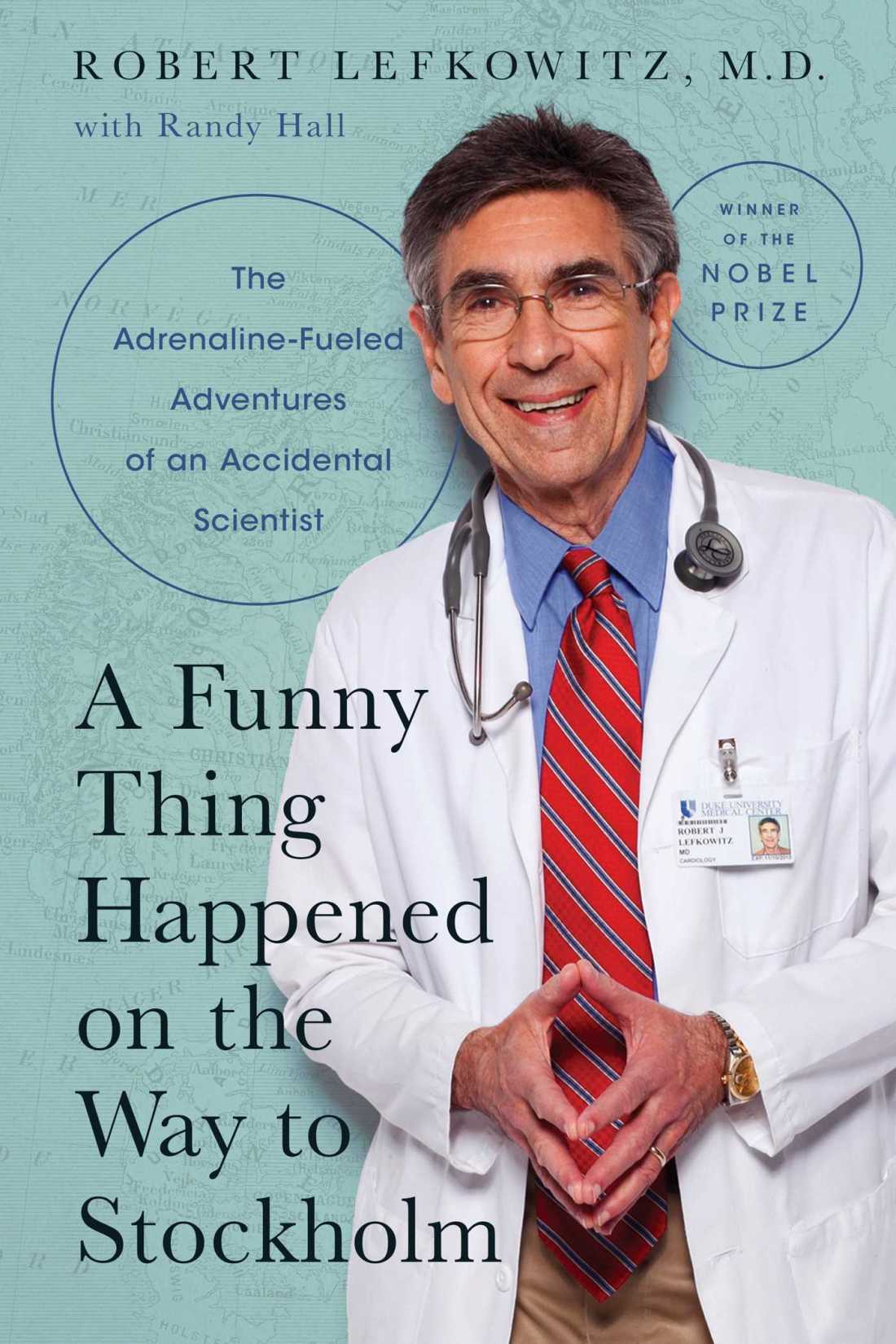
Book Review: A Funny Thing Happened on the Way to Stockholm: The Adrenaline-Fueled Adventures of an Accidental Scientist by Robert Lefkowitz and Randy Hall

Cover of the book A Funny Thing Happened on the Way to Stockholm: The Adrenaline-Fueled Adventures of an Accidental Scientist by Robert Lefkowitz and Randy Hall
A Funny Thing Happened on the Way to Stockholm: The Adrenaline-Fueled Adventures of an Accidental Scientist
by Robert Lefkowitz and Randy Hall
Pegasus, 2021

This review was first published by Booklist on January 1, 2021.

Lefkowitz grew up wanting to be a doctor, not a scientist. But life took him down some unexpected paths and his pioneering research identifying the nature and structure of beta receptors won him the Nobel Prize in Chemistry in 2012. An avid and inveterate storyteller, he chronicles his life in medicine and science. Well on his way to becoming a cardiologist, he found himself drawn to the world of medical research, where he contributed to groundbreaking discoveries for more than 40 years, and became one of the field’s great mentors. Told with humor and humility, what shines through most is his love of stories. This book came about because of his penchant for sharing tales about his life, but he also argues for the central importance of storytelling in both patient care and scientific research: knowing a patient’s story is essential to understanding their ailments, and research data doesn’t mean anything without a story to make sense of it. His passion for science and discovery, for helping people, and for celebrating stories is infectious.

Book Review: Extraterrestrial: The First Sign of Intelligent Life beyond Earth by Avi Loeb

Cover of the book Extraterrestrial: The First Sign of Intelligent Life beyond Earth by Avi Loeb
Extraterrestrial: The First Sign of Intelligent Life beyond Earth
by Avi Loeb
HMH, 2021

This review was first published by Booklist on December 1, 2020.

On October 19, 2017, astronomers discovered ‘Oumuamua, the first known interstellar object to pass through our solar system. But its behavior was strange. While many hypotheses have been presented to explain its anomalies, Loeb, the longest-serving chair of Harvard’s Department of Astronomy and founder of the Black Hole Initiative, postulates the most likely explanation is that ‘Oumuamua is evidence of extraterrestrial intelligence. He offers strong evidence to support this conclusion, but perhaps more valuable is how he uses this as a jumping-off point for much broader musings on the state of science. He critiques the tendency of science to be too conservative and the pernicious effects of scientific elitism toward the public. He considers the larger implications of what it would mean if we do obtain proof of other intelligent life in the universe, including the need for humanity to overcome our shortsightedness and invest in further exploration. Some of his digressions are a bit of a leap, but whether or not readers agree with him, his vision and curiosity are compelling.

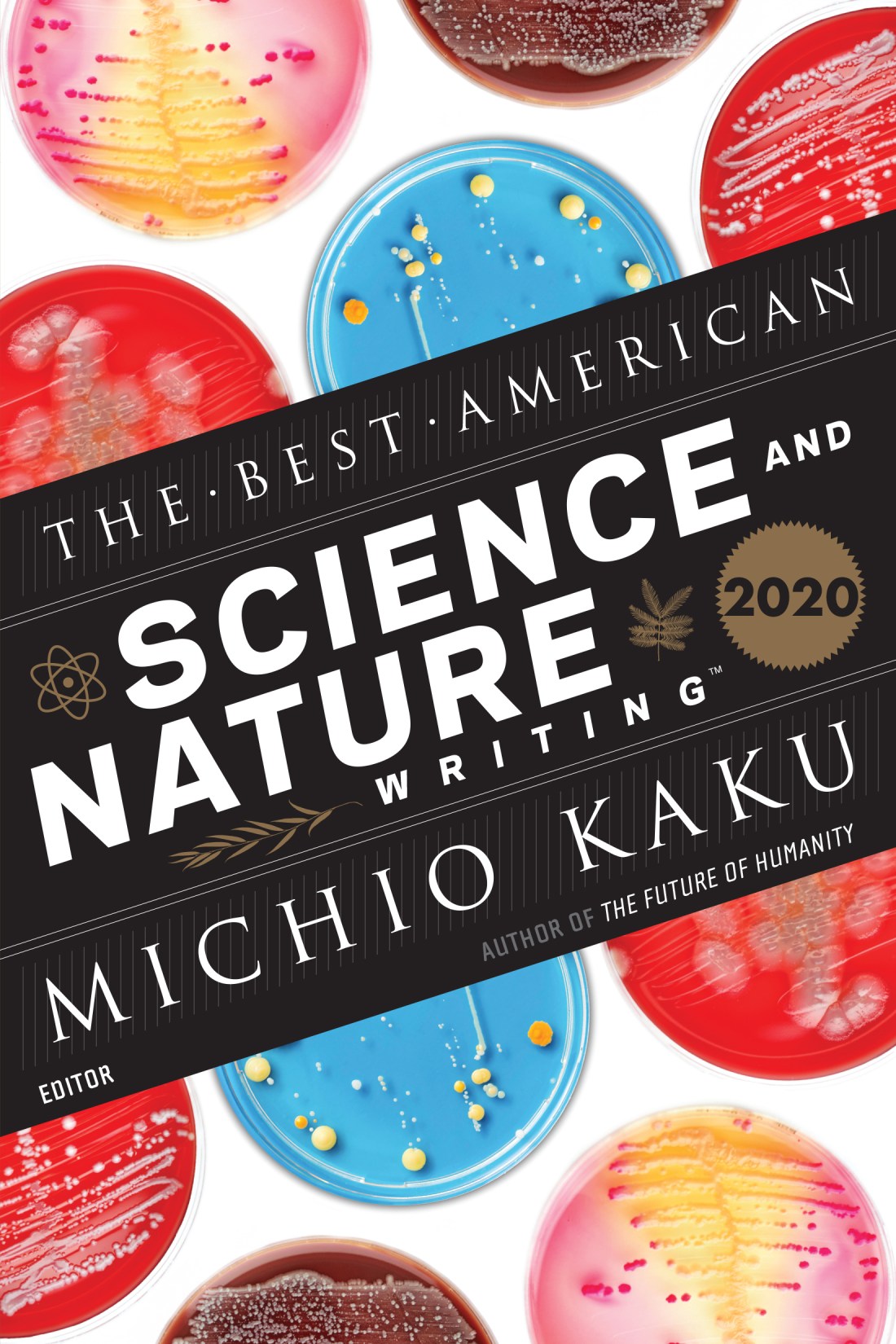
Book Review: The Best American Science and Nature Writing, 2020 edited by Michio Kaku and Jamie Green

Cover of the book The Best American Science and Nature Writing, 2020 edited by Michio Kaku and Jamie Green
The Best American Science and Nature Writing, 2020
edited by Michio Kaku and Jamie Green
HMH, 2020

This review was first published by Booklist on November 1, 2020.

The common thread in most of the works here is disaster and how one recovers from it. Disasters range from extinction-level asteroid impacts to natural disasters to accidents and illness. Works raise two questions: “How did this happen?” and “What comes next?” These questions occupy many of the writers featured here, and the exploration of the recovery process will be particularly resonant for current readers; because all of the pieces included here were published in 2019, the 2020 edition of this series feels a little like a pre-pandemic time capsule. Selected works cover everything from climate change to medicine to ecology to geology to cosmology to chaos theory: proof that any subject makes a good story in the hands of a talented writer. Also striking is the way this collection as a whole jumps through time, with articles about dinosaurs and the geological K-t boundary alongside explorations of future technology. However, the articles focused on the present are the most personal and carry the deepest emotional resonance. This series remains a must-buy for most library collections.

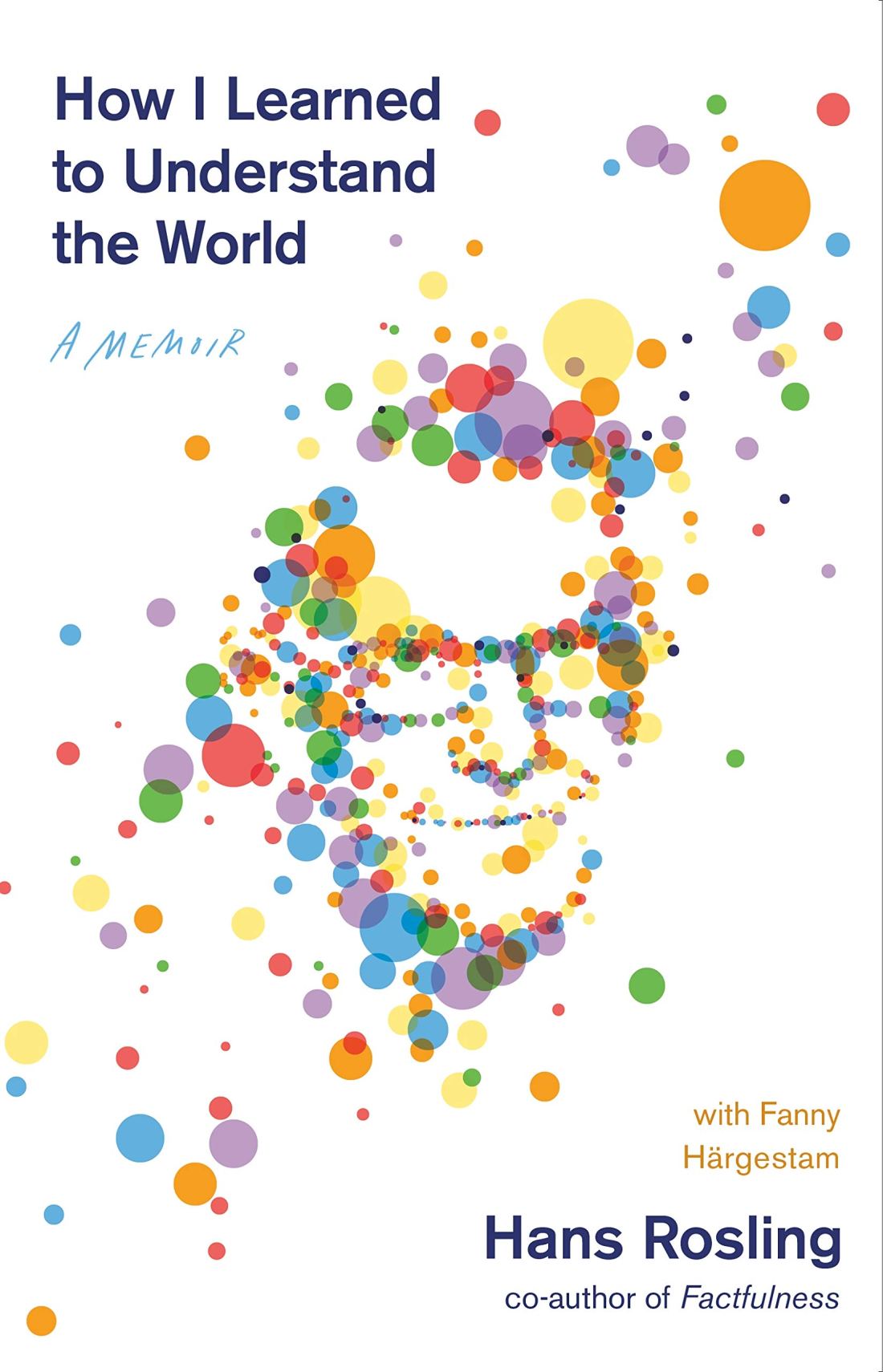
Book Review: How I Learned to Understand the World by Hans Rosling

Cover of the book How I Learned to Understand the World by Hans Rosling
How I Learned to Understand the World
by Hans Rosling
Flatiron, 2020

This review was first published by Booklist on November 1, 2020.

In this deeply personal memoir, Rosling takes account of his life with the goal of exploring how he came to understand the world. Most famous for his work in worldwide health data analysis as the founder of the Gapminder Institute and one of the inventors of the Trendalyzer software system which creates animated graphics of data over time, he sought to comprehend the big picture as clearly as possible, to make the best decisions about how to improve the health and living conditions of the world’s most needful. He dedicated much of his effort to correcting the common misunderstandings most Western countries have about the state of non-Western countries. Rosling began his career as a physician in Mozambique shortly after that country gained independence, and pioneered new epidemiological methods to better address the lived reality of the people he served. Over the years, he applied these same methods throughout sub-Saharan Africa, all while he and his wife raised three children and he battled cancer twice. His memoir is kind, humane, and unflinchingly honest.

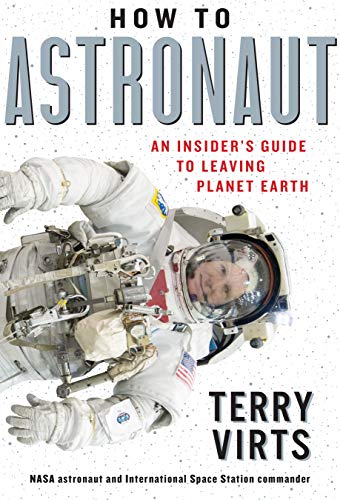
Book Review: How to Astronaut: An Insider’s Guide to Leaving Planet Earth by Terry Virts

Cover of the book How to Astronaut: An Insider's Guide to Leaving Planet Earth by Terry Virts
How to Astronaut: An Insider’s Guide to Leaving Planet Earth
by Terry Virts
Workman, 2020

This review was first published by Booklist in August 2020.

How to Astronaut is an amusing and enlightening insight into an astronaut’s work life. Virts joined NASA near the end of the construction of the International Space Station (ISS) and continued as an ISS crew member. During his time, he led crews, performed space walks, docked the space shuttle to the ISS, worked as a medical officer, performed many science experiments, and even filmed an IMAX documentary—all of this after his first career as a fighter and test pilot with the U.S. Air Force. He shares stories from his many experiences: what it’s like to train, the terror of a launch, how to handle weightlessness, the pains of suiting up, how physically demanding space walks are, what the Earth is like from orbit, how astronauts eat, sleep, work, play, and—yes—go to the bathroom. This is an eye-opening insider’s view on what it’s really like to be an astronaut: the joys, the dangers, the fear, and the day-to-day reality of it. Virts’ writing is humorous, playful, down to earth, and often wise.