Book Review: 42 Reasons to Hate the Universe: And One Reason Not To by Chris Ferrie and others

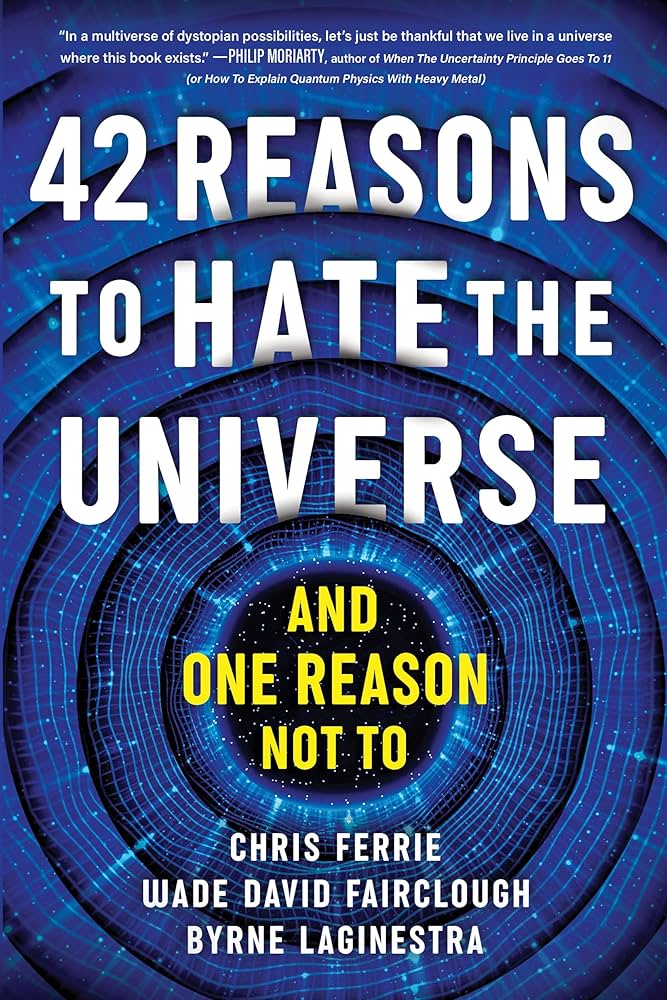
Cover of the book 42 Reasons to Hate the Universe: And One Reason Not To by Chris Ferrie and others
42 Reasons to Hate the Universe: And One Reason Not To
by Chris Ferrie and others
Sourcebooks, 2024

This review was first published by Booklist on December 1, 2023.

Ferrie, best known for his Baby University board books, presents a delightfully profane and cranky work for adults. As the title states, he and his coauthors describe 42 ways the universe wants to kill us. Most of these threats exist right here on Earth (animals, earthquakes, volcanoes, climate change, the air we breathe and water we drink), but things get much worse once we get into space (cosmic radiation, black holes, the violent death of stars, various theories as to how the universe might end). Some ideas are more plausible than others, but it all paints a clear picture of just how precarious and unlikely it is that complex, intelligent life should exist at all. The question of whether we’re alone suggests answers that are equally unpleasant. Each chapter is relatively short, but all the essential information is there to make sure readers understand just how vicious our universe is. It’s funny, snarky, and bleak while still being informative and engrossing. It’s an apt approach for our cynical times.

Book Review: Space Shuttle Stories: Firsthand Astronaut Accounts from All 135 Missions by Tom Jones

Cover of the book Space Shuttle Stories: Firsthand Astronaut Accounts from All 135 Missions by Tom Jones
Space Shuttle Stories: Firsthand Astronaut Accounts from All 135 Missions
by Tom Jones
Smithsonian, 2023

This review was first published by Booklist on October 1, 2023.

Jones (Sky Walking, 2007) offers a sweeping overview of the history of the Space Transportation System (better known as the space shuttle) that defined the U.S. space program for the last quarter of the twentieth century, via firsthand accounts from the crews of every one of the 135 STS missions: stories about the work they did, the challenges they faced, and what it’s like to rocket into space and come back down to Earth. It’s fascinating to hear their perspectives. These stories are presented chronologically and divided into three sections, marked by the Challenger and Columbia disasters, beginning with shuttle development in the 1970s and ending with the construction of the International Space Station. Each section is prefaced with historical information and context. One significant appeal of this book is the many high-quality, full-color photographs: every mission crew and dozens of stunning shots of the shuttle in use. This is an excellent recommendation for fans of the space shuttle and anyone interested in the U.S. space program.

This title has been recommended for young adult readers:
YA/S – special interest: The outstanding visuals and firsthand storytelling make this an attractive resource.

Book Review: Grace in All Simplicity: Beauty, Truth, and Wonders on the Path to the Higgs Boson and New Laws of Nature by Chris Quigg and Robert N. Cahn

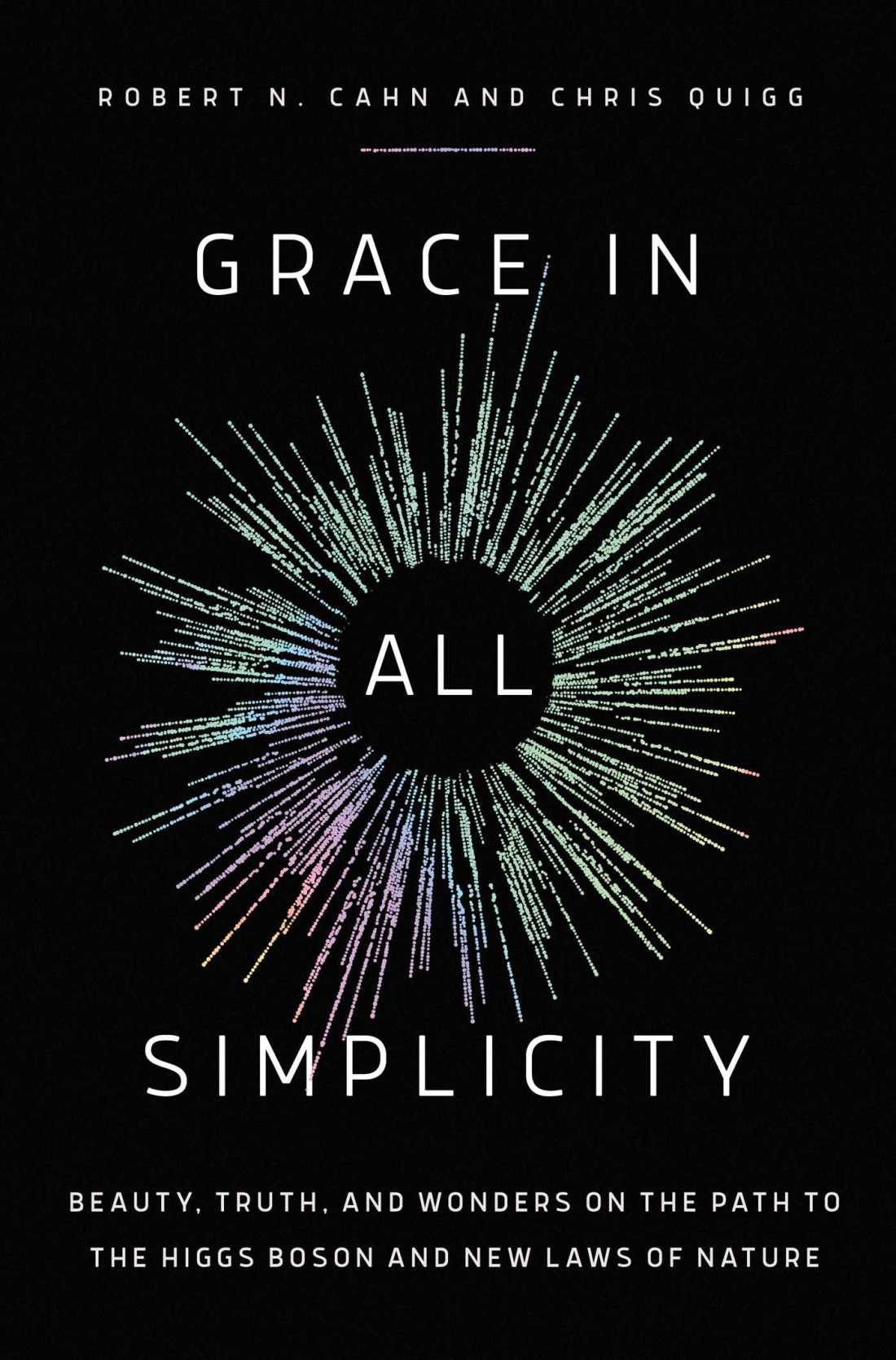
Cover of the book Grace in All Simplicity: Beauty, Truth, and Wonders on the Path to the Higgs Boson and New Laws of Nature by Chris Quigg and Robert N. Cahn
Grace in All Simplicity: Beauty, Truth, and Wonders on the Path to the Higgs Boson and New Laws of Nature
by Chris Quigg and Robert N. Cahn
Pegasus, 2023

This review was first published by Booklist on September 1, 2023.

Grace in All Simplicity traces the development of our current, standard model of physics from the earliest days of atomic theory to the development of particle physics to challenges of dark matter and energy. Cahn and Quigg highlight the many people who contributed to this history, alongside the technology that made it possible and the experiments that revolutionized our understanding of the universe. This isn’t a chronological account. By bouncing around the time line, they highlight the connectedness of the underlying concepts and the ways experiment and theory interact over time. There’s equal attention paid to theory, experiment, and technology. All are necessary to build our best scientific understandings. Theory requires experiment, technology enables new experiments, and experiments deliver results which require new theory. It’s all connected. While there’s no math, the content is very dense, chock-full of concepts and names of people and particles. Because this isn’t a chronological account, the dates can get muddled, but the payoff is a wonderful and engaging dive into the last century of revolutionary physics.

Book Review: The Secret Lives of Numbers: A Hidden History of Mathematics by Kate Kitagawa and Timothy Revell

Cover of the book The Secret Lives of Numbers: A Hidden History of Mathematics by Kate Kitagawa and Timothy Revell
The Secret Lives of Numbers: A Hidden History of Mathematics
by Kate Kitagawa and Timothy Revell
Morrow, 2023

This review was first published by Booklist in July 2023.

**STARRED REVIEW** The history of math is typically taught from an exclusively Greco-Eurocentric perspective as a parade of great men. This significantly distorts reality. Mathematics has been invented in one form or another by every culture on Earth, and the exclusion of women and people of color from traditional narratives is particularly glaring. Kitagawa and Revell do an excellent job of broadening our view to the far more vibrant, collaborative, diverse, and interesting history. Different cultures developed the same ideas at different times, and there is no one inventor of any given idea. The foundations of calculus were discovered by mathematicians in India centuries before Newton or Leibniz were even born, for example, and binary notation has roots in the traditional hexagrams of the Chinese Book of Changes. The mathematics of different cultures were driven by different needs and values, and some of our biggest mathematical revolutions were fueled when these different traditions encountered and altered each other. Math, like all human endeavors, has been subject to politics, religious and cultural influences, and struggles for power and wealth. Mathematics is the most powerful tool humans ever invented, and this book is a welcome corrective to our understanding of how it came to be.

Book Review: Out There: The Science behind Sci-Fi Film and TV by Ariel Waldman

Cover of the book Out There: The Science behind Sci-Fi Film and TV by Ariel Waldman
Out There: The Science behind Sci-Fi Film and TV
by Ariel Waldman
Running Press, 2023

This review was first published by Booklist on June 1, 2023.

Waldman, host of the space- and pop- culture-focused show Offworld, offers a delightful collection of conversations about the role of popular sf films and television in shaping our vision of space and what the future may hold. She presents conversations she’s had with NASA astronauts, physicists, astronomers, engineers, SETI researchers, and other analysts on subjects such as spaceship and spacesuit design, how we might deal with loneliness and communicate with aliens, black holes, artificial gravity, matter transporters, clones, cyborgs and artificial intelligence, the skills modern and future astronauts will need to have, and more. Luminaries such as Frank Drake (creator of the famed Drake Equation), Mythbuster’s Adam Savage, and speculative fiction author Annalee Newitz (to name but a few of the most well-known) detail their perspectives on how sf has and continues to influence how we relate to science and popular expectations for human beings’ future in space. Most importantly, this work illustrates the importance of imagination in the pursuit of science. It’s a concise and rewarding book.

Book Review: Under Alien Skies: A Sightseer’s Guide to the Universe by Philip Plait

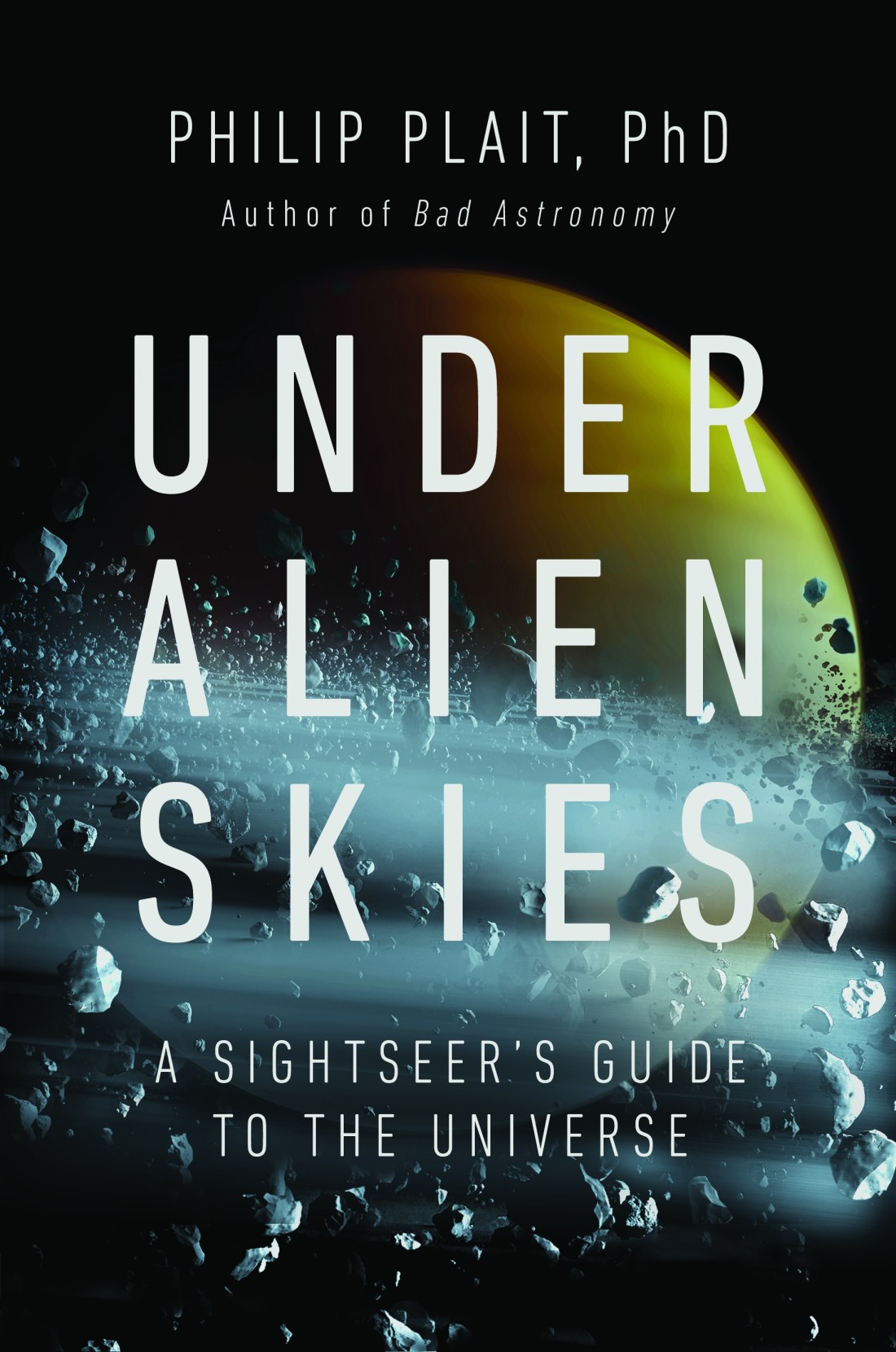
Cover of the book Under Alien Skies: A Sightseer's Guide to the Universe by Philip Plait
Under Alien Skies: A Sightseer’s Guide to the Universe
by Philip Plait
Norton, 2023

This review was first published by Booklist on March 15, 2023.

What would it be like to stand on Mars or experience sunset on a world with multiple suns? To visit a stellar nursery or orbit a black hole? What would you see? How would it feel? Plait takes readers on a tour of the cosmos, from the moon to the supermassive black hole at the center of our galaxy, and paints vivid descriptions of what these objects are like, using the best observations and theories we currently have. It’s an effective framing device to explore what we know about the strange and wonderful things we’ve discovered, from exoplanets to nebulae. His realistic depictions, grounded in human senses, awaken a feeling of wanderlust and make the esoteric feel real. What elevates this above similar books about our universe is Plait’s sense of wonder and joy. He clearly never lost his childhood glee for discovery, and it’s refreshing for a scientist to be so open about it. He shows that science requires creativity and imagination and rewards curiosity and the urge to explore. It’s a remarkable journey.

Book Review: The Magick of Physics: Uncovering the Fantastical Phenomena in Everyday Life by Felix Flicker

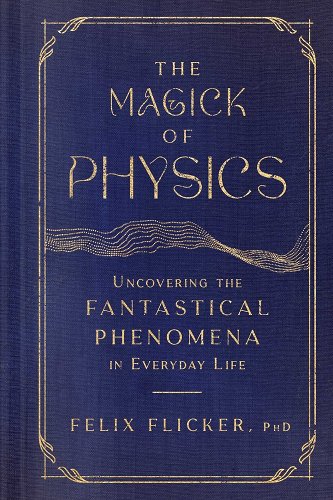
Cover of the book The Magick of Physics: Uncovering the Fantastical Phenomena in Everyday Life by Felix Flicker
The Magick of Physics: Uncovering the Fantastical Phenomena in Everyday Life
by Felix Flicker
Simon & Schuster, 2023

This review was first published by Booklist on March 1, 2023.

Physics is modern magic, and condensed matter physicists are the wizards of the modern world. Condensed matter physics is the study of how matter behaves in the real world, and how we can harness it to improve our daily lives. It’s what gave us steam engines, electric grids, and computers. It’s the single largest branch of physics, yet it’s one of the least discussed, with more glamorous theoretical fields commanding popular attention. Flicker seeks to reveal the wonder and fascination of this work. He walks readers through the history of how the field developed, introducing the major milestones and scientists along the way. He guides us through the different states of matter, thermodynamics, relativity, quantum mechanics, topology, and magnetism, to show us just how enthralling these can be. The joy he has for this work is infectious. Much of the content gets abstruse, but he avoids complex math, and by framing it as modern magic this becomes part of the charm. It’s OK if you don’t understand: it’s magic. You can still enjoy the show.

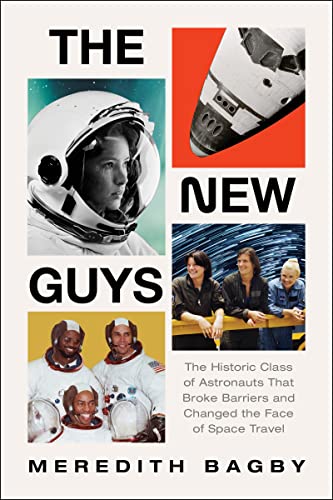
Book Review: The New Guys: The Historic Class of Astronauts That Broke Barriers and Changed the Face of Space Travel by Meredith Bagby

Cover of the book The New Guys: The Historic Class of Astronauts That Broke Barriers and Changed the Face of Space Travel by Meredith Bagby
The New Guys: The Historic Class of Astronauts That Broke Barriers and Changed the Face of Space Travel
by Meredith Bagby
Morrow, 2023

This review was first published by Booklist on January 6, 2023.

In 1978, NASA recruited Astronaut Group 8, the first group of astronaut candidates selected to serve on the space shuttle and the first opportunity open to nonmilitary personnel. This group included the first American women, first African Americans, first Asian American, first married couple, and (unbeknownst at the time) the first gay astronaut to fly into space. NASA recruited scientists, engineers, and medical professionals, not just pilots. Members of this remarkably diverse group—known as the “new guys”—served from the shuttle’s first flight to its final decommissioning. They launched technology (including the Hubble Space Telescope) that fundamentally altered our world and weathered disasters (Bagby covers the loss of the Challenger in significant detail), political maneuvering, and bad press. Their crowning achievement was construction of the International Space Station. Much has already been written about these men and women, their successes and tragedies, and Bagby doesn’t break new ground here. But she brings together a wealth of information and crafts it into a compelling, cohesive, and complete narrative. An excellent choice for anyone interested in the history of space exploration.

Book Review: The Things We Make: The Unknown History of Invention from Cathedrals to Soda Cans by Bill Hammack

Cover of the book The Things We Make: The Unknown History of Invention from Cathedrals to Soda Cans by Bill Hammack
The Things We Make: The Unknown History of Invention from Cathedrals to Soda Cans
by Bill Hammack
Sourcebooks, 2023

This review was first published by Booklist on January 1, 2023.

**STARRED REVIEW** The Things We Make is a heartfelt ode in praise of engineers. Hammack, a long-time engineering educator, argues that far from merely being “applied science,” engineering boasts a robust method all its own, meaningfully separate from science. He offers several compelling examples of how engineering has changed our world and pushes back against the harmful myth of the lone inventor, which too often excludes the work of marginalized individuals, and perpetuates popular misunderstandings of what engineering actually is. The book starts with a description of how, in the Middle Ages, illiterate masons who didn’t know any math managed to build Gothic cathedrals that have stood for centuries. Other examples range from the development of color photography to the creation of designer enzymes, from such marvels as the modern computer chip to the quotidian soda can. He really runs the gamut with his examples, but all of them show how engineering utilizes rules of thumb and compromise solutions to resolve real-world problems.The Engineering Method, as much as the Scientific Method, stands as one of humanity’s greatest achievements. A must-read for anyone interested in engineering or the history of technology and human achievement.

Book Review: The Alien Perspective: A New View of Humanity and the Cosmos by David Whitehouse

Cover of the book The Alien Perspective: A New View of Humanity and the Cosmos by David Whitehouse
The Alien Perspective: A New View of Humanity and the Cosmos
by David WhitehouseR
Icon, 2022

This review was first published by Booklist on October 15, 2022.

The question of whether we’re alone in the universe is one of the most profound, and one which struggles to be taken seriously in scientific circles. It’s a question that extends beyond science into the realms of religion and philosophy. Evidence of intelligent life elsewhere would upend our understanding of our place in the universe. In his latest, Whitehouse summarizes the efforts we’ve made to search for other life in the universe, from SETI to UFO sightings, and the limitations such efforts must overcome. He assesses what we actually know about the likelihood that anyone else is out there. He also explores possibilities for what alien life might be like, an impossible question to answer, as we only have ourselves as an example, whereas life on other planets could be radically different. Finally, he examines what’s in store for the future of the universe with an eye toward whether or not life might survive. In the end, without definitive contact with extraterrestrials, any searches we make tell us more about ourselves than about life elsewhere.