Book Review: The Quiet Zone: Unraveling the Mystery of a Town Suspended in Silence by Stephen Kurczy

Cover of the book The Quiet Zone: Unraveling the Mystery of a Town Suspended in Silence by Stephen Kurczy
The Quiet Zone: Unraveling the Mystery of a Town Suspended in Silence
by Stephen Kurczy
Morrow/Dey St., 2021

This review was first published by Booklist on August 20, 2021.

The National Radio Quiet Zone (NRQZ) was established by the federal government in the Appalachian area around Green Bank, West Virginia, in 1958, to protect a National Science Foundation radio telescope from signal interference. Within the NRQZ, everything from cellphones to WiFi to microwave ovens is restricted by law. In addition to attracting world-class astronomers to the region, the lack of technology over the years has attracted hippie communes, back-to-nature homesteaders, people suffering from electromagnetic hypersensitivity syndrome, and even the famous clown doctor, Patch Adams. In addition, the remote location made the NRQZ an ideal location for one of the most dangerous neo-Nazi organizations in the country, an NSA surveillance site, and murder and disappearances. Kurczy, a millennial journalist who rejects cellphones, spent several years visiting the NRQZ to learn why this place, of all places, would bring such disparate folk together. Turns out, the quiet zone isn’t all that quiet and not everyone wants it to be. An engaging and sympathetic study of the myriad people who call this unique place home.

Book Review: A Brief History of Motion: From the Wheel, to the Car, to What Comes Next by Tom Standage

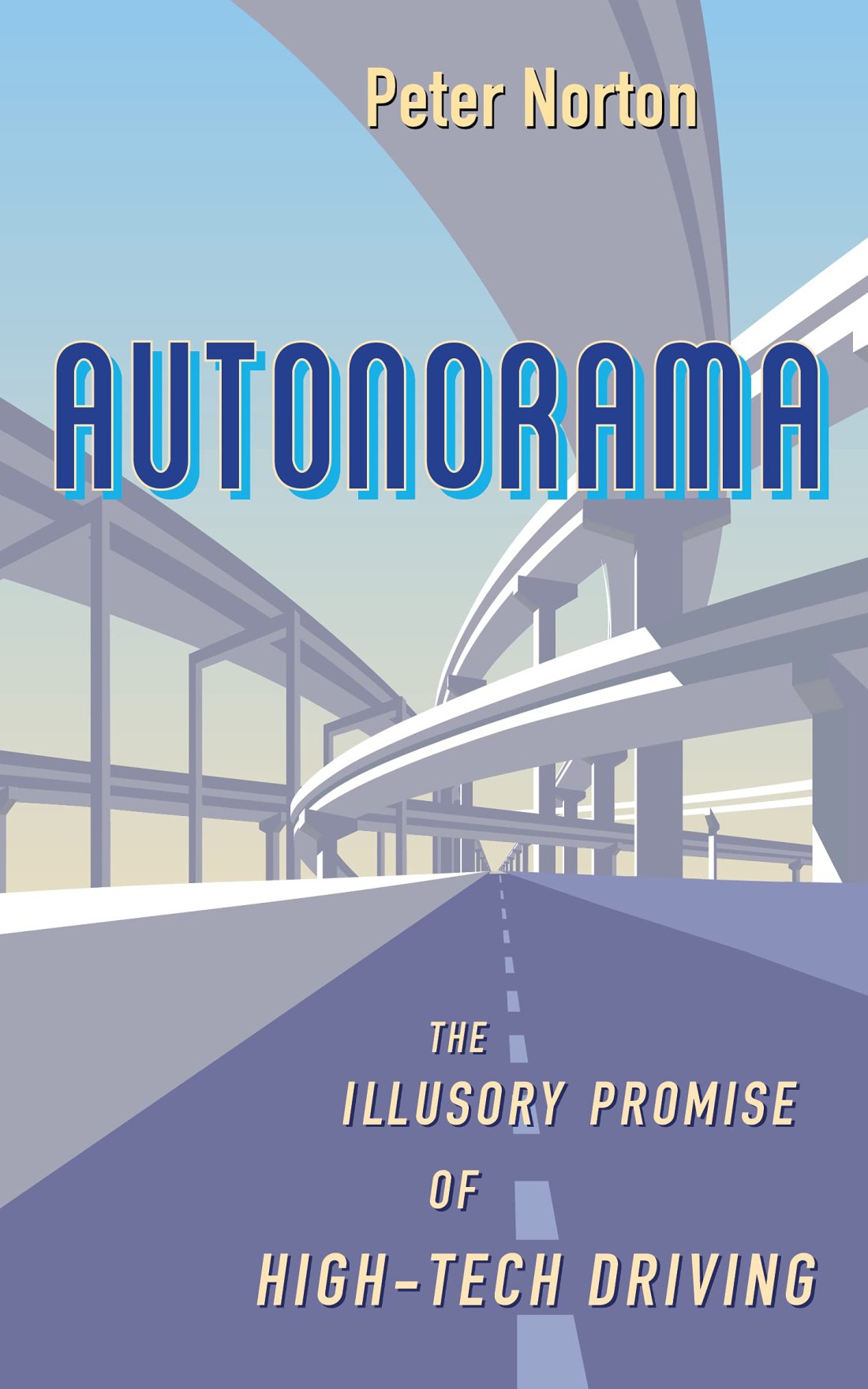
Cover of the book A Brief History of Motion: From the Wheel, to the Car, to What Comes Next by Tom Standage
A Brief History of Motion: From the Wheel, to the Car, to What Comes Next
by Tom Standage
Bloomsbury, 2021

This review was first published by Booklist on July 30, 2021.

Traffic jams. Accidents. Pollution. Safety concerns. This was the situation faced by cities at the end of the nineteenth century, with a glut of horse-drawn vehicles clogging streets and dirtying roads. The car was supposed to solve all that. Instead, automobiles came with their own problems: congestion, deadlier accidents, climate impacts, and the worsening of economic and cultural divides. Standage believes a look back at the history of wheeled vehicles and their impacts is useful to guide us toward the future. Cars fundamentally altered the landscape of the modern world, driving the redesign of urban areas and fueling the rise of suburbia. The popularity of cars had ramifications even beyond urban planning and traffic: factory mechanization, planned obsolescence, and the creation of teenage culture were all affected. He offers a balanced overview of new options being explored: autonomous vehicles, ride-share apps, vehicle sharing, and integrated transit systems. All offer potential benefits, and all come with risks. Any new technology will have consequences we don’t foresee. This is a well-researched exploration of an urgent subject.

Book Review: Where Did the Universe Come From? And Other Cosmic Questions by Chris Ferrie and Geraint F. Lewis

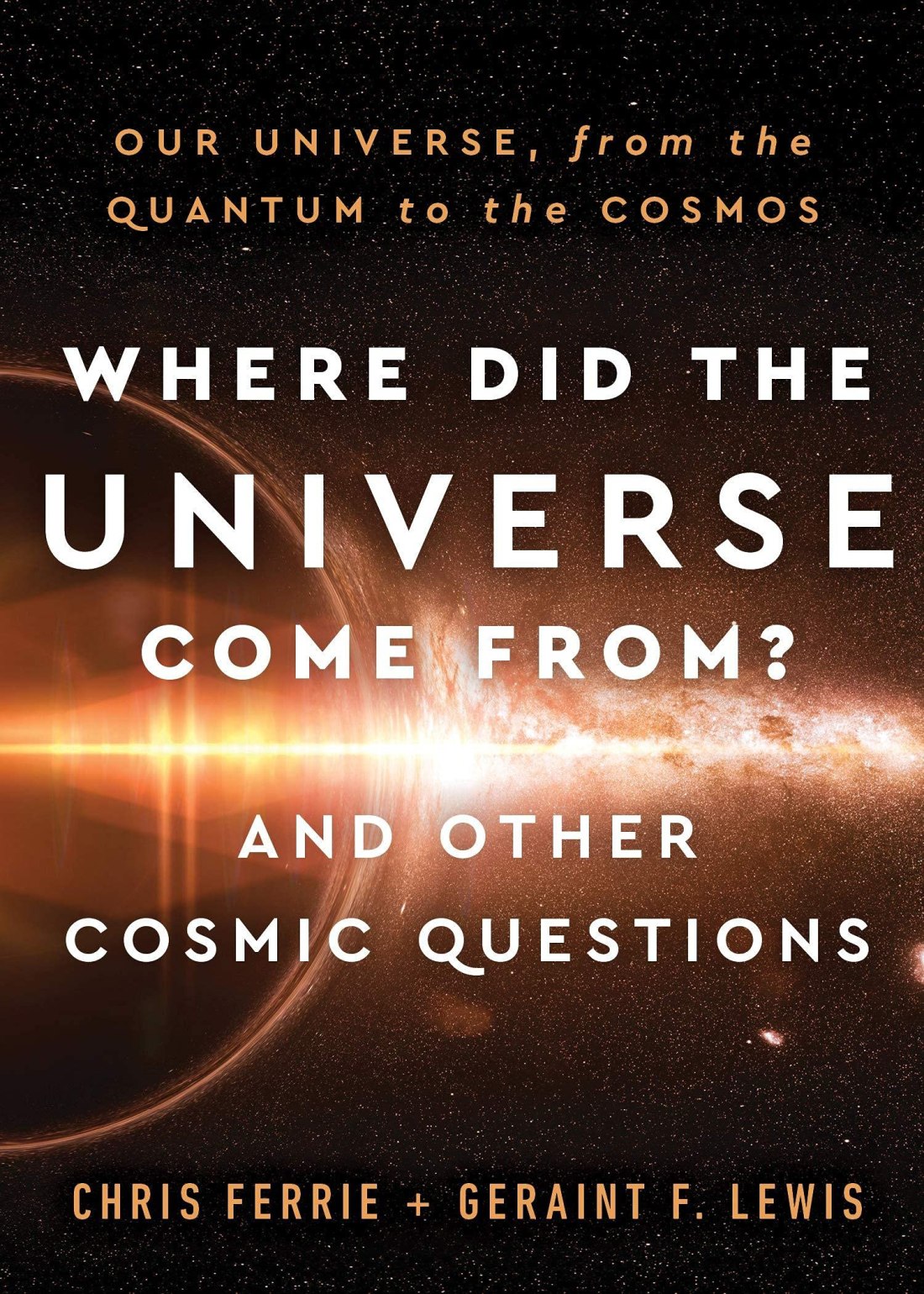
Cover of the book Where Did the Universe Come From? And Other Cosmic Questions by Chris Ferrie and Geraint F. Lewis
Where Did the Universe Come From? And Other Cosmic Questions
by Chris Ferrie and Geraint F. Lewis
Sourcebooks, 2021

This review was first published by Booklist on July 21, 2021.

**STARRED REVIEW** Our understanding of how the universe works is governed by two models: relativity and quantum mechanics. Both models have proven their accuracy time and again, but we also know that both can’t be true. The quest to marry the two into a single coherent model remains the ultimate goal of physicists. In Where Did the Universe Come From? two physicists explore the various ways our universe is governed by both relativity and quantum mechanics, from its origins in the big bang to the evolution of galaxies, from the death of stars to the heat death of the universe. They also summarize the history of how these concepts developed. They identify the gaps in our understanding and examine ideas for how a “theory of everything” might be forged. The authors do an exceptional job of explaining quantum-physical concepts in layperson’s terms, using examples and metaphors to illuminate the important ideas without the need to understand the mathematics. This is incredibly complicated stuff and it can only be simplified so far. Where Did the Universe Come From? is one of the most accessible summaries of the present state of cosmology on the market.

Book Review: Hold Fast through the Fire by K. B. Wagers

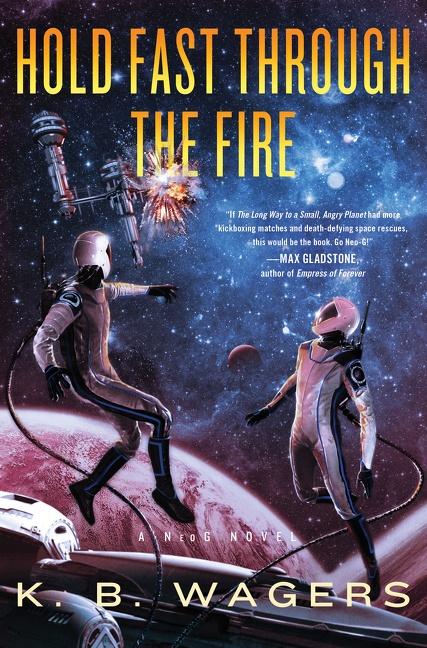
Cover of the book Hold Fast through the Fire by K. B. Wagers
Hold Fast through the Fire
by K. B. Wagers
Harper Voyager, 2021

This review was first published by Booklist on July 21, 2021.

The Near-Earth Orbital Guard Interceptor ship, Zuma’s Ghost, has a new commander: Nika Vagin, Jenks’ brother, returning from his stint with Intel, and a new ensign, Chae Ho-ki, from the Trappist colonies. The only problem: both of them have something to hide and it’s messing up the dynamics of the team. When Zuma’s Ghost is sent to the Trappist system, it becomes a target of a deep conspiracy to disrupt trade and reignite a war with Mars. Loyalties and relationships are tested in ways they might not survive, and a shocking tragedy strikes deep. This second entry in the NeoG series (after A Pale Light in the Black, 2020) packs an emotional gut punch. What makes Wagers’ work stand out in the field of military science fiction is how characters rely on forgiveness, kindness, and trust to solve challenges. They’re vulnerable, share their emotions, and rely on each other, and Wagers shows how this can be people’s greatest strength—a bracing contrast to the typical braggadocio of the genre. Their talent for creating characters readers care about is on full display.

Book Review: Half Lives: The Unlikely History of Radium by Lucy Jane Santos

Cover of the book Half Lives: The Unlikely History of Radium By Lucy Jane Santos
Half Lives: The Unlikely History of Radium
by Lucy Jane Santos
Pegasus, 2021

This review was first published by Booklist on June 1, 2021.

Given the known dangers of radiation, it’s difficult to comprehend how anyone could have thought it was healthy. But for nearly half a century after the discovery of radium, radiation was touted by scientists and medical experts as a cure-all for a whole range of maladies, from cancer to tuberculosis to various skin conditions. Radium was used in spas, steam treatments, salves and poultices, face creams, hair tonics, toothpaste, and more. People were even encouraged to drink radioactive water. Scientists recommended a range of radiation-based medical treatments and worried about unscrupulous businesses selling patent medicines that falsely claimed to contain radium. It was only over time that the dangers of radiation became clear. The development of the atomic bomb marked the end of radium’s golden age. In telling this history, Santos is careful not to judge from the perspective of hindsight: the use of radiation in medicine wasn’t quackery, it was supported by the best current scientific understanding. It’s an entertaining and eye-opening tale of a strange time in the early history of modern science.

Book Review: Secrets of the Force: The Complete, Uncensored, Unauthorized Oral History of Star Wars by Edward Gross and Mark A. Altman

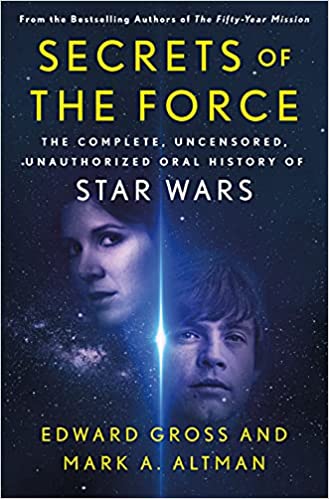
Cover of the book Secrets of the Force: The Complete, Uncensored, Unauthorized Oral History of Star Wars by Edward Gross and Mark A. Altman
Secrets of the Force: The Complete, Uncensored, Unauthorized Oral History of Star Wars
by Edward Gross and Mark A. Altman
St. Martin’s, 2021

This review was first published by Booklist on June 1, 2021.

Gross and Altman continue their series of deep-dive oral histories with their latest entry, which is on the beloved and influential Star Wars universe. They present interviews with cast members, creative staff, production crews, and executives from all three film trilogies and the television shows, detailing back stories about the development of the franchise: script writing, production design, filming, scoring, promotion, and merchandising. Lucas didn’t just create beloved movies, he used his success to invent new technologies that revolutionized the film industry more than once. Also featured is analysis of the cultural context and impact of Star Wars, along with critical perspectives. While the bulk of the content focuses on the movies and television shows, the books, comics, and games of the Expanded Universe are also covered. By presenting quotes in the format of a group interview, the authors juxtapose different perspectives. The work is comprehensive, although occasionally repetitive. It doesn’t break any new ground; rather, the value lies in gathering so much information in one place. It’s sure to be in demand with Star Wars fans.

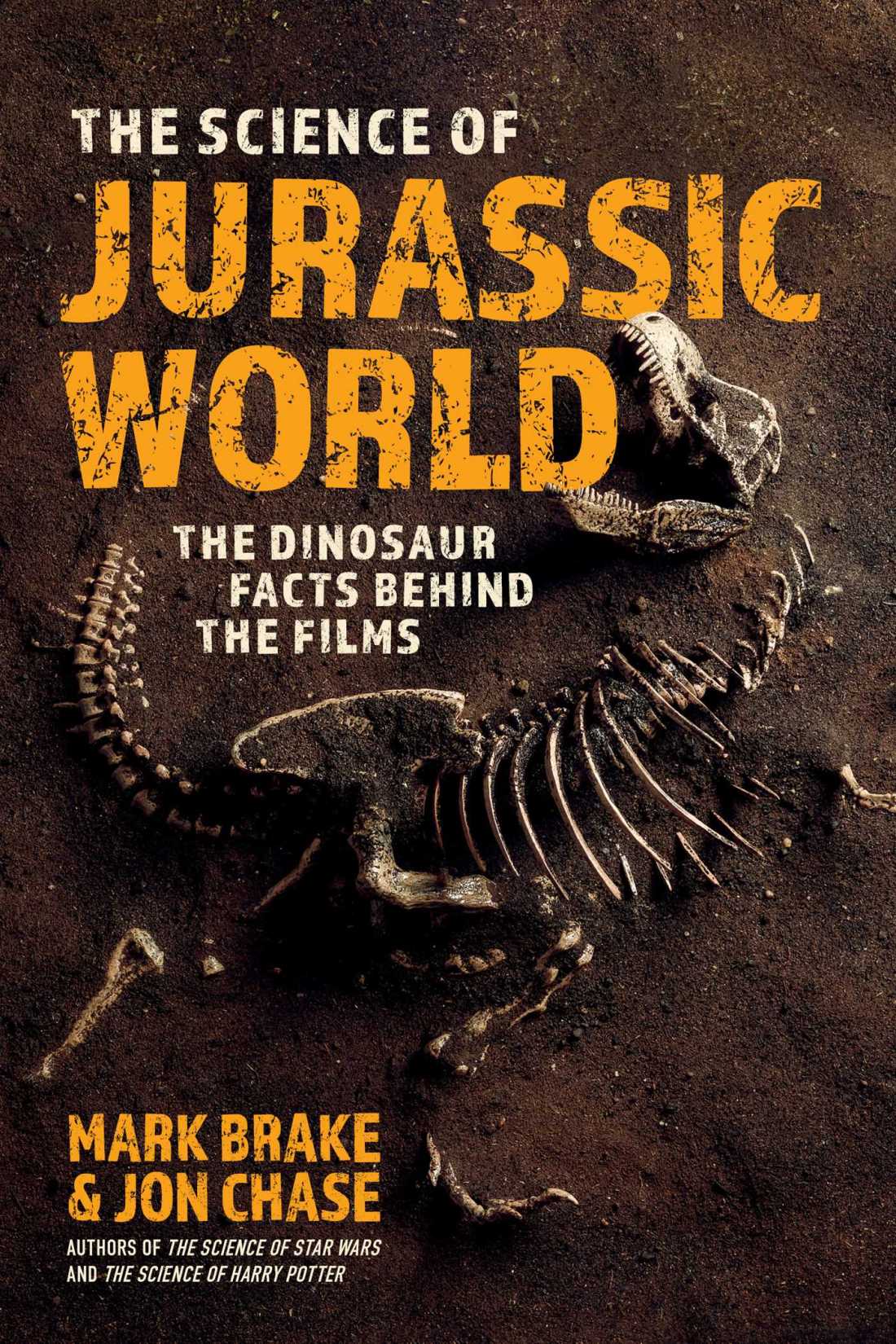
Book Review: The Science of Jurassic World: The Dinosaur Facts Behind the Films by Mark Brake and Jon Chase

Cover of the book The Science of Jurassic World: The Dinosaur Facts Behind the Films by Mark Brake and Jon Chase
The Science of Jurassic World: The Dinosaur Facts Behind the Films
by Mark Brake and Jon Chase
Skyhorse, 2021

This review was first published by Booklist on May 15, 2021.

The original Jurassic Park movie attempted to be as scientifically plausible as possible; subsequent entries in the franchise have been less so. But just how accurate is the science behind the series? Brake uses the films as a framework to explore the current state of what we know about dinosaurs, as well as what we don’t. This is a broad overview, covering everything from the Bone Wars to the latest discoveries. He explores how dinosaurs evolved and spread across the earth, what they were like, how they behaved, how they went extinct, and how new evidence is continually reshaping our understanding. He even considers what dinosaurs can teach us about our current world and the challenges we face today. Brake’s stated goal is to create a dinosaur book for adults that’s as engaging as books on the subject for children. He mostly succeeds, although some of the connections to the movie franchise feel a bit forced. It’s a good introduction and overview of the field and our current understanding of dinosaurs. Recommended for any library collection.

This title has been recommended for young adult readers:

YA/S – special interest: An excellent selection for teens interested in paleontology.

Book Review: Titan Song by Dan Stout

Cover of the book Titan Song by Dan Stout
Titan Song
by Dan Stout
DAW, 2021

This review was first published by Booklist on May 14, 2021.

Titanshade is wracked by a series of brutal murders, but the weird thing is, the perpetrators all confess and claim they were overtaken by inexplicable rage. The Barekusu, eldest of the Eight Families and originators of the Path, are in town for mysterious reasons. The biggest disco star on the planet is headlining a music festival out on the ice plains, financed by someone who has a grudge against Carter, whose mysterious new manna abilities continue to complicate things and whose personal life is still a mess. When a sinkhole in the middle of town unearths old mysteries, it leads down into the heat vents, where a shocking and dangerous truth lies at the heart of the city. Stout (Titan’s Day, 2020) continues to expand his world of the Carter Archives in fascinating directions, this time teasing a deep and unexpected history, hinting that not all is as it seems, leaving readers eager to know more. The conflict is less personal in this entry and the tone is more cerebral, but there’s still plenty of action and snark to satisfy fans.

Book Review: Forged in War: How a Century of War Created Today’s Information Society by R. David Lankes

Cover of the book Forged in War: How a Century of War Created Today’s Information Society by R. David Lankes
Forged in War: How a Century of War Created Today’s Information Society
by R. David Lankes
Rowman & Littlefield, 2021

This review was first published by Booklist on May 1, 2021.

Modern knowledge infrastructure is a fractured complex of filter bubbles, tracking our every move across platforms, websites, and apps, gathering our personal data to sell to the highest bidders. To understand how this came to be, Lankes studied the origins of knowledge systems from the time of the world wars through the twentieth century. Most of our communication systems and technology were designed to be weaponized in response to wartime threats. Propaganda, manipulation, and ubiquitous surveillance are built in as data analysis is optimized for the cold calculations of war. These tools weren’t intended for commerce or entertainment, and certainly not to protect the privacy of users. But these are precisely the features businesses and designers use to capture attention and increase profits. Lankes argues for more humanist values to redesign our knowledge infrastructure: policies and systems that prioritize privacy and give users control of personal data, intellectual property rights that better serve the common good, and nuanced data analysis instead of algorithmic dataism. Lankes’ historical perspective is compelling and his arguments convincing.

Book Review: Super Fly: The Unexpected Lives of the World’s Most Successful Insects by Jonathan Balcombe

Cover of the book Super Fly: The Unexpected Lives of the World's Most Successful Insects by Jonathan Balcombe
Super Fly: The Unexpected Lives of the World’s Most Successful Insects
by Jonathan Balcombe
Penguin, 2021

This review was first published by Booklist on May 1, 2021.

Flies, two-winged flying insects that include everything from houseflies to mosquitoes to midges, are some of the least studied insects on the planet, which is surprising given that they’re among the most populous and varied. But associations with filth and blight, biting and pestilence, and crop destruction don’t make them very appealing. Balcombe wants to change that. Flies are fascinating, vital, and beautiful creatures. Flies are essential to the food chain, among the most common plant pollinators, and clean up rot and decay. They help solve crimes and heal wounds, and even unlock the possibility of insect sentience. Most famous for helping scientists study genetic inheritance via fruit flies, Diptera, it turns out, have far more to teach us. Balcombe also warns of the potential catastrophic effects of human actions on fly populations. Monoculture and pesticides are greatly reducing their numbers, but without flies, ecosystems will collapse. They may be pests, but flies deserve our respect and admiration. This is an excellent overview of what we know and what we’re discovering about flies.