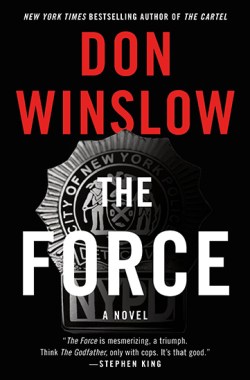
I’m not sure I’ve ever had a novel recommended to me more highly, more insistently, by more people, than The Force by Don Winslow.
More than one person has told me it’s the best book of the year. More than one has told me it’s the best cop novel ever written. Promo materials claim it’s nothing less than The Godfather of cop novels.
I’ve never been interested in gritty cop novels but I was eager to read this one. My conclusion, in a nutshell:
Human beings are monotypic: we’re the only species within our taxonomic genus. Monotypic genera are relatively rare—it’s unusual for there to be no other species within a genus, especially among higher level complex organisms. (*)
For well over half of our existence on this planet as H. sapiens, there were other people out there who were within our taxonomic genus but who weren’t our species.
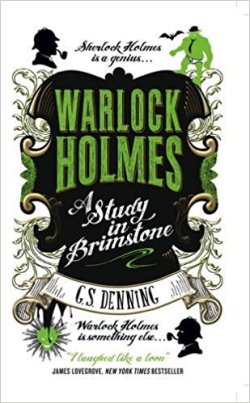
A Study in Brimstone by G. S. Denning Titan Books, 2016
I’m not a fan of Arthur Conan Doyle’s original Sherlock Holmes stories (although I’ve read all of them at least once, some more than once, and I’ve see all of the major BBC television adaptations). I dislike Victorian literature in general.
I’m also not much of a fan of contemporary paranormal fiction—I don’t dislike it but it’s not something I seek out.
So there’s really no reason why I should like G. S. Denning’s “Warlock Holmes” series as much as I do.
The Kill Society by Richard Kadrey Harper/Voyager, 2017
This review was first published by Booklist on June 7, 2017.
Sandman Slim is dead (for real this time) and abandoned in a desolate part of the Tenebrae, the land of the dead. He’s discovered by a motorized roving gang trailing destruction and death in its wake, led by a religious fanatic looking for an ultimate weapon to kill God. Slim runs into some old friends along the way. It culminates in a fight between angels at the gates of Heaven itself. And Wormwood is up to something, as always. All because Sandman Slim tried to break open Heaven. This is Kadrey’s version of a Mad Max movie laid out as a cautionary tale about religious fanaticism. It’s a fast-paced story and an ideal setting to show off more of his richly imagined hereafter. The ending puts Sandman Slim right where he most wants to be, but in the last position he ever wanted. This entry in the series is plenty entertaining, but there are a few too many coincidences to be believable. Kadrey’s social criticism is much more obvious than usual, and it hits closer to home.
I started getting headaches in my mid-20s. I threw out my back at work one day and never did anything to fix it—I relied on my standard “ignore it and it’ll go away” strategy. This caused entrenched muscle imbalances, which led to steadily mounting tension along the length of my spine, which eventually came to rest in my neck and shoulders.
I started getting tension headaches at the back of my head, where my spine connects to my skull. These headaches are a dull throb on one side or the other, sometimes nothing much, sometimes bad enough to make me sweaty and nauseous and shaky. I always knew when one was coming on because it would be preceded by a few hours of mounting tension in my back and shoulders. I always knew when one would be really bad because my neck would start cracking every time I moved my head.
This review was first published by Booklist on May 31, 2017.
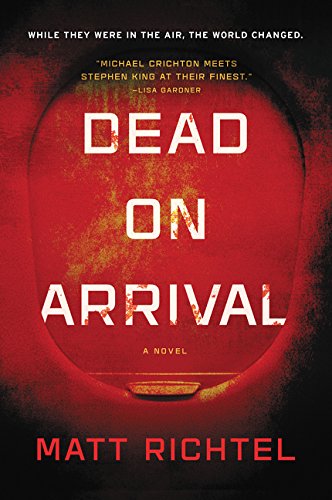
The promotional blurbs for Richtel’s latest compare it to Michael Crichton’s thrillers and Stephen King’s The Stand, and these comparisons aren’t without some merit. The story is similar in atmosphere and style to both suggestions, and it’s a cautionary tale about technology and science left unchecked. An airplane lands in a remote town and everyone on the ground appears to be dead. A disgraced doctor on board is the best hope to discover what’s going on. The first half of the novel is split between this mystery and flashbacks to the doctor’s past and his relationship to a particular individual who works for an online technology giant. A twist at the midpoint of the book radically changes the direction of the story, and the second half proceeds as a conventional race-against-the-clock thriller. The pacing is excellent, the science is detailed and believable, and the flashback structure is handled well. Richtel’s writing style is urgent, making this an enjoyable and gripping read.
I’m incredibly grateful that Ken took the time to respond. His tweets are insightful and his critique of my review is helpful. I’ve included them here with his permission. Please read through them.
The Three-Body Problem by Cixin Liu (translated by Ken Liu) Tor, 2014
The Dark Forest by Cixin Liu (translated by Joel Martinsen) Tor, 2015
Death’s End by Cixin Liu (translated by Ken Liu) Tor, 2016
In my review of Leviathan Wakes by James S. A. Corey, I compare reading it to reading Asimov’s Foundation when I was a kid.
I’m going to make the same comparison with the “Remembrance of Earth’s Past” series by Cixin Liu. Reading this awakens the same sense of discovery and amazement as reading Asimov when I was a child. Liu gifts us a story that’s astounding in scope and vision, with some of a biggest Big Ideas in science fiction.
The English translations of Liu’s work boast an admirable level of stylistic polish. There’s a spare and refreshing lyricism at work here. I’m as impressed with the quality of the translations as I am with Liu’s story.
This is what science fiction should be. I’m in awe of Liu’s imagination and accomplishment.
Bit by Bit: How Video Games Transformed Our World by Andrew Ervin Basic, 2017
This review was first published by Booklist on April 15, 2017.
It’s unusual for a history of video games to feature multiple quotes from Rilke, references to philosophy and Zen Buddhism, and comparisons to great works of art. But that’s exactly what Ervin serves up to support his compelling argument: video games can be art. They can achieve the same heights of storytelling and social commentary, inspire genuine self-reflection, and promote personal and social progress, like any other creative medium. He examines what he considers the most seminal games, designers, and developments in the short history of video games. This isn’t a comprehensive history and doesn’t pretend to be. It’s a personal list—Ervin focuses on what he considers most important and his own experiences as a lifelong gamer. He’s clear about his personal preferences but does his best to understand the appeal of important games he doesn’t like. Ultimately, this is less about how video games have transformed our world and more about how they can. Ervin’s hopefulness sometimes feels naive, but that doesn’t render his faith in games any less compelling.
The Girl on the Train by Paula Hawkins Riverhead Books, 2015
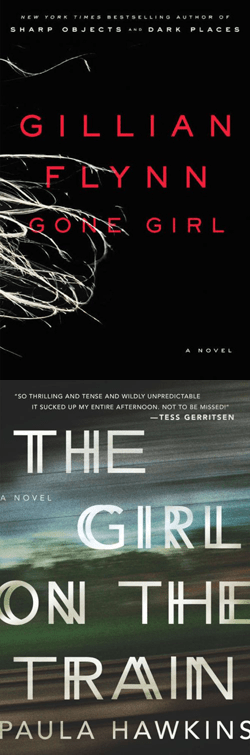
In 2012, Gillian Flynn published Gone Girl and kick-started our current craze for unreliable narrator stories. 2015 saw the release of The Girl on the Train by Paula Hawkins and the unreliable narrator novel was firmly ensconced.
Rarely have I witnessed two books compared to each other more than these.
Not only was The Girl on the Train trumpeted as “this year’s Gone Girl,” not only did every critic and reviewer on the planet compare the two, but just about everyone I knew picked a favorite and took a side in the which-is-better debate.
Most people I know like both but have a clear preference for one or the other, and there are more than a few who love one and hate the other.
For most, their preference seems to boil down to which narrator appealed to them best. It’s not a matter of which you like best, as neither narrator is intended to be likeable. But both are meant to be intriguing.
I’m convinced that character appeal isn’t all that’s going on here. I think focusing on which narrator appeals the most is circling around a deeper issue.




 John the Librarian