The Challenge of Setting in SF

I had a roommate once who had never read any SF before we moved in together. She saw my collection of science fiction and decided to give it a try.

She grabbed a book off my shelf at random—a far future, hard scifi title. Pretty advanced for her first exposure to the genre. She found it very frustrating.

She had no problem getting into the characters or the plot. She understood the science well enough and enjoyed how the author extrapolated it. She didn’t get too tripped up over the genre-specific vocabulary, either, although she did have to ask me what some of the acronyms stood for.

The problem was the setting. She couldn’t make sense of the world of the story, the environment. She didn’t know what things were and couldn’t picture them. Presented with an imagined far-future, alien setting, she felt lost and disoriented.

She was frustrated because she thought she was supposed to understand it. She felt like she was missing something, some key that would bring the world of the story into focus. Something to make it all make sense.

Continue reading “The Challenge of Setting in SF”

Book Review: Artemis by Andy Weir

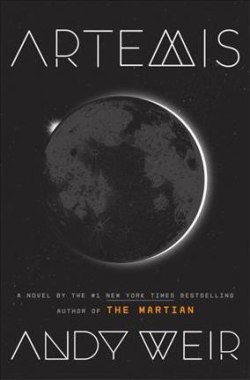
Artemis by Andy Weir
Artemis
by Andy Weir
Crown, 2017

Artemis is the only city on the Moon. Established by the Kenya Space Corporation, it’s a series of habitable domes, filled with a mix of rich tourists and working class residents from myriad ethnic groups. It’s like the Wild West with few established laws, dominated by trade guilds.

A small bubble of life in the middle of a deadly and dangerous environment.

Jazz Bashara grew up in Artemis, the daughter of a Saudi Arabian welder with whom she’s had a falling out. An underachieving genius with a string of broken romantic relationships, she works as a low wage porter and she earns extra money on the side as a smuggler. She’s egotistical and bitter, smart and funny, strong and broken in equal measure.

One day, Jazz gets a job offer that may be too illegal even for her but which promises to pay enough to be worth it. Despite her reservations, she accepts. Next thing she knows, she’s wrapped up in a couple of murders and a Brazilian mafia family has sent an assassin to the Moon to hunt her down. To save her own life, she could end up risking the lives of everyone in Artemis.

And then there’s a new technology that holds untold riches for whoever controls it…

Continue reading “Book Review: Artemis by Andy Weir”

Book Review: The Force by Don Winslow

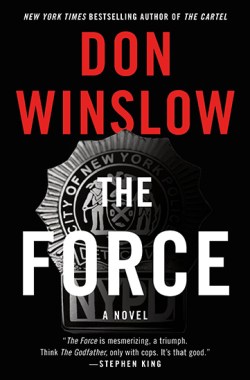
The Force by Don Winslow
The Force
by Don Winslow
William Morrow, 2017

I’m not sure I’ve ever had a novel recommended to me more highly, more insistently, by more people, than The Force by Don Winslow.

More than one person has told me it’s the best book of the year. More than one has told me it’s the best cop novel ever written. Promo materials claim it’s nothing less than The Godfather of cop novels.

I’ve never been interested in gritty cop novels but I was eager to read this one. My conclusion, in a nutshell:

Yeah, it’s that good.

Continue reading “Book Review: The Force by Don Winslow”

Searching for the Other

Human beings are monotypic: we’re the only species within our taxonomic genus. Monotypic genera are relatively rare—it’s unusual for there to be no other species within a genus, especially among higher level complex organisms. (*)

We weren’t always monotypic. We shared Ice Age Europe with Homo neanderthalensis for tens of thousands of years. We shared parts of the planet with H. erectus for much of our early existence. It’s possible we even overlapped somewhat with H. heidelbergensis (I don’t know what the scholarly consensus is on this—recent discoveries have complicated the origins of H. sapiens. There were also many more coexistent relatives during our early evolution.)

For well over half of our existence on this planet as H. sapiens, there were other people out there who were within our taxonomic genus but who weren’t our species.

Continue reading “Searching for the Other”

Book Review: Warlock Holmes by G. S. Denning

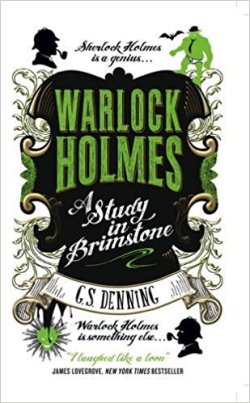
A Study in Brimstone by G. S. Denning
A Study in Brimstone
by G. S. Denning
Titan Books, 2016

I’m not a fan of Arthur Conan Doyle’s original Sherlock Holmes stories (although I’ve read all of them at least once, some more than once, and I’ve see all of the major BBC television adaptations). I dislike Victorian literature in general.

I’m also not much of a fan of contemporary paranormal fiction—I don’t dislike it but it’s not something I seek out.

So there’s really no reason why I should like G. S. Denning’s “Warlock Holmes” series as much as I do.

Because I kinda love it.

Continue reading “Book Review: Warlock Holmes by G. S. Denning”

Book Review: The Kill Society by Richard Kadrey

Cover of the book The Kill Society by Richard Kadrey
The Kill Society
by Richard Kadrey
Harper/Voyager, 2017

This review was first published by Booklist on June 7, 2017.

Sandman Slim is dead (for real this time) and abandoned in a desolate part of the Tenebrae, the land of the dead. He’s discovered by a motorized roving gang trailing destruction and death in its wake, led by a religious fanatic looking for an ultimate weapon to kill God. Slim runs into some old friends along the way. It culminates in a fight between angels at the gates of Heaven itself. And Wormwood is up to something, as always. All because Sandman Slim tried to break open Heaven. This is Kadrey’s version of a Mad Max movie laid out as a cautionary tale about religious fanaticism. It’s a fast-paced story and an ideal setting to show off more of his richly imagined hereafter. The ending puts Sandman Slim right where he most wants to be, but in the last position he ever wanted. This entry in the series is plenty entertaining, but there are a few too many coincidences to be believable. Kadrey’s social criticism is much more obvious than usual, and it hits closer to home.

On Food and Headaches

I started getting headaches in my mid-20s. I threw out my back at work one day and never did anything to fix it—I relied on my standard “ignore it and it’ll go away” strategy. This caused entrenched muscle imbalances, which led to steadily mounting tension along the length of my spine, which eventually came to rest in my neck and shoulders.

I started getting tension headaches at the back of my head, where my spine connects to my skull. These headaches are a dull throb on one side or the other, sometimes nothing much, sometimes bad enough to make me sweaty and nauseous and shaky. I always knew when one was coming on because it would be preceded by a few hours of mounting tension in my back and shoulders. I always knew when one would be really bad because my neck would start cracking every time I moved my head.

Continue reading “On Food and Headaches”

Book Review: Dead on Arrival by Matt Richtel

Cover of the book Dead on Arrival by Matt Richtel
Dead on Arrival
by Matt Richtel
Morrow, 2017

This review was first published by Booklist on May 31, 2017.

The promotional blurbs for Richtel’s latest compare it to Michael Crichton’s thrillers and Stephen King’s The Stand, and these comparisons aren’t without some merit. The story is similar in atmosphere and style to both suggestions, and it’s a cautionary tale about technology and science left unchecked. An airplane lands in a remote town and everyone on the ground appears to be dead. A disgraced doctor on board is the best hope to discover what’s going on. The first half of the novel is split between this mystery and flashbacks to the doctor’s past and his relationship to a particular individual who works for an online technology giant. A twist at the midpoint of the book radically changes the direction of the story, and the second half proceeds as a conventional race-against-the-clock thriller. The pacing is excellent, the science is detailed and believable, and the flashback structure is handled well. Richtel’s writing style is urgent, making this an enjoyable and gripping read.

Remembrance of Earth’s Past by Liu Cixin: A Critical Follow-Up

Shortly after I published my review of the “Remembrance of Earth’s Past” trilogy by Liu Cixin, I tweeted a link to it and @ referenced both the author and the two English language translators of the series, Ken Liu and Joel Martinsen. Shortly after that tweet, Ken posted a series of tweets in response.

I’m incredibly grateful that Ken took the time to respond. His tweets are insightful and his critique of my review is helpful. I’ve included them here with his permission. Please read through them.

https://twitter.com/kyliu99/status/858025429793468417 Continue reading “Remembrance of Earth’s Past by Liu Cixin: A Critical Follow-Up”

Book Review: Remembrance of Earth’s Past by Cixin Liu

Remembrance of Earths Past by Cixin Liu

The Three-Body Problem by Cixin Liu
(translated by Ken Liu)
Tor, 2014

The Dark Forest by Cixin Liu
(translated by Joel Martinsen)
Tor, 2015

Death’s End by Cixin Liu
(translated by Ken Liu)
Tor, 2016

In my review of Leviathan Wakes by James S. A. Corey, I compare reading it to reading Asimov’s Foundation when I was a kid.

I’m going to make the same comparison with the “Remembrance of Earth’s Past” series by Cixin Liu. Reading this awakens the same sense of discovery and amazement as reading Asimov when I was a child. Liu gifts us a story that’s astounding in scope and vision, with some of a biggest Big Ideas in science fiction.

The English translations of Liu’s work boast an admirable level of stylistic polish. There’s a spare and refreshing lyricism at work here. I’m as impressed with the quality of the translations as I am with Liu’s story.

This is what science fiction should be. I’m in awe of Liu’s imagination and accomplishment.

Continue reading “Book Review: Remembrance of Earth’s Past by Cixin Liu”