Book Review: The Science of Science Fiction: The Influence of Film and Fiction on the Science and Culture of Our Times by Mark Brake

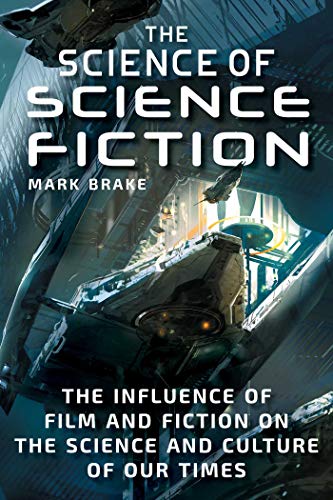
The Science of Science Fiction: The Influence of Film and Fiction on the Science and Culture of Our Times
by Mark Brake
Skyhorse, 2018

This review was first published by Booklist on November 2, 2018.

Brake (Different Engines, 2007, with Neil Hook) is a scholar and authority on how science fiction can influence the course of science and define our popular perceptions. The short essays—none longer than half a dozen pages—collected here are grouped into four main themes: “Space,” “Time,” “Machine,” and “Monster.” Some essays fit more than one theme, but they give the work a useful structure. Each essay is a quick read, but none go into much depth. Anyone looking for a robust scholarly treatment of the subject might be disappointed. Brake takes a valuable historical view, citing several stories from the earliest days of the genre, dating back to the 1600s and earlier, as well as classic and modern movies. However, the examples he chooses seem somewhat random and lack modern literary selections. He examines the history of science from Galileo and Newton to Einstein and the atomic bomb and on to the invention of computers and the internet. The book comes across as almost a random selection of short works; nonetheless, it is insightful, fascinating, and an easy read.

Book Review: The Best American Science Fiction and Fantasy 2018 edited by N. K. Jemisin and John Joseph Adams

Cover of the book The Best American Science Fiction and Fantasy 2018 edited by N. K. Jemisin and John Joseph Adams
The Best American Science Fiction and Fantasy 2018
edited by N. K. Jemisin and John Joseph Adams
HMH/Mariner, 2018

This review was first published by Booklist on October 26, 2018.

**STARRED REVIEW** If these annual best-of anthologies indicate where speculative fiction is heading, readers should be excited for the future of the genre. The 20 stories collected here aren’t necessarily the most popular of the year. Indeed, they are selected from a wider variety of publications than the typical mainstream sf magazines. These tales are the year’s most innovative and interesting, prime examples of artists seeking to push the boundaries of their art. This collection brings to mind Harlan Ellison’s Dangerous Visions anthologies, starting in 1967, in the way it showcases cutting-edge work, ranging from hard-science fiction to fantasy, to dystopia. There’s also a stronger emphasis on the eerie horror than most best-of collections. According to Jemisin (The Stone Sky, 2017), guest editor for this installment, these are stories of revolution—some literally, while some revolt against the style and tropes of the genre, while others offer revolutionary reimaginings of the world and society. These are stories to take your breath away, to make you laugh, to bring you to despair, to give you hope, to creep you out, and even to break your heart. Some work better than others, but all are interesting, vibrant, and worthy.

Movie Review: A Star Is Born by Bradley Cooper

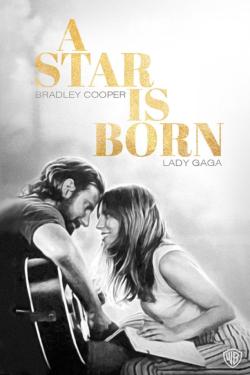
A Star Is Born, directed by Bradley Cooper
A Star Is Born
Directed by Bradley Cooper
Screenplay by Eric Roth, Bradley Cooper & Will Fetters
Based on the screenplay by William A. Wellman, Robert Carson, Dorothy Parker & Alan Campbell
Produced & distributed by Warner Bros. Pictures, 2018

I didn’t think I was all that interested in seeing the new version of A Star Is Born. I’ve rarely been happier to be proven mistaken.

This film is phenomenal.

I’m a fan of Lady Gaga and Bradley Cooper, both. So perhaps I shouldn’t be too surprised that I ended up spending 2.25 hours sitting in a theater, losing myself in them.

I’m not going to offer a plot synopsis or go through specific scenes. There are a couple of points I want to make, but mostly I want to offer a list of all the reactions I had watching this movie. In no particular order:

Continue reading “Movie Review: A Star Is Born by Bradley Cooper”

Book Review: Probability Shadow by Mark Laporta

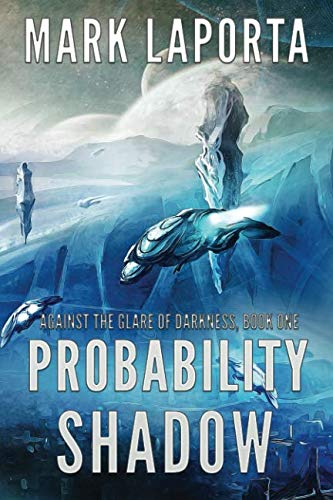
Cover of the book Probability Shadow by Mark Laporta
Probability Shadow
by Mark Laporta
Chickadee Prince, 2018

This review was first published by Booklist on October 4, 2018.

Laporta’s skill with intricate world building is on full display in this first novel of a new trilogy for adults (after Mirror at the Heart of Time, 2017, for teens). He’s created an engrossing far-future reality of galaxy-spanning civilizations, populated by multiple alien races (bodiless symbionts, sentient AI, and mysterious creatures who exist outside of linear time, among others). His imagination is impressive and establishes a delightful playground for the trilogy to explore. This is a political-intrigue story with aspects of military sf and some action sequences. The main character is a diplomat and the conflict is set off by a shortage of vital resources. It’s not the typical fast-paced plot one expects for this kind of setting; that alone makes Probability Shadow interesting. Laporta’s characters are compelling, if drawn rather broadly. The plot gets convoluted and the short chapters make for abrupt transitions, but the sheer scope of his imagination is worth the experience and redeems minor stylistic missteps. The setup for the next book promises an even grander vision.

Book Review: Astounding: John W. Campbell, Isaac Asimov, Robert A. Heinlein, L. Ron Hubbard, and the Golden Age of Science Fiction by Alec Nevala-Lee

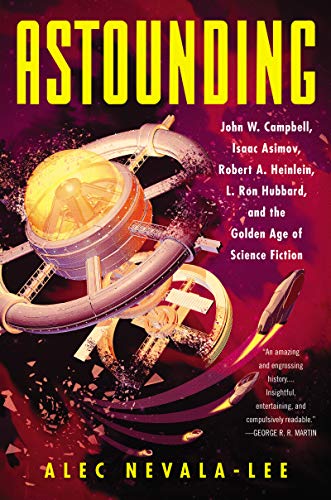
Cover of the book Astounding: John W. Campbell, Isaac Asimov, Robert A. Heinlein, L. Ron Hubbard, and the Golden Age of Science Fiction by Alec Nevala-Lee
Astounding: John W. Campbell, Isaac Asimov, Robert A. Heinlein, L. Ron Hubbard, and the Golden Age of Science Fiction
by Alec Nevala-Lee
HarperCollins/Dey Street, 2018

This review was first published by Booklist on September 15, 2018.

Nevala-Lee (Eternal Empire, 2013) presents a necessary addition to the history of science fiction: a critical look at the life and work of John W. Campbell, legendary editor of Astounding magazine and the central architect of science fiction’s golden age. This period, and the men most central to it, defined the path that still dominates the genre today. Part biography, part history, Astounding covers Campbell’s relationships with his most important writers (Asimov, Heinlein, and Hubbard); their tumultuous personal lives; the role their wives played in their careers; and the effect WWII and the atomic bomb had on the genre. Campbell and others truly believed science fiction could save the world. Nevala-Lee delves into the development of dianetics and Campbell’s split with Hubbard over Scientology. He also addresses the many biases, prejudices, and personal failings of these eminent men. At times, it feels like Nevala-Lee attempts to accomplish too much, and the mix of history with biography isn’t always comfortable, but it’s all necessary to understand how science fiction became what it is today.

Book Review: Lost Mars: Stories from the Golden Age of the Red Planet edited by Mike Ashley

Cover of the book Lost Mars: Stories from the Golden Age of the Red Planet edited by Mike Ashley
Lost Mars: Stories from the Golden Age of the Red Planet
edited by Mike Ashley
Univ. of Chicago/British Library, 2018

This review was first published by Booklist on August 20, 2018.

There has been a craze lately for retro and golden-age science fiction, and Lost Mars fits right into that trend, presenting a collection of 10 classic short stories about Mars written between 1887 and 1963. It features works by H. G. Wells, Ray Bradbury, and J. G. Ballard as well as authors less well known to modern audiences. These stories are of the highest quality and illustrate how our evolving understanding of the Red Planet changed the way we wrote about it and how Mars came to occupy a prominent position in our hopes, dreams, and fears as the modern age dawned and grew. Editor Ashley (The Mammoth Book of Time Travel SF, 2013) offers a brief and thoroughly researched introduction which provides background information about both the major Martian discoveries of the nineteenth, twentieth, and twenty-first centuries and the history of Martian science fiction from H. G. Wells through Andy Weir. It serves as a fascinating overview of the history of Mars in science fiction, from the birth of the genre through the beginning of the space age.

Book Review: Resistant by Rachael Sparks

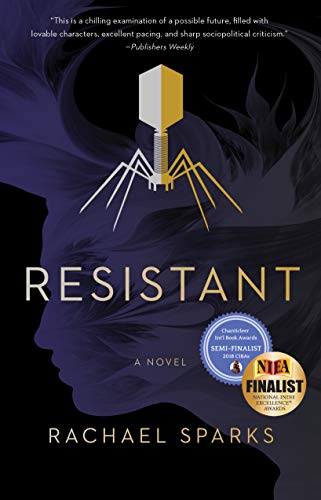
Cover of the book Resistant by Rachael Sparks
Resistant
by Rachael Sparks
SparkPress, 2018

This review was first published by Booklist on August 20, 2018.

In the near future, antibiotic-resistant bacteria have decimated the population. One young woman may hold the cure, and, aided by the Resistance, she is on the run from nefarious government agents. Besieged by betrayals, she must figure out whom to trust and how to save mankind. Sparks’ debut is a thrill ride for readers of biological thrillers like those of Robin Cook. The strong pacing and characterization contribute to an easily believable world with just the right amount of technology to satisfy more traditional sf readers. There is even a dash of romance. Despite the occasional awkward transition and slightly heavy-handed exposition, Resistant is a potent combination of elements, making this a novel that’s sure to appeal to a wide audience.

Movie Review: Solo: A Star Wars Story

Solo: A Star Wars Story directed by Ron Howard
Solo: A Star Wars Story
Directed by Ron Howard
Written by Jonathan & Lawrence Kasdan
Produced by Lucasfilm, Ltd.
Distributed by Walt Disney Studios, 2018

What I find most interesting about Solo: A Star Wars Story is that it doesn’t really feel like a Star Wars movie. That’s mostly a good thing.

What I mean is: it doesn’t feel important. It’s the only Star Wars movie so far that isn’t significant. In the original trilogy, Lucas explicitly sought to create a modern myth, a la Joseph Campbell. There’s an inherent sense of weight to it. The new trilogy sought to bring the Star Wars universe back to relevance and so it has a sense of mission, as well as a similar sense of modern myth. Rogue One tells a tale of emotional, moral, and narrative consequence.

Solo doesn’t have any of that. It’s not important to the main trilogies and it doesn’t take itself all that seriously. Which makes it one of the most fun Star Wars movies I’ve seen. It’s pure entertainment. It’s refreshing.

Continue reading “Movie Review: Solo: A Star Wars Story

Book Review: Dispatches from Planet 3: 32 (Brief) Tales on the Solar System, the Milky Way, and Beyond by Marcia Bartusiak

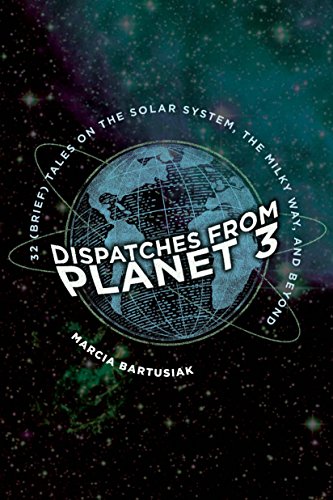
Cover of the book Dispatches from Planet 3: 32 (Brief) Tales on the Solar System, the Milky Way, and Beyond by Marcia Bartusiak
Dispatches from Planet 3: 32 (Brief) Tales on the Solar System, the Milky Way, and Beyond
by Marcia Bartusiak
Yale, 2018

This review was first published by Booklist on August 13, 2018.

These 32 short essays cover major events in the history of astronomy and cosmology, ranging from the demotion of Pluto to the status of dwarf planet, the evolution of galaxies, the detection of gravity waves and neutrinos, and the role of time in the Big Bang. Bartusiak’s (The Day We Found the Universe, 2009) goal is to provide historical context for many recent discoveries and a summary of how we got to where we are now in the science of space, offered in easy-to-read, bite-size morsels. Many of these essays cover events from the late 1800s through the mid-1900s, the period when modern cosmology was born, but the collection isn’t arranged chronologically. Rather, the essays are grouped, small to large, by topic, starting from the solar system and working out to the larger universe. Of particular value, several essays focus on women who did significant work, but who historically haven’t gotten credit. This is an informative and rewarding read for anyone interested in our understanding of the universe. Recommended for fans of Amanda Gefter’s Trespassing on Einstein’s Lawn (2014).

Book Review: Exit Strategy by Martha Wells

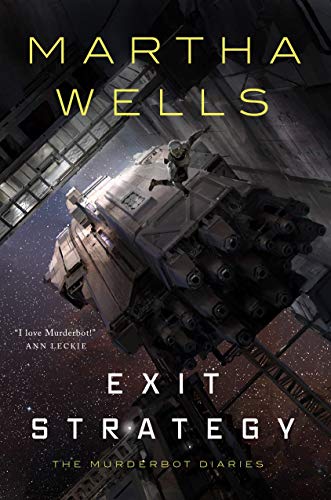
Cover of the book Exit Strategy by Martha Wells
Exit Strategy
by Martha Wells
Tor, 2018

This review was first published by Booklist in August, 2018.

After finding evidence proving that the GrayCris Corporation engaged in illegal activities, Murderbot heads out to hand the case over to Dr. Mensah, its former owner. But Dr. Mensah has disappeared, and Murderbot must track her down—straight into the heart of enemy territory. Saving its mentor and taking down GrayCris are just the beginning of its challenges—Murderbot also has to figure out who it is, where it fits in society, and just how it is supposed to relate to all these people. The fourth installment of Wells’ Murderbot Diaries (after Rogue Protocol, 2018) will satisfy readers’ hopes for this series finale. It follows the same basic structural formula as its predecessors, so it has all the action fans expect. Exit Strategy tones down the humor a bit but adds depth to Murderbot’s introspection as it wrestles with questions of identity that it has been avoiding, and the story leaves it to decide its own future. Everything comes full circle while remaining appropriately open ended. Wells gives us a worthy conclusion to one of the best series in recent memory.