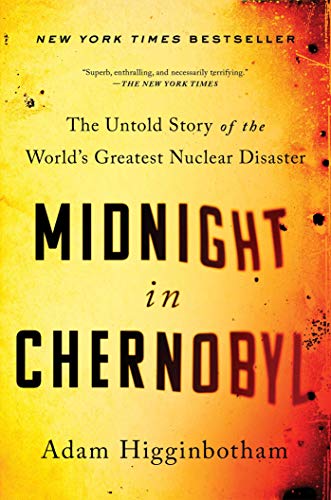
Midnight in Chernobyl: The Untold Story of the World’s Greatest Nuclear Disaster by Adam Higginbotham Simon & Schuster, 2019
This review was first published by Booklist on January 1, 2019.
**STARRED REVIEW** Midnight in Chernobyl is a top-notch historical narrative: a tense, fast-paced, engrossing, and revelatory product of more than a decade of research. Higginbotham interviewed most of the surviving central participants in the disaster, examined volumes of newly declassified Soviet documents, and surveyed previous research and reportage. The result is a stunningly detailed account of the explosion of Reactor Four at the Chernobyl nuclear-power plant on April 26, 1986. It offers a brief history of the development of the Soviet nuclear-power program leading up to the construction of the plant at Chernobyl, a second-by-second account of the night of the accident, the confluence of causes, the evacuation of the surrounding countryside, the containment and cleanup efforts, and a deep dive into the aftermath: the medical and environmental consequences, the political machinations and missteps, the role Chernobyl played in the downfall of the USSR, and the effect it had on the pursuit of nuclear power worldwide. For all its wealth of information, the work never becomes overwhelming or difficult to follow. Higginbotham humanizes the tale, maintaining a focus on the people involved and the choices, both heroic and not, they made in unimaginable circumstances. This is an essential human tale with global consequences.
This review was first published by Booklist on December 15, 2018.
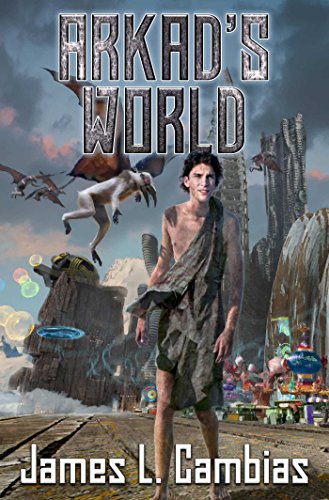
Arkad is the only human on a world populated by aliens, his past a mystery. When other humans arrive, he seeks them out, determined to find a way off the planet to rejoin his own kind. Cambias (A Darkling Sea, 2014) has achieved a feat of world building: an expansive, believable setting with fascinating aliens, compelling mysteries, and a rich sense of history. The novel is a classic quest story, a well-paced series of encounters with different folk along the way, building momentum toward a final confrontation with Arkad’s past. Though the book is not without flaws, it does boast a rare instance of a deus ex machina that actually works, adding a delicious twist to the end.
This title has been recommended for young adult readers:
YA/Mature Readers: With a young adult protagonist, this will appeal to older teen readers who can handle the explicit references to sexual anatomy.
The traditional definition of library neutrality holds that the library is a space where everyone is welcome, where all views are represented, and where everyone has the freedom to explore ideas and make their voices heard.
I’ve said this before and I’ll say it again: This definition doesn’t describe a neutral space. It describes a space where everyone is equal.
Equality is a direct concern of libraries—especially public libraries. We pledge to serve all members of our community equally, without bias or judgement. We commit to making space for all voices, perspectives, and cultural traditions of the communities we serve. Equality is built into our professional values.
Let’s say you have two lines that are unequal in length:
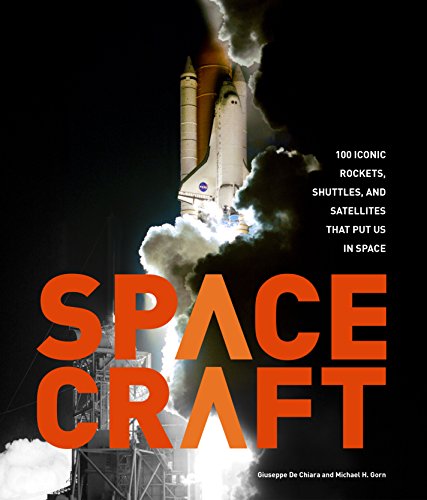
Spacecraft: 100 Iconic Rockets, Shuttles, and Satellites That Put Us in Space by Michael H. Gorn Quarto/Voyageur, 2018
This review was first published by Booklist on December 1, 2018.
Spacecraft profiles 100 craft that are significant in the history of space exploration: rockets, orbiters, spaceplanes, landers, space stations, satellites, and exploratory craft from the U.S., Russia, Europe, China, and more recent private, corporate ventures into space flight. The articles offer thorough physical and technical descriptions of each craft, along with a history of its development and use. The book is organized into 3 main sections, each covering a 20-year span from 1957 through 2017. Articles are further organized by the type of craft, with each country’s being grouped together. It’s not a strictly chronological narrative, but it provides an overall understanding of the history of the development and deployment of spacecraft. Readers can also use the table of contents to flip to any specific article that interests them. The articles are accompanied by numerous full-color drawings by illustrator Giuseppe De Chiara that show the details even better than the photographs do. This work is high quality; an effective hybrid of reference volume and coffee-table book. A solid choice for any public library.
Nighttime Is My Time by Mary Higgins Clark Simon & Schuster Audio, 2004 Read by Jan Maxwell
I got really into the TV show American Chopper some years back. I don’t have any interest in motorcycles and I couldn’t care less about the family drama between the stars of that show. But I loved watching it. I loved watching genuinely skilled people create their visions.
I love watching master craftspeople at work.
There’s joy in witnessing that level of skill. This is why I love shows about carpentry, home renovation, car mods, tattooing. It’s one of the many reasons why I love music, dance, theater, and athletics. It doesn’t matter if any of these interest me personally, I’m fascinated watching people who love doing them. Any human endeavor which requires skill to do well, is worth witnessing.
Reading Nighttime Is My Time by Mary Higgins Clark reminds me of watching American Chopper. She crafts her stories. Her control of plot and pacing and structure, how she manipulates the reader to place suspicion on different characters at different times, her myriad misdirections, how she builds the tension. She shows her work and gives us a ring-side seat to her creative process.
I enjoy witnessing her craft.
That being said, Nighttime Is My Time isn’t a very good book. I listened to the audiobook and the narration by Jan Maxwell is excellent. But the book itself drove me a bit nuts.
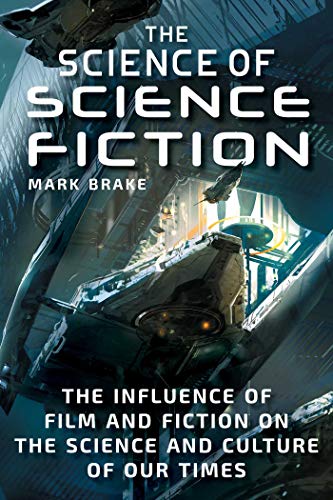
The Science of Science Fiction: The Influence of Film and Fiction on the Science and Culture of Our Times by Mark Brake Skyhorse, 2018
This review was first published by Booklist on November 2, 2018.
Brake (Different Engines, 2007, with Neil Hook) is a scholar and authority on how science fiction can influence the course of science and define our popular perceptions. The short essays—none longer than half a dozen pages—collected here are grouped into four main themes: “Space,” “Time,” “Machine,” and “Monster.” Some essays fit more than one theme, but they give the work a useful structure. Each essay is a quick read, but none go into much depth. Anyone looking for a robust scholarly treatment of the subject might be disappointed. Brake takes a valuable historical view, citing several stories from the earliest days of the genre, dating back to the 1600s and earlier, as well as classic and modern movies. However, the examples he chooses seem somewhat random and lack modern literary selections. He examines the history of science from Galileo and Newton to Einstein and the atomic bomb and on to the invention of computers and the internet. The book comes across as almost a random selection of short works; nonetheless, it is insightful, fascinating, and an easy read.
It’s important to me to have my perspectives, assumptions, and biases challenged in healthy ways. I seek out opportunities to learn how other people experience and view the world. This is an ongoing process. I believe it makes me a better person, more kind and compassionate, makes me stronger.
It’s my passion for understanding human nature as fully as I can. It’s my passion for serving my community—all members and all needs. Building mutual understanding and respect is how you make the world a better place.
I’ve spent a lot of time recently reading books about race and privilege. I have several more books on my list to read. This is a list of titles which challenge my perspectives and open my eyes to aspects I hadn’t considered before. Here they are, via my current library account. *
The Best American Science Fiction and Fantasy 2018 edited by N. K. Jemisin and John Joseph Adams HMH/Mariner, 2018
This review was first published by Booklist on October 26, 2018.
**STARRED REVIEW** If these annual best-of anthologies indicate where speculative fiction is heading, readers should be excited for the future of the genre. The 20 stories collected here aren’t necessarily the most popular of the year. Indeed, they are selected from a wider variety of publications than the typical mainstream sf magazines. These tales are the year’s most innovative and interesting, prime examples of artists seeking to push the boundaries of their art. This collection brings to mind Harlan Ellison’s Dangerous Visions anthologies, starting in 1967, in the way it showcases cutting-edge work, ranging from hard-science fiction to fantasy, to dystopia. There’s also a stronger emphasis on the eerie horror than most best-of collections. According to Jemisin (The Stone Sky, 2017), guest editor for this installment, these are stories of revolution—some literally, while some revolt against the style and tropes of the genre, while others offer revolutionary reimaginings of the world and society. These are stories to take your breath away, to make you laugh, to bring you to despair, to give you hope, to creep you out, and even to break your heart. Some work better than others, but all are interesting, vibrant, and worthy.
A Star Is Born Directed by Bradley Cooper Screenplay by Eric Roth, Bradley Cooper & Will Fetters Based on the screenplay by William A. Wellman, Robert Carson, Dorothy Parker & Alan Campbell Produced & distributed by Warner Bros. Pictures, 2018
I didn’t think I was all that interested in seeing the new version of A Star Is Born. I’ve rarely been happier to be proven mistaken.
This film is phenomenal.
I’m a fan of Lady Gaga and Bradley Cooper, both. So perhaps I shouldn’t be too surprised that I ended up spending 2.25 hours sitting in a theater, losing myself in them.
I’m not going to offer a plot synopsis or go through specific scenes. There are a couple of points I want to make, but mostly I want to offer a list of all the reactions I had watching this movie. In no particular order: