Book Review: The Science Fiction Fanzine Reader: Focal Points 1930–1960 edited by Luis Ortiz

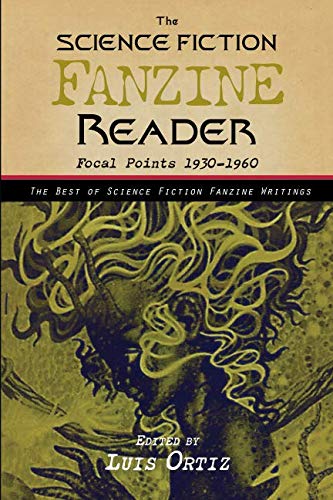
Cover of the book The Science Fiction Fanzine Reader: Focal Points 1930–1960 edited by Luis Ortiz
The Science Fiction Fanzine Reader: Focal Points 1930–1960
edited by Luis Ortiz
IPG/Nonstop, 2019

This review was first published by Booklist on March 15, 2019.

The Science Fiction Fanzine Reader offers a fascinating look into the culture of early science fiction fandom during its first three decades. Given the cheap and ephemeral nature of these fanzines, this book is the culmination of a remarkable research project by Ortiz (Emshwiller, 2007). He collects dozens of articles, editorials, letters, and commentary written by sf fans between 1930 and 1960, as well as a handful of pieces where fans reflect back on their early days in fandom. It’s an engrossing glimpse into the mindset of sf readers in the middle of the twentieth century. This isn’t a straight history—readers need to have a solid knowledge of the history of science fiction and fandom in order to get the most out of it. The selections don’t seem to be in any order—they’re not grouped by theme or chronologically, which obscures broader patterns within the history of fanzines. Still, this book is for committed historians of the sf genre.

Book Review: We Are Mayhem by Michael Moreci

Cover of the book We Are Mayhem by Michael Moreci
We Are Mayhem
by Michael Moreci
St. Martin’s, 2019

This review was first published by Booklist on March 1, 2019.

Moreci’s second novel in his Black Star Renegades series (Black Star Renegades, 2018) is even more compelling than its predecessor: action packed and funny, with more emotional resonance. We Are Mayhem deepens established characters’ relationships and explores how they inhabit their world. The narrative follows two alternating story lines—Cade, searching for answers to help him control the Rokura, and Kira, leading the rebellion against Praxis. Each chapter ends with a cliff-hanger, and there are several surprise reveals and an unexpected ending. Though occasionally the novelty of Moreci’s characters and ideas outpace his unsophisticated writing style, readers who are hooked will be eager for the next installment.

Book Review: Titanshade by Dan Stout

Cover of the book Titanshade by Dan Stout
Titanshade
by Dan Stout
DAW, 2019

This review was first published by Booklist on March 1, 2019.

**STARRED REVIEW** Titanshade is a city running out of oil, and there’s a scramble to find alternative energy sources. When a delegate central to delicate negotiations is brutally murdered, it threatens to upend the future of the city. But no one knows who wanted the delegate dead or why, and a disgraced cop must descend into a complex underbelly of crime and political machinations to uncover the truth. What he discovers could cost him what he holds most dear. Titanshade is entirely unique: it’s a gritty noir murder mystery on an alien world with multiple species, a strange form of sorcery, a powerful religion, and large-scale political intrigue. And it’s set in the 1970s, with pay phones, 8-track tapes, racial tensions, and arguments about disco music. What’s amazing is how good it is at being all of these: the genuinely compelling mystery lives in a hugely original sf world and an immersive historical milieu. Moreover, debut novelist Stout is smart enough to let his characters live in this world without trying too hard to show it off. The setting just is, without effort, and that makes it eminently believable. This book should appeal equally to both sf fans and noir aficionados.

Book Review: Terminal Uprising by Jim C. Hines

Cover of the book Terminal Uprising by Jim C. Hines
Terminal Uprising
by Jim C. Hines
DAW, 2019

This review was first published by Booklist on January 18, 2019.

Terminal Uprising cements the reputation of the Janitors of the Post-Apocalypse as an exciting and rewarding series. The second entry (after Terminal Alliance, 2017) picks up four months after the end of the first. This time, Mops and crew are headed to Earth, the world of feral humans, and they’re accompanied by an unexpected ally. What they discover upends much of what they thought they knew about humanity’s downfall and could tip the balance in the war between Krakau and Prodryans. As always, their expertise in the custodial arts serves them well in unexpected ways. (Even better: librarians help save the day.) This book is plenty funny but less overtly jokey than the first one. The story is more interesting, and the character development is more multifaceted. Hines has grown confident in this world, and he continues to expand it in fascinating directions. The narrative takes a bit to establish momentum, but the latter half is quick and exciting. Overall, a strong edition to an excellent series that will appeal to fans of Becky Chambers.

This title has been recommended for young adult readers:

YA/General Interest: Humor and Hitchhiker’s Guide sensibilities make this series a good fit for sf-loving teens who aren’t put off by salty language.

Book Review: Arkad’s World by James L. Cambias

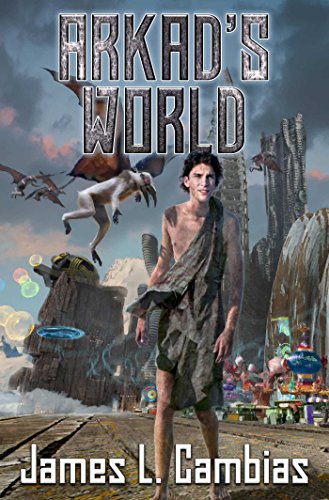
Cover of the book Arkad's World by James L. Cambias
Arkad’s World
by James L. Cambias
Baen, 2019

This review was first published by Booklist on December 15, 2018.

Arkad is the only human on a world populated by aliens, his past a mystery. When other humans arrive, he seeks them out, determined to find a way off the planet to rejoin his own kind. Cambias (A Darkling Sea, 2014) has achieved a feat of world building: an expansive, believable setting with fascinating aliens, compelling mysteries, and a rich sense of history. The novel is a classic quest story, a well-paced series of encounters with different folk along the way, building momentum toward a final confrontation with Arkad’s past. Though the book is not without flaws, it does boast a rare instance of a deus ex machina that actually works, adding a delicious twist to the end.

This title has been recommended for young adult readers:

YA/Mature Readers: With a young adult protagonist, this will appeal to older teen readers who can handle the explicit references to sexual anatomy.

Book Review: The Science of Science Fiction: The Influence of Film and Fiction on the Science and Culture of Our Times by Mark Brake

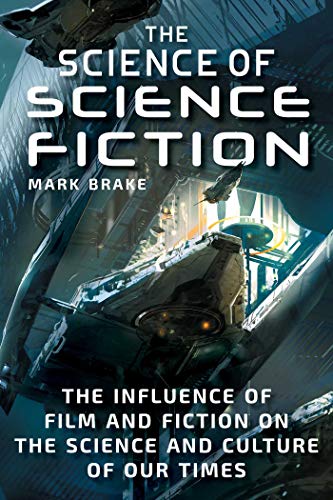
The Science of Science Fiction: The Influence of Film and Fiction on the Science and Culture of Our Times
by Mark Brake
Skyhorse, 2018

This review was first published by Booklist on November 2, 2018.

Brake (Different Engines, 2007, with Neil Hook) is a scholar and authority on how science fiction can influence the course of science and define our popular perceptions. The short essays—none longer than half a dozen pages—collected here are grouped into four main themes: “Space,” “Time,” “Machine,” and “Monster.” Some essays fit more than one theme, but they give the work a useful structure. Each essay is a quick read, but none go into much depth. Anyone looking for a robust scholarly treatment of the subject might be disappointed. Brake takes a valuable historical view, citing several stories from the earliest days of the genre, dating back to the 1600s and earlier, as well as classic and modern movies. However, the examples he chooses seem somewhat random and lack modern literary selections. He examines the history of science from Galileo and Newton to Einstein and the atomic bomb and on to the invention of computers and the internet. The book comes across as almost a random selection of short works; nonetheless, it is insightful, fascinating, and an easy read.

Book Review: The Best American Science Fiction and Fantasy 2018 edited by N. K. Jemisin and John Joseph Adams

Cover of the book The Best American Science Fiction and Fantasy 2018 edited by N. K. Jemisin and John Joseph Adams
The Best American Science Fiction and Fantasy 2018
edited by N. K. Jemisin and John Joseph Adams
HMH/Mariner, 2018

This review was first published by Booklist on October 26, 2018.

**STARRED REVIEW** If these annual best-of anthologies indicate where speculative fiction is heading, readers should be excited for the future of the genre. The 20 stories collected here aren’t necessarily the most popular of the year. Indeed, they are selected from a wider variety of publications than the typical mainstream sf magazines. These tales are the year’s most innovative and interesting, prime examples of artists seeking to push the boundaries of their art. This collection brings to mind Harlan Ellison’s Dangerous Visions anthologies, starting in 1967, in the way it showcases cutting-edge work, ranging from hard-science fiction to fantasy, to dystopia. There’s also a stronger emphasis on the eerie horror than most best-of collections. According to Jemisin (The Stone Sky, 2017), guest editor for this installment, these are stories of revolution—some literally, while some revolt against the style and tropes of the genre, while others offer revolutionary reimaginings of the world and society. These are stories to take your breath away, to make you laugh, to bring you to despair, to give you hope, to creep you out, and even to break your heart. Some work better than others, but all are interesting, vibrant, and worthy.

Book Review: Probability Shadow by Mark Laporta

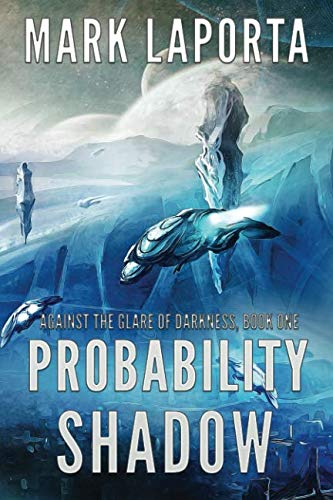
Cover of the book Probability Shadow by Mark Laporta
Probability Shadow
by Mark Laporta
Chickadee Prince, 2018

This review was first published by Booklist on October 4, 2018.

Laporta’s skill with intricate world building is on full display in this first novel of a new trilogy for adults (after Mirror at the Heart of Time, 2017, for teens). He’s created an engrossing far-future reality of galaxy-spanning civilizations, populated by multiple alien races (bodiless symbionts, sentient AI, and mysterious creatures who exist outside of linear time, among others). His imagination is impressive and establishes a delightful playground for the trilogy to explore. This is a political-intrigue story with aspects of military sf and some action sequences. The main character is a diplomat and the conflict is set off by a shortage of vital resources. It’s not the typical fast-paced plot one expects for this kind of setting; that alone makes Probability Shadow interesting. Laporta’s characters are compelling, if drawn rather broadly. The plot gets convoluted and the short chapters make for abrupt transitions, but the sheer scope of his imagination is worth the experience and redeems minor stylistic missteps. The setup for the next book promises an even grander vision.

Book Review: Lost Mars: Stories from the Golden Age of the Red Planet edited by Mike Ashley

Cover of the book Lost Mars: Stories from the Golden Age of the Red Planet edited by Mike Ashley
Lost Mars: Stories from the Golden Age of the Red Planet
edited by Mike Ashley
Univ. of Chicago/British Library, 2018

This review was first published by Booklist on August 20, 2018.

There has been a craze lately for retro and golden-age science fiction, and Lost Mars fits right into that trend, presenting a collection of 10 classic short stories about Mars written between 1887 and 1963. It features works by H. G. Wells, Ray Bradbury, and J. G. Ballard as well as authors less well known to modern audiences. These stories are of the highest quality and illustrate how our evolving understanding of the Red Planet changed the way we wrote about it and how Mars came to occupy a prominent position in our hopes, dreams, and fears as the modern age dawned and grew. Editor Ashley (The Mammoth Book of Time Travel SF, 2013) offers a brief and thoroughly researched introduction which provides background information about both the major Martian discoveries of the nineteenth, twentieth, and twenty-first centuries and the history of Martian science fiction from H. G. Wells through Andy Weir. It serves as a fascinating overview of the history of Mars in science fiction, from the birth of the genre through the beginning of the space age.

Book Review: Resistant by Rachael Sparks

Cover of the book Resistant by Rachael Sparks
Resistant
by Rachael Sparks
SparkPress, 2018

This review was first published by Booklist on August 20, 2018.

In the near future, antibiotic-resistant bacteria have decimated the population. One young woman may hold the cure, and, aided by the Resistance, she is on the run from nefarious government agents. Besieged by betrayals, she must figure out whom to trust and how to save mankind. Sparks’ debut is a thrill ride for readers of biological thrillers like those of Robin Cook. The strong pacing and characterization contribute to an easily believable world with just the right amount of technology to satisfy more traditional sf readers. There is even a dash of romance. Despite the occasional awkward transition and slightly heavy-handed exposition, Resistant is a potent combination of elements, making this a novel that’s sure to appeal to a wide audience.