ALA Report on Internet Filtering

Bravo to the American Library Association for compiling this report!

Over-filtering in schools and libraries harms education, new ALA report finds by Jazzy Wright (posted on June 11, 2014)

In addition to raising essential points regarding the negative impact that over-filtering the internet has on education and learning (and disproportionately for the poor), the article highlights an issue that I feel very strongly about:

“[S]chools that over-filter restrict students from learning key digital readiness skills that are vital for the rest of their lives. Over-blocking in schools hampers students from developing their online presence and fully understanding the extent and permanence of their digital footprint. … Filtering beyond CIPA’s requirements results in critical missed opportunities to prepare students to be responsible users, consumers, and producers of online content and resources.”

This echoes an argument that I’ve made before—censorship does our children a vast disservice in the long run. When it comes to libraries, I would also reiterate—it’s not a library’s job to police people.

What I like best about this report from the ALA is that it tells us the same things about internet filtering that the Librarian in Black has been telling us for years. It’s good to see her message recognized as an official stance of the ALA.
Read the full report here (PDF).

The Potential of Ebooks, Part 2: Another Modest Proposal

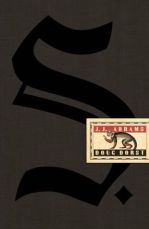
S.
S. by Doug Dorst & J.J. Abrams
I keep thinking about the novel S. and how Doug Dorst and J.J. Abrams intended it to be a celebration of the printed book—they created an experience calibrated to take advantage of aspects that are unique to printed material.

It has me wondering—how do you create a story that equally celebrates ebooks and takes full advantage of the aspects that are unique to electronic formats?

Part of the challenge with such a goal is that we haven’t even come close to developing the full potential of ebooks yet: multimedia integration, burying easter eggs in the pixels, ereader versions of the Konami Code… There’s tremendous opportunity for a level of interactivity that print simply can’t match and we’ve barely scratched the surface.
Continue reading “The Potential of Ebooks, Part 2: Another Modest Proposal”

Everything to Everyone, or: Why Library Websites Are So Complicated

“Everything to everyone is a very confusing mixed message.”

This is one of the last lines in this post from UX Magazine:

Five Customer Experience Lessons Coffee Taught Me by Tyler Wells (posted on May 5, 2014)

As a digital librarian, my library’s website is the entrance point for the Digital Branch. So it’s no surprise that I spend a lot of time thinking about library websites and following discussions about the subject. Sometimes, I even write about it.

A couple of years ago, I noticed a lot of people comparing library websites to Amazon.com. Amazon has far more stuff in their catalog than any library system (probably—I don’t actually have any numbers to back up this statement) and yet they manage to maintain a site that’s much more user friendly and highly functional than most library websites; their information architecture, their UX design, and the ways they leverage their product metadata puts most library websites to shame.

Why can’t library websites be more like Amazon?
Continue reading “Everything to Everyone, or: Why Library Websites Are So Complicated”

On the Role of Digital Librarians

The other day, I told someone that I’m a digital librarian. Of course, they asked the standard follow-up question:

What does a digital librarian do?

Such exchanges have become common for me and they highlight the continuing issues of misperception that plague digital librarianship. People assume that it must be different from traditional librarianship.

I’ve addressed this issue before but I want to take another stab at it:

Digital librarianship is librarianship. There’s no significant qualitative difference between a digital librarian and any other kind. Digital librarians require the same basic training and fundamental skills that all librarians need.

Digital libraries are libraries. Sure, different sorts of libraries are different (how’s that for tautology?)—public vs. academic vs. private, etc.—but digital libraries aren’t any more so.
Continue reading “On the Role of Digital Librarians”

Thoughts on Mobile Reference

Digital librarians spend a lot of time thinking about online and mobile reference. Reference is the core service of libraries—helping people find the information they need is what librarians have been doing for centuries.

We need to explore methods to translate reference services into digital environments. I’m happy to see all the work being done on this front.

One of the concerns that comes up pretty often in discussions of mobile reference is the competition with online, crowd-sourced Q&A services like Yahoo Answers. The more I think about it, though, the more I’m convinced that this concern is a red herring.

I don’t believe that libraries should try to compete with these services. Because I’m not at all convinced that libraries should be in the business of casual Q&A.
Continue reading “Thoughts on Mobile Reference”

Book Review: Everything Is Miscellaneous by David Weinberger

Everything Is Miscellaneous book cover
Everything Is Miscellaneous: The Power of the New Digital Disorder by David Weinberger. New York: Times Books, 2007.
The central thesis of Everything Is Miscellaneous is one with which I completely agree: digital information environments allow us to organize, access, and interact with information in new and previously undreamt ways. It allows us to transcend the limitations of physical storage and communication media, to free information to be everywhere and anywhere all at the same time.

It allows information to be whatever we need, whenever we need it. There exists more potential now to add more value, not just to information itself, but to the ways we access and interact with it. Mr. Weinberger offers us a powerful and compelling vision for our digital information world.

These three quotes perfectly sum up what this book is about:

From p. 212:

The difference in the digital order is the difference between the annoying interactions you have on a product support line… and the conversations you have with real people. … The potential for connections from the trivial to the urgent is characteristic of the new miscellany. We are busily creating as many of these meaningful connections as we can.

Continue reading “Book Review: Everything Is Miscellaneous by David Weinberger”

The End Of The Library?

I just read this post on TechCrunch:

The End Of The Library by MG Siegler (posted on October 13, 2013)

Obviously, this post is generating huge reactions among some librarians. There’s not a lot for me to add to the discussion on the future of libraries that I didn’t say in my post Another Librarian’s Response to “What’s a Library?” and in my response to Terry Deary when he suggested that libraries are no longer relevant.

In particular:

He doesn’t see our research resources, our literacy initiatives, our job search assistance, our government documents collections, or our social services. He doesn’t see our partnerships with local school systems and cultural institutions. He doesn’t see community use spaces and safe places to for people to hang out. He doesn’t see a champion of informed democracy and self-improvement. He doesn’t see librarians as curators of information, experts to guide people through society’s myriad information resources.

Continue reading “The End Of The Library?”

5 Myths About the 'Information Age' by Robert Darnton

This article needs to be shared as widely as possible! I couldn’t have said any of this any better.

5 Myths About the ‘Information Age’ by Robert Darnton (posted by The Chronicle of Higher Education on April 17, 2011)

It may be a couple years old but the points he makes are important.

I discovered this post through the Library Juice Press blog—for my money, one of the very best library blogs out there.

The Continued Value of Print

With the inexorable rise of ebooks, there have been a lot of people expounding the continuing benefits of print books. Most of them tend to cite similar things:

  • The physical heft of print books.
  • The smell of print books.
  • The permanence of print.
  • The retention of knowledge when reading print books.
  • Etc.

People also approach the issue from the perspective of the benefits of ebooks.

We’ve all read these blog posts and articles, we know how they go. These are all legitimate and important considerations.

Here’s an article, though, that mentions a couple benefits of print that I’ve not seen cited before—and I think these reasons are some of the best for continuing to allow print books to play an important role in all our lives:

The Biblioracle on Physical Books in an E-Book World by John Warner (posted by the Chicago Tribune on August 2, 2013)
Continue reading “The Continued Value of Print”

Unintentional Knowledge

I love this article! It’s a wonderful summary of the real value of browsing the stacks.

Unintentional Knowledge: What We Find When We’re Not Looking by Julie Alves (posted on The Chronicle of Higher Education, June 23, 2013)

As a professional librarian, I’m obsessed with the phenomenon of serendipitous discovery. Some of the most rewarding learning experiences of my life came to me by chance; I discovered some of my favorite books and authors simply by browsing the shelves at the library and allowing interesting things to catch my eye. I’m more grateful for these unlooked-for experiences than I can say.

With new digital content services, and with more libraries going towards automated storage and retrieval systems for their print collections, we’re challenged to find ways to maintain the possibility of non-targeted browsing and unanticipated discovery under these new conditions.
Continue reading “Unintentional Knowledge”