The official NaPoWriMo prompt for today is a challenge to “write a poem about food. This could be a poem about a particular food, or about your relationship to food in general.”
Given the importance and prominence of food in all our lives, you’d think this would be a fairly easy task. Instead, I found my mind circling around the topic, jumping from one aspect of food culture to another, thinking about food in a variety of contexts. So rather than try to focus on one isolated idea, I used that jumping-circling itself as the jumping off point for my poem.
April is National Poetry Writing Month and I’ll be participating. I won’t promise a poem a day, and I won’t always be following the daily prompts on the official NaPoWriMo site, but I do plan to write at least two or three new poems a week for the rest of this month.
This review was first published by Booklist on April 1, 2016.
Coop is a thief who specializes in thaumaturgical snatch and grabs. His cohorts are poltergeists, strongmen, telekinetic lockpickers, and women who can make things invisible—one of whom is his ex-girlfriend. But wait, there’s more. Like an angel who was supposed to destroy the Earth after the Flood but botched the job, cops who specialize in “peculiar science,” gangsters, bumbling demon-worship cults, vampires, werewolves, zombies, and monsters of all ilk, all living in secret in a surreal version of L.A. And it seems that everyone wants Coop to steal them a very special box. The Everything Box is what you would get if Carl Hiaasen and Kinky Friedman had written Good Omens (1990) instead of Neil Gaiman and Terry Pratchett. It offers a similar setting of the real world blended with the paranormal—complete with a looming apocalypse—but the writing has an edgier, racier sense of humor. The story is fast, the twists keep turning, and the resolution is satisfying. This strongly PG-rated, ribald romp is a good set-up for a potential new series.
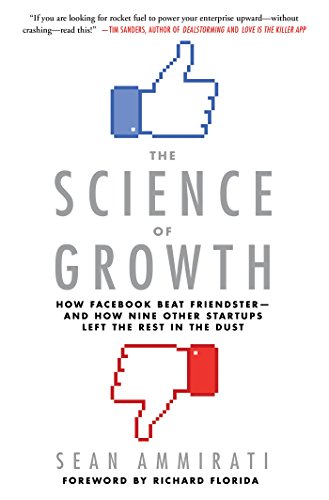
The Science of Growth: How Facebook Beat Friendster—and How Nine Other Startups Left the Rest in the Dust by Sean Ammirati St. Martin’s, 2016
This review was first published by Booklist on April 1, 2016.
So you’ve started a business, now what? Ammirati seeks to answer this question in this sequel of sorts to the standard texts on the science of startups. In response, Ammirati offers a science of growth—a guide on how to scale your business once it’s successfully established. Why did Facebook beat Friendster? How did Tesla outdo Fisker? Why does McDonald’s boast over 35,000 locations worldwide, when White Castle has fewer than 500? Ammirati examines 26 well-known companies to discover what separates the success stories from the failures. He draws examples from diverse industries and isolates several variables: prerequisites for growth, catalysts for growth, and foundational elements to sustain it. An authority in the field of the startup economy, Ammirati teaches the subject at Carnegie Mellon and heads of the country’s most successful startup incubators, and it shows in the way his book is thoroughly researched. It’s also accessible, easy to read, and eye-opening. This is a necessary and welcome addition to the business canon.
And just like with Ms. Atwood, I wish I’d read some of his other work first.
I spent some time thinking about how to write a review of this book, how best to sum it up. Then I came across the New York Times review of it and realized that I can’t put it any better than they did. So I’m going to be horribly lazy and just link to theirs:
The Heart Goes Last by Margaret Atwood Nan A. Talese, 2015
I have a shameful confession: The Heart Goes Last is the first novel by Margaret Atwood I’ve ever read. The absence of her work in my reading history is one of my biggest gaps.
I wish I’d read some of her other work first.
The Heart Goes Last isn’t anything much beyond fine. It’s not great and it’s not a testament to her prestige. If it weren’t for Ms. Atwood’s larger reputation, this novel wouldn’t impel me to read anything else by her.
This review was first published by Booklist on March 15, 2016.
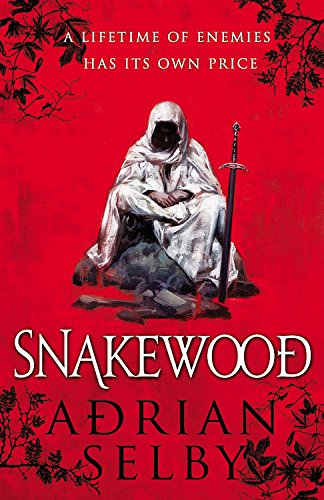
Kailen’s Twenty were legendary, undefeatable mercenaries present at some of the most important events in the history of the Old Kingdoms. Now, three decades after they disbanded, someone is killing them off, one by one. Set in a brutal world of subtle magic, clashing empires, and commercial interests, this is an impressive fantasy debut. Selby demonstrates the command of style, character, plotting, and world building of a seasoned author. The tale switches between the first-person perspectives of multiple characters, and Selby’s writing style changes appropriately. The nonchronological narrative is woven through with flashbacks. Selby creates a robust world that’s entirely believable, but he doesn’t get distracted showing it off. He lets the story live in this world in a deeply effective way. Snakewood has much in common with the work of Joe Abercrombie and should appeal to his fans. As a story about the violent world of warriors and magic, Snakewood is reminiscent of Matthew Stover’s Acts of Caine series, but without the science fiction elements.



 John the Librarian