Wishing everyone the very best in 2015!

Personal blog: All opinions are only my own, unless you want to borrow them. (he/him)
Wishing everyone the very best in 2015!
A few weeks ago, I read Reza Aslan’s book Zealot: The Life and Times of Jesus of Nazareth and I loved it. I went to my Goodreads account and posted a glowing review.
I recommended this book to some historians I know and they both read it. I’ve been speaking to them about it and I was surprised to learn that they’re far more critical of the work than I am. Not because of their religious beliefs but because they don’t think it’s very good history.
Both of them have advanced degrees in history. One of them works as an administrator in higher education. They’ve both been trained in the work of history and both have expectations molded by the standards of academic work.
They see significant flaws in Dr. Aslan’s book. If someone expects to challenge the orthodox historical consensus on a subject (as Dr. Aslan does) there are standards that must be met, the work must uphold a certain level of academic rigor.
Zealot fails to meet these standards. As my friend suggested—he can’t believe that this work would ever survive peer review.
After hearing what my friends had to say about the work I decided to do what a good librarian should do and find out more about Dr. Aslan’s qualifications, his authority to speak on this matter, and the critical reception his work has received from professional historians in the field.
Last year, I vowed to be more aware of how my life is very different from the lives of many in the community I serve through my library work.
I recently read the book, The Short and Tragic Life of Robert Peace, and it opened my eyes to yet another way that I’m really quite privileged compared to many.
When I completed my Master’s degree and began my job search, my top priority was to get my wife back home. She’d spent several years living away from her family and wanted to be near them again.
Everyone I spoke to for job search advice, every article I read, they all told me that I had to be willing to go where the work was, wherever that happened to be. Librarianship is a highly mobile profession. When I restricted my job search right out of the gate to a fairly narrow region of the country, it went against common wisdom. Some people told me I was making a mistake, narrowing my options too soon. Indeed, I passed over many professional opportunities because they were in the wrong part of the country.
But family was my first priority. Getting my wife back home was the most important thing. Luckily, I found a great job at a great public library, right where we wanted to be.
When I tell people why I did what I did—that I chose to put family first despite the potential risk to my career—many people praise me. For much of my life, there has been a sense that families suffer for our culture’s obsessive focus on work and career. Many people tell me how refreshing it is to see someone living with different values.
Now consider a young man very like Robert Peace:
I’m fascinated by ancient history—the archaic and classical Mediterranean, ancient Egypt, Sumeria and Mesopotamia. Mostly, though, I love studying paleoanthropology and archaeology—the Paleo- and Neolithic periods, the evolution of human kind and our spread across the face of the planet.
Recent history doesn’t particularly interest me. I understand the proximal importance of the Modern Era, the World Wars, the Cold War, etc., to the present day but it doesn’t capture my imagination. I look at the world during that time and I see something very much like the world I was born into. It’s too familiar to be fascinating.
I’m fascinated by ancient and prehistory because these eras are so vastly different from the world I live in. In a review I wrote of Madeline Miller’s novel, The Song of Achilles, I refer to the “alien-ness of Bronze Age Greece”. I read articles like this one about Kennewick Man and it’s shocking to realize just how little prehistoric life resembles my own. How vastly different it was than anything I’ve ever known.
This handy infographic was created by The Visual Communication Guy (posted on July 14, 2014):

I came across it on GalleyCat in a post by Dianna Dilworth (posted on August 25, 2014).
It makes an excellent compliment to this infographic.
Recently, a coworker—knowing my fascination with UX and design philosophy—sent me a link to the following article:
Material world: how Google discovered what software is made of by Dieter Bohn (posted on The Verge on June 27, 2014)
Subtitled, “The next era of Google design is about software as substance,” it presents an intriguing take on where Google is heading in terms of their overarching design philosophy.
I love knowing that they’re thinking in terms of designing for how the human brain actually works—we need to be able to create mental models of our environment in order to fully function within it. That’s a psychological and neurological truth that’s been sorely neglected in the history of computer technology to date.
I’ve spent a lot of time over the past days following the #YesAllWomen hashtag, and reading articles and stories that many of my friends have posted on Facebook and their personal blogs.
I’ve stayed abreast of the #NotAllMen backlash and the critical assessment of it.
There’s one article in particular that I keep coming back to:
Why It’s So Hard for Men to See Misogyny by Amanda Hess (posted on Slate on May 27, 2014)
I believe that the best thing I can do in this situation is to shut up and listen. I’ve gone back and forth about this post, debating whether or not I should even say anything.
But I’ve heard too many women tell me that the silence of men on this issue is a part of the problem. That by not speaking up I tacitly allow these problems to continue. So here goes…
Continue reading “#YesAllWomen”
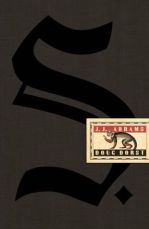
It has me wondering—how do you create a story that equally celebrates ebooks and takes full advantage of the aspects that are unique to electronic formats?
Part of the challenge with such a goal is that we haven’t even come close to developing the full potential of ebooks yet: multimedia integration, burying easter eggs in the pixels, ereader versions of the Konami Code… There’s tremendous opportunity for a level of interactivity that print simply can’t match and we’ve barely scratched the surface.
Continue reading “The Potential of Ebooks, Part 2: Another Modest Proposal”
In my last few jobs—non-profit health support organizations in Chicago, the Kansas City Public Library—I developed a reputation as the person who can break your brand new website in ways that you never anticipated.
As we built our award-winning Civil War on the Western Border website here at KCPL; as the non-profit I worked at for my last few years in Chicago went through two different content management systems and completely redid their website—we obviously spent a lot of time testing the new sites and services, making certain of the functionality, running the systems through their paces before launching them to the public.
In the process, I learned that I’m the guy who identifies the most bizarre ways that things break down and fall apart. I search for the most counter-intuitive paths I can take through a site and I see where they lead me.
For example:
Continue reading “Website Development as Storytelling”
The other day, I told someone that I’m a digital librarian. Of course, they asked the standard follow-up question:
What does a digital librarian do?
Such exchanges have become common for me and they highlight the continuing issues of misperception that plague digital librarianship. People assume that it must be different from traditional librarianship.
I’ve addressed this issue before but I want to take another stab at it:
Digital librarianship is librarianship. There’s no significant qualitative difference between a digital librarian and any other kind. Digital librarians require the same basic training and fundamental skills that all librarians need.
Digital libraries are libraries. Sure, different sorts of libraries are different (how’s that for tautology?)—public vs. academic vs. private, etc.—but digital libraries aren’t any more so.
Continue reading “On the Role of Digital Librarians”
 John the Librarian