In Praise of Formulaic Genre Fiction

A friend of mine posted this article on Twitter a couple days ago (via the New York Public Library):

What Makes Great Detective Fiction, According to T. S. Eliot
by Paul Grimstad (posted by The New Yorker, February 2, 2016)

I love knowing that no less a luminary than T. S. Eliot was a passionate advocate of early detective fiction. But more illuminating is this glimpse into historic perceptions of genre fiction:

Namely, critics have always dismissed genre fiction as low-brow and formulaic, as intrinsically non-literary, and therefore less worthy.

Continue reading “In Praise of Formulaic Genre Fiction” →

Internet Access as Public, Social & Cultural Space

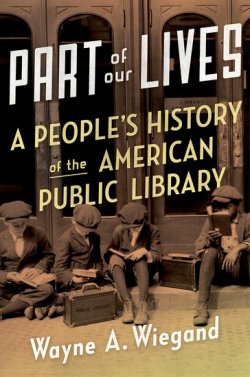
In his book, Part of Our Lives: A People’s History of the American Public Library, Dr. Wayne Wiegand groups library services into three major categories:

  • Information access
  • Reading materials
  • Public space

These categories clarify a nagging issue I have with the language we use to talk about the importance of internet access in libraries. The following quote from a recent article by Larra Clark is a good example:

Continue reading “Internet Access as Public, Social & Cultural Space” →
Do Public Libraries Promote Democracy?

In his book, Part of Our Lives: A People’s History of the American Public Library, Dr. Wiegand challenges the traditional theory that public libraries are institutions which promote an informed democracy. He correctly points out that it’s “hard to prove that American public libraries are essential to democracy.” I’m certain it’s difficult, just as it’s difficult to prove many of the intangible benefits that libraries present their patrons.

Public libraries were conceptualized in large part to provide citizens access to information and “useful knowledge” which would help them to become more informed voters and civic actors. This theoretical framework is a political version of Ben Franklin’s ideal of the “self-made man”.

But historical data of public library usage makes it abundantly clear that very few people use their library this way. The maintenance of an informed democracy via access to “useful knowledge” isn’t something our patrons are all that interested in.

So it’s appropriate and useful to question this orthodoxy.

Continue reading “Do Public Libraries Promote Democracy?” →

Book Review: Part of Our Lives by Wayne A. Wiegand

Part of Our Lives by Wayne A. Wiegand
Part of Our Lives: A People’s History of the American Public Library by Wayne A. Wiegand
Oxford University Press, 2015

I recently read the book, Part of Our Lives: A People’s History of the American Public Library by Wayne A. Wiegand. Rather than write a typical review of it, I want to share a letter that I sent the author.

(TL;DR version: This book is wonderful and every public librarian and public library user should read it. I think it’s important.)


Dear Dr. Wiegand,

I’d like to thank you for writing Part of Our Lives: A People’s History of the American Public Library. Before I proceed to explain why I want to thank you, I need to spend some time voicing a complaint about something you wrote in your introduction. Bear with me—the extent of my gratitude for your work won’t be clear without this context.

Continue reading “Book Review: Part of Our Lives by Wayne A. Wiegand” →

Are We Really Living in a Golden Age of Information?

Information professionals like to crow that we’re living in a Golden Age of Information. More information is available to more people than ever before in history, and it’s easier to access than ever.

The standard response is to point out that there’s more bad information than ever before. A whole lot of the information currently circulating around out there isn’t reliable.

This is true. But it’s also true that there’s more good information available to us than ever before, too. Just as bad information has increased, good information has increased alongside. I believe this firmly and I’ll stand by this statement.

But I’m not sure if the increase in good information is keeping pace with the increase in bad. It may be the proportion of good-to-bad has become more unbalanced. It may be that good information is being increasingly overwhelmed by the bad.

Continue reading “Are We Really Living in a Golden Age of Information?” →

Diverse Books for White Dudes

On the last day of the KLA/MLA joint conference last week, I attended a session titled “Why We Need Diverse Books.” I believe the #WeNeedDiverseBooks initiative is one of the most important social movements going on right now. I believe diversity is the most important frontier for collection development in libraries.

The session presenters recommended a variety of publishers who are good sources of diverse titles and gave examples of successful diversity programming they had done at their own libraries. For me, the most interesting point raised was the need for foreign language titles in a diverse collection. Language is an essential facet of cultural diversity, and yet our diversity collections are still predominantly written in English. A truly diverse collection which serves a truly diverse community should have resources in a multiplicity of languages. Too often, this gets overlooked in collection development efforts. I think this is a point well-made.

I walked out of this session asking myself another question which sometimes gets neglected in our discussions about diverse books:

How do we get white dudes to start reading diverse books?

Continue reading “Diverse Books for White Dudes” →

Digital Technology: It’s Just a Tool

Let’s not make more of it than it is.


This is the second of my point / counterpoint posts. Read the first post here.


When we think about digital illiteracy, we picture people who lack familiarity or skill with technology, people who lack knowledge or comfort with digital information resources. We think about luddites—some willing, some unwilling.

But there’s a kind of digital illiteracy that exists at the other end of the spectrum: technolust. People who adopt new technologies and digital resources too enthusiastically.

An uncritical acceptance of digital technology fails to understand it in a way as profound as any luddite.

Digital technology provides us with tools. A proper understanding of our tools doesn’t just mean knowing what they can do—it also means knowing what they can’t do, and what we shouldn’t try to make them do.

Understanding our tools means knowing their limitations as well as their strengths.

Continue reading “Digital Technology: It’s Just a Tool” →

Luddite Librarians

Digital technology is part of our job now, whether we like it or not.


This post is the first of two that I plan to present as a point / counterpoint kind of thing. Read the second post here.


Every library, it seems, has a handful of staff members who just won’t get onboard with new technology and new digital services. Some of them even make it a point of pride—they see themselves as stalwarts, holdouts against unnecessary change.

Some say they’re too set in their ways and technology changes too fast to keep up with it. Some flat out don’t trust new technology or digital information resources.

As a profession, we grimace and shrug and resign ourselves to the fact that some of our coworkers are going to be like that.

But consider it from a different angle:

Continue reading “Luddite Librarians” →

Once Again, Print Proves Its Worth

Perhaps it’s ironic, but the more time I spend as a digital librarian, learning and exploring new technology, finding new and better ways to provide technology to our patrons, the more I find myself passionately advocating for the importance of print and the necessity of its continued presence in our reading culture.

Once again, print proves its worth:

Reading Books Instead of Kindles Can Improve Your Memory, Concentration and Good Looks by Jon Levine (posted on Arts.Mic on August 20, 2015)

Nothing in this article surprises me (although I get frustrated every time someone implies that ebooks aren’t books). It all pretty well stands to reason:

Continue reading “Once Again, Print Proves Its Worth” →

Libraries Should Be About Books

It’s de rigueur nowadays for people to criticize libraries for being “too much about books.” The idea being that too many libraries are still stuck in the past, in outmoded service models, and failing to adapt to new technologies, trends, etc.

There is some truth in the criticism—although I also find that too many of these critics fail to be critical enough of new trends and tend too often to promote faddishness.

It makes me want to ask the obvious question:

What’s wrong with libraries being about books?

Books mean reading. Books are still the best, most valuable tool of a reading life. This makes books timelessly important—beyond fads, more enduring than ever-changing technology.

Books matter. Still and always. Because reading matters.

Continue reading “Libraries Should Be About Books” →